


No matter how much progress people think the #metoo movement achieved, reporting a sexual assault remains a complex decision. Being required to repeatedly relive a traumatic event is just one of the process’s drawbacks. You may feel reluctant if the accused holds a position of influence or power because they could retaliate, compounding the harm they’ve already caused. In addition, there remains the very real possibility that people won’t believe you and even blame you for the incident. In Bayaan , an investigation into a high-profile rape allegation repeatedly meets official and unofficial obstacles.
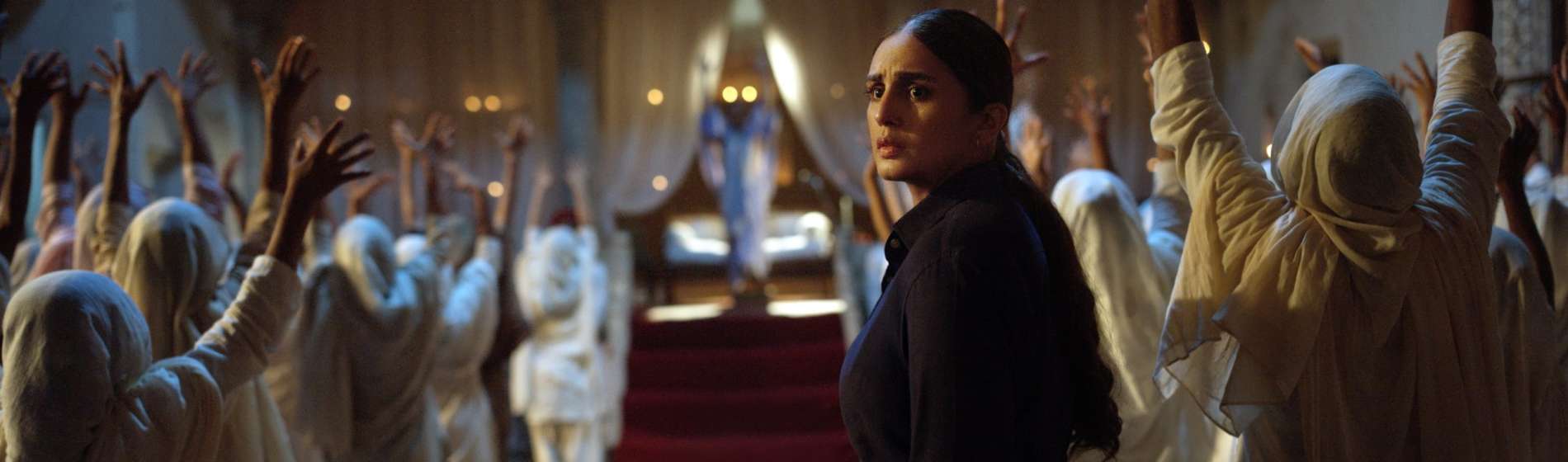
Officer Roohi (Huma Qureshi) has put off field work, perhaps intimidated by the unavoidable comparisons to her father’s distinguished career. But when they offer her the lead on a small-town case, she can’t turn down the opportunity. An anonymous letter published in a newspaper accuses the local guru, Maharaj (Chandrachur Singh), of rape and sexual assault.
A judge orders an investigation, but the report is due in an impossibly short time. Partnered with local officers, Karnail (Vibhore Mayank) and Meena (Sampa Mandal), Roohi begins to wade through the fanatical reverence for the spiritual leader. But one secret leads to another, revealing a thread that points to a monster in religious guise.
Viewers will quickly realize Maharaj is a definition cult leader. He gains the loyalty of the people by supporting community initiatives that benefit everyone, regardless of their caste or creed. His influence is boundless as his worshippers blindly obey his will. His photo is everywhere, unnervingly keeping watch over his flock.
Notably, his kindness extends to a commune of women and girls who live on his compound full time. Maharaj gives them new names and assumes the role of their father. There’s also a noticeable absence of other men on the property. Combined, these are the perfect conditions for a predator to operate undetected. Maharaj doesn’t make an immediate on-screen appearance, allowing his reputation to proceed him. But when he does, Singh exhibits an unsettling mix of benevolence and malevolence, hiding behind an eerie smile.
Roohi may be a rookie, but experience wouldn’t make this case easier. Officials are unwilling to risk Maharaj’s disapproval, so they only half-heartedly support Roohi’s investigation. Zealous followers violently object to any accusations against their leader. Any attempts to question potential victims or their families find only shaking heads and closing doors.
The closer Roohi gets to the truth, the more dangerous it becomes to pursue it. Yet her determination to expose the years of cover-ups is unwavering. Qureshi’s performance is reserved, but not detached. Over the course of the inquiry, audiences witness Roohi’s transformation from green detective to a champion for these silenced women.
Writer-director Bikas Ranjan Mishra presents a carefully crafted procedural. Although the letter is the catalyst, the story is so much larger than the whistleblower’s personal experience. It doesn’t venture far from the genre’s formula, making some of the more nefarious elements predictable — particularly for avid Law & Order viewers and true crime enthusiasts. Sadly, like many of those narratives, this film is inspired by real-life violence.