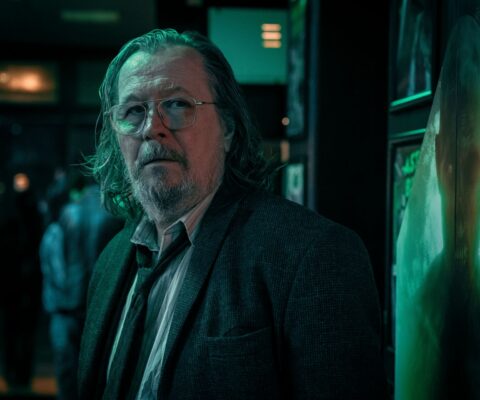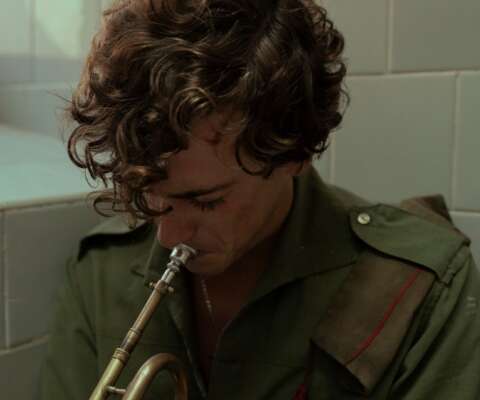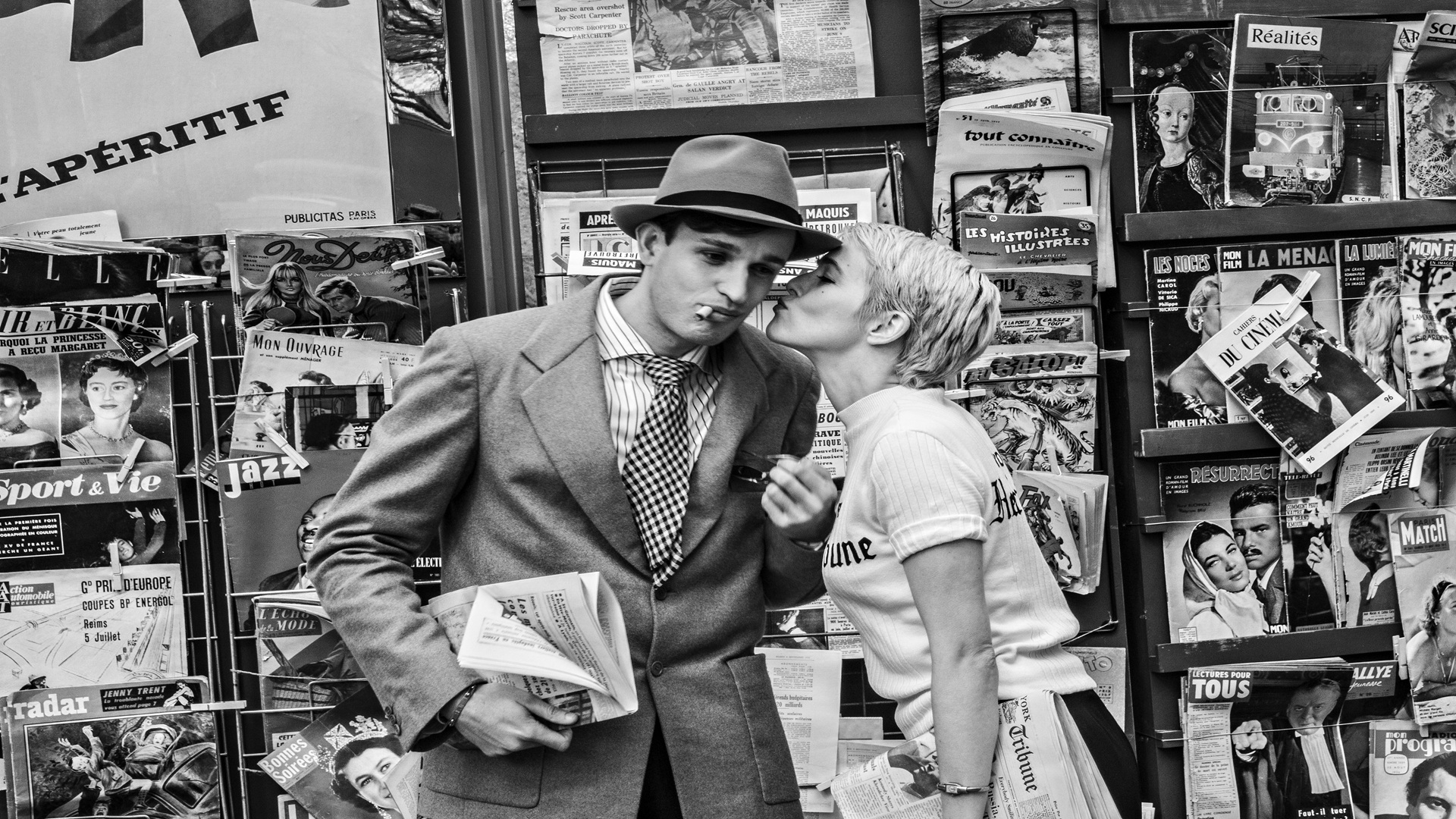



In one rather revealing moment in Richard Linklater’s Nouvelle Vague , Jean-Luc Godard (Guillaume Marbeck), then a young film critic-turned-director, quotes French painter and sculptor Paul Gauguin when he tells his skeptical actors that “in art, one is either a plagiarist or a revolutionary.” Godard clearly sees himself as the latter despite only directing a short film up to that point, and uses it to justify his unconventional approach to the filmmaking process. What makes the scene so fascinating is that the audience can see Linklater also wrestling with the question of where his film lands on Gauguin’s art scale.
For a filmmaker who revolutionized American independent cinema with his 1990 debut Slacker and subsequent works, Linklater’s latest feels anything but radical.
As if holding up a forgery of a painting to the light, Linklater’s homage to Godard may feature the same meticulously crafted brush strokes of the French New Wave it celebrates, but lacks the rebellious spirit of the era. It is a love letter to artistic risk-taking that curiously sticks to a formal structure that Godard himself might have condemned in his reviews.
Despite its surprisingly traditional approach, Nouvelle Vague still manages to charm through its unabashed love for the brilliance of the French New Wave and the way its impact has spanned generations. Linklater’s airy and loving tribute film takes audiences into the behind-the-scenes chaos surrounding the filming of Godard’s 1960 masterpiece Breathless . After making a name for himself writing about film for the influential publication Cahiers du cinema , Godard decided to adhere to his own words that “the best way to criticize a film is to make one.”
Annoyed that he did not achieve his goal of making his first feature film by age 25, Godard convinces Georges de Beauregard (Bruno Dreyfürst) to produce the film despite not having a completed script. Using a treatment by fellow Cahiers writer François Truffaut (Adrien Rouyard), who was still basking in the glow of the critical acclaim his debut feature film The 400 Blows received, the soon-to-be legendary filmmaker set off to assemble his cast and crew for the 20-day shoot.
As Linklater follows Godard as he goes about casting amateur boxer Jean-Paul Belmondo (Aubry Dullin) and American starlet Jean Seberg (Zoey Deutch, who is wonderful in the role) in the lead roles and assembling a crew that includes former war photographer Raoul Coutard (Matthieu Penchinat), he litters his film with many of the icons of the area. Giddily name-dropping, almost to the point of distraction, the likes of Agnes Varda, Alain Resnais, Robert Bresson, and more, all portrayed by actors, Linklater’s film constantly reminds the audience of the abundance of talent that was overflowing at the time.
Taking great care in recreating every aspect of the era, even presenting his film in the same black and white style and having all the dialogue in French just like Breathless , it is easy to get swept up in the overall aesthetics of the film. However, Nouvelle Vague truly finds its groove when the filming of Breathless starts, and the audience observes how the cast and crew dealt with an artistic vision that they couldn’t fully see.
Offering plenty of humour in Godard’s eccentric ways, which included ignoring continuity and ending a day long shoot in two-hours, it is easy to see why individuals like Seberg would be frustrated to the point of wanting to quit the picture. As the film shows, the brilliance of an artist is rarely understood in the making of the art. It is only when the work is done that its construction can fully be appreciated.
Considering that Linklater presents Godard as a genius who was so far ahead of his time right off the bat, one does not get too much insight into the man outside of the making of the film. The adversities he faces making the film feel minor in the grand scheme of things since the audience already knows how everything will turn out. Regardless, it is Godard’s ongoing drive to go where inspiration takes him that keeps the moving.
Nouvelle Vague makes it clear that creativity in its purest form is not beholding to preconceived notions. True art finds its emotion and humanity in things that can be challenging and unconventional.
Working best as an introduction to Godard for the uninitiated, Nouvelle Vague is an engaging tribute to a legendary film and filmmaker. Linklater’s film may not be anywhere as bold or inventive as the work it celebrates, but that does not make this love letter to cinema and the creative process any less charming.
Nouvelle Vague screened as part of the 2025 Toronto International Film Festival.
Head here to get all our That Shelf TIFF coverage .