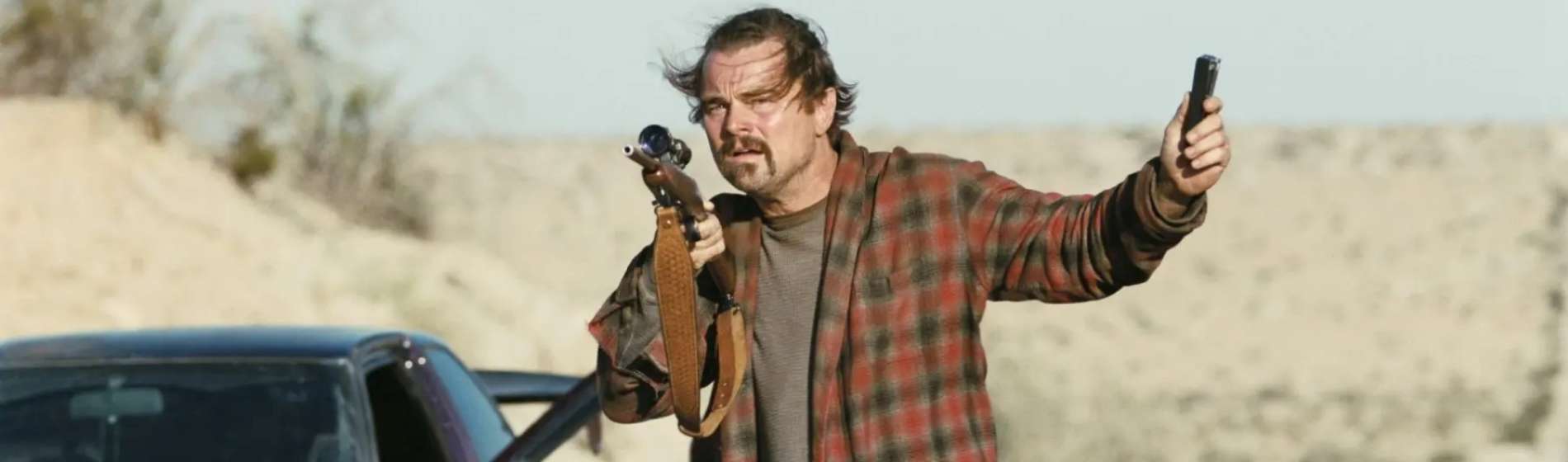


Paul Thomas Anderson must have been a good boy last year because he got one huge toy set for Christmas. His latest movie One Battle After Another offers a smorgasbord of cars, guns, and other fun playthings to smash together. The price tag for PTA’s romp bears a cost estimated between $130 to $170 million USD – before marketing and such. The production looks every bit as obnoxiously expensive as it range sounds. It’s a huge gamble on a filmmaker of escalating self-indulgence, especially since his biggest box office hit, 2007’s There Will Be Blood , had a worldwide haul of only $77 million.
Essays (re: Film Twitter Discourse) will surely be written about the privilege afforded to white male directors like PTA, especially since One Battle After Another is the biggest bro down of a movie since Fight Club . But it’s also an exhilarating exemplar for the riotous rewards that follow when a studio hands an auteur a giant bag of cash and says “do you thing” without saddling him with a Marvel movie. One hopes it inspires further all-in gambles with arthouse talents.
The grand canvas also means it’s Anderson’s most mainstream film yet, in a relative sense of the word. But it’s a major rebound from the navel-gazing of 2021’s Licorice Pizza and a return to the kind of ambitiously sprawling ensemble feat that typified his formative films Magnolia and Boogie Nights . The most obvious predecessor to One Battle After Another , though, is Anderson’s 2014 Thomas Pynchon romp Inherent Vice . Battle draws inspiration from Pynchon’s novel Vineland and the author’s sense of humour jives perfectly with Anderson’s own anti-establishment voice. It’s a work of anarchically comedic fury.
The film actually calls to mind Pynchon’s seminal novel The Crying of Lot 49 with the wayward revolutionaries who fuel it. In that Pynchon book, a secret society creates a secondary mail delivery system, seemingly to overthrow the postal service just for something to do. In Battle , the revolutionaries throw their fingers in the air, blow shit up, and stick it to the pigs. However, the group known as the French 75, remains ideologically ambiguous and strategically clueless. They seemingly enjoy anarchy for its own sake, eager to set the world ablaze without demands, roadmaps, or a backup plans.
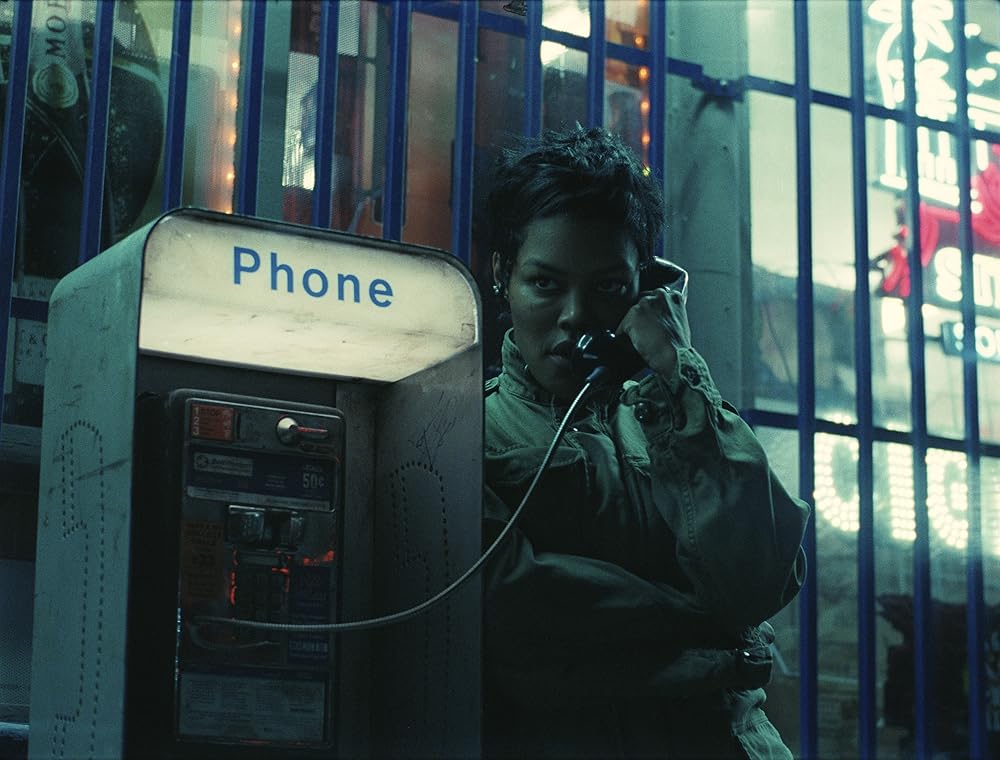
But the spark of revolution turns them on, as noted by the sweltering intensity that radical Bob (Leonardo DiCaprio) finds while running guns, freeing undocumented migrants, and blowing up the grid with compatriot Perfidia Beverly Hills—a great movie name if there ever was one. Teyana Taylor ( A Thousand and One ) plays Perfidia with incendiary badass spunk. She’s a lover and a fighter with a burning passion to overthrow the establishment—any establishment—by whatever means possible.
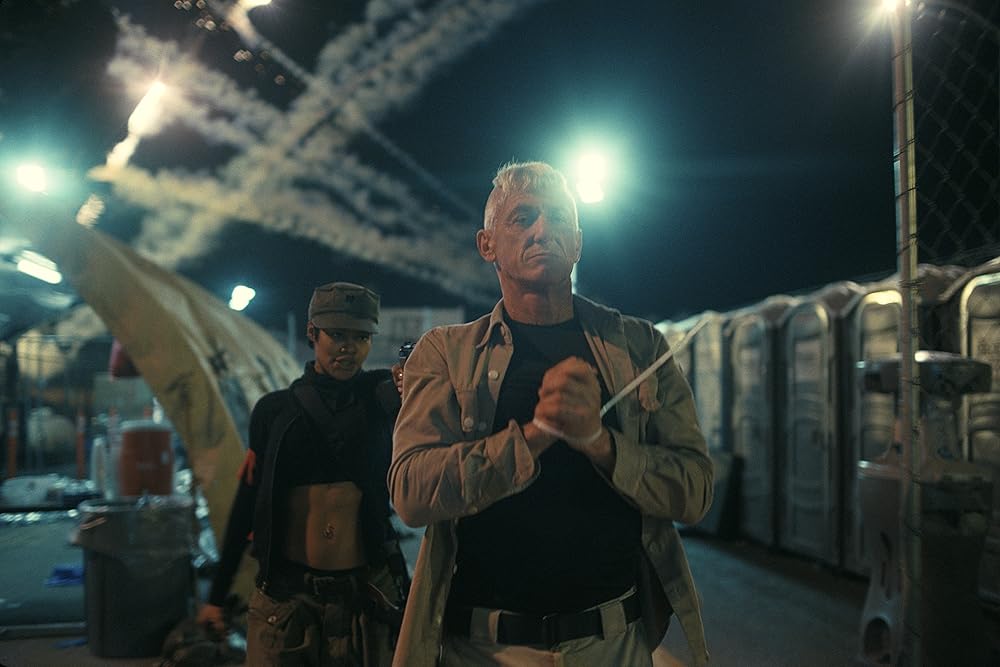
That drive extends to physical passion, too, when Colonel Steven J. Lockjaw (Sean Penn) finds himself hell-bent on revenge after Perfidia summons a boner from him while ambushing his camp. Lockjaw prides himself as a patriot, but a secret case of jungle fever shoots Perfidia atop his most wanted list. She does what’s necessary in the name of revolution, but Lockjaw’s insatiable lust ensures she’ll be running for life.
Perfidia goes on the lam, leaving Bob with their baby daughter Willa. Her exit, however, leaves a big hole that One Battle After Another struggles to fill. That’s more a testament to Taylor’s performance: Perfidia’s fiery presence gets the film off to an intense start. The character drop-off recalls the sense of loss in Moonlight that arises when Mahershala Ali departs the picture after making such a strong early impression, but there’s a bigger recovery time here as One Battle After Another struggles to regain its mojo without Miss Beverly Hills.
The same also goes for Bob and the French 75. Thrown into a hiding during the film’s rocky second act, Bob now serves as a revolutionary in spirit, rather than action. He gets high all day while Willa (impressionable newcomer Chase Infinity), now a teenager, goes about a seemingly normal life. She makes the best of her eccentric dad and the mother whose absence hangs atop their lives. But when Lockjaw decides to clean up loose ends left in Perfidia’s wake, Bob summons the reinforcements best he can. The call for revolution rouses him from a pot-induced slumber.
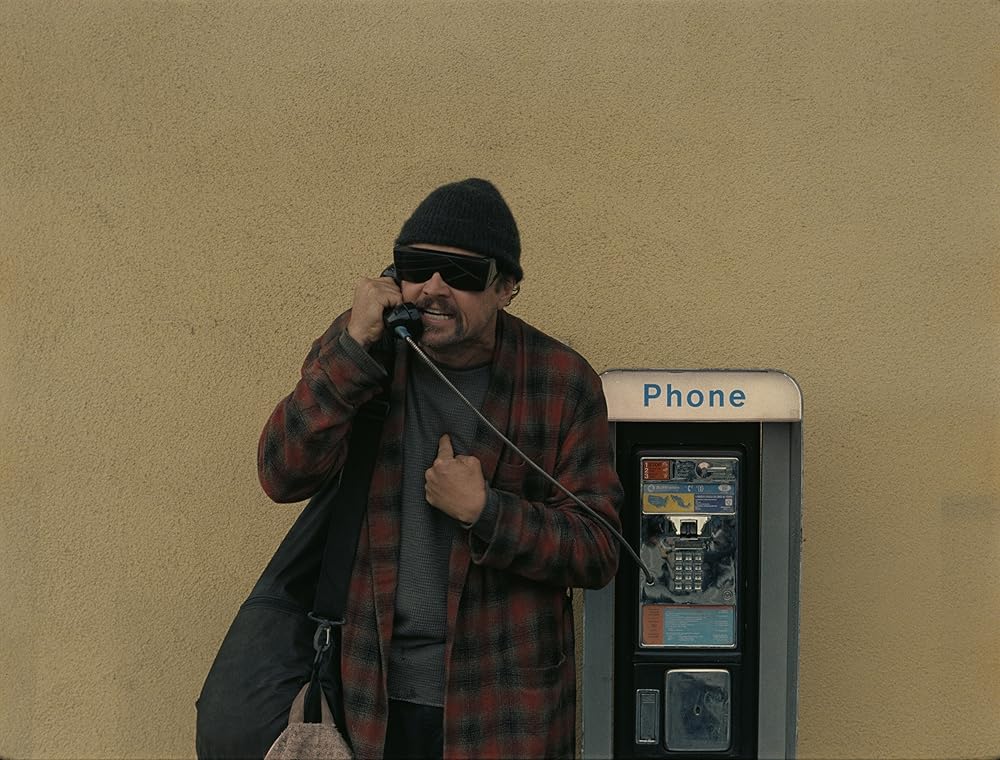
Calling in the cavalry inspires a madcap adventure as the French 75 rallies to protect Willa. Anderson introduces a motley crew of co-conspirators, including a sage and slightly alcoholic karate teacher, Sensei Sergio (a very funny Benicio del Toro, gamely bringing the comedic chops honed with Wes Anderson ) and old comrade Deandra (Regina Hall). She’s a rock of calm, quiet strength steering whatever crazy train/ship of fools Bob has in his service.
The players converge as Lockjaw tracks the French 75 and they hunt him in turn. Anderson seemingly makes the picture bigger and bolder as narrative sprawl converges. What follows is a madcap, wackily paced chase movie with bravura stunts and nausea-inducing rides up and down undulating hills at high speeds. The cinematography by Matthew Bauman captures the chaotic energy mere millimetres from the pavement as the cars careen along the open roads, while the breakneck editing by Andy Jurgensen masterfully keeps the adrenaline flowing without missing a single beat. It’s maximalist filmmaking to the hilt.
The actors embrace the chance to let loose, too. DiCaprio plays the ignoramus revolutionary with gusto. Bob finds his groove as the odyssey spirals dizzyingly, and DiCaprio creates a high-energy character who thrives on chaos. He’s very funny as he chases the next high, unconcerned with furthering any agenda save to disrupt the status quo. But he’s a stoner anti-hero and hardly a stalwart radical to lead a new America flailing into the night. DiCaprio plays him as a revolutionary without the slightest hint of ideological bent—or, frankly, intellect—but one who sells his convictions so strongly that it doesn’t matter what, if anything, he stands for.
The anarchic drive offers a fine counterpoint to the jingoistic all-Americanism of Lockjaw. Penn is deadpan hilarious in a strangely jacked performance. If Bob stands for nothing, Lockjaw serves a man of meeker convictions. As Lockjaw pursues the radical family to further his own acceptance in a secret society, which pledges allegiance to Saint Nick, Lockjaw feels birthed from the MAGA movement, down to his overtight t-shirts, constipated gait, and gee-golly nuttiness. It’s a feat of great physical comedy from one of Hollywood’s most self-serious actors. He’s a perfectly inept foil for DiCaprio’s Bob: two boys with toys furiously smashing their playthings to smithereens.
There’s a fiery sense of rebellion to the movie, too. It’s as if Anderson knows he’s potentially setting fire to a huge whack of cash. Every frame of One Battle After Another seemingly runs contradictory to the risk aversion of contemporary Hollywood filmmaking. The originality, the energy, the grandeur, and the sheer expensiveness of it all proves consistently exhilarating. However, the film thumbs its nose seemingly in every direction and, at the same time, nowhere. The element feels especially Pynchon-esque and Anderson-esque: the French 75 are a joke, but at least they’re challenging lesser alternatives.
Anderson presents an American that feels so self-defeating, one can’t help but join cheer the French 75 as they blow things up. The same could be said for Hollywood: a shit-disturber could do it some good.