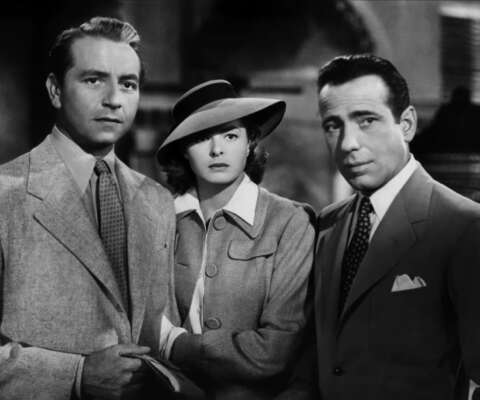



David Mackenzie ’s Relay is a throwback of sorts. Not quite the thrillers of the 1970s, like his film Hell or High Water , but closer to the renaissance the genre received in the early aughts, like Cellular and Red Eye . Of course, the days when films about professionals who excel at their craft became blockbusters are gone—although they sometimes appear when fronted by an A-list actor . Racing cars is an easier sell than corporate espionage, however, and this throwback leans into small-scale filmmaking. Still, Mackenzie, who’s worked all over the place genre-wise ( Young Adam , Outlaw King , and Starred Up ), is up to the challenge of delivering a solid flick.
Ash ( Riz Ahmed ) is a fixer. He specializes in arranging payoffs between whistleblowers and companies that stand to lose everything. Ash doesn’t broker things conventionally, though. He is meticulous, and no one knows his identity. Following his very specific set of rules allows Ash to operate in the shadows permanently. He sticks his neck out for no one. No one, that is, until Sarah ( Lily James ) comes calling. She used to represent a biotech company launching a new wheat strain. The only problem? It causes cancer. Sarah thought she would go public with the information, but she relents once corporate mercenary Dawson ( Sam Worthington ) makes her life miserable.
When the informers lose their nerve, they hire Ash to give back the damning evidence. Rarely do we see this happen in film. Deep Throat didn’t decide to let Nixon slide in All the President’s Men. Russell Crowe didn’t turn tail at the end of The Insider . But, in this case, Sarah wants out of the crosshairs. So Ash performs a reverse heist, if you will, so the corporation receives its assets. that the. It’s terrifying to think how many companies would prefer to kill one employee instead of making things right, but that’s where we’re at now.
Sarah knows the company has eyes on her, but she doesn’t know that Ash does too. It’s a cat-and-mouse game the entire runtime, keeping viewers on the edge of their seats. As Dawson, Worthington offers more to the shadowy operative than we usually get from white-collar villains. It’s a stoic performance, yet peppered with enough character to keep him from being bland. Willa Fitzgerald also steals scenes as the aloof but more frightening Rosetti.
The film’s title comes from the device that gives Ash cover — The telephone relay service for the deaf. Operators can’t repeat what they’ve heard, and, better yet, there are no recordings made. It’s one of many services that Ash utilizes that have fallen off in popularity, but are an absolute necessity. Public libraries, post offices, and mass transit; everybody can access these institutions, but no one owns them. When you need anonymity, you go there.
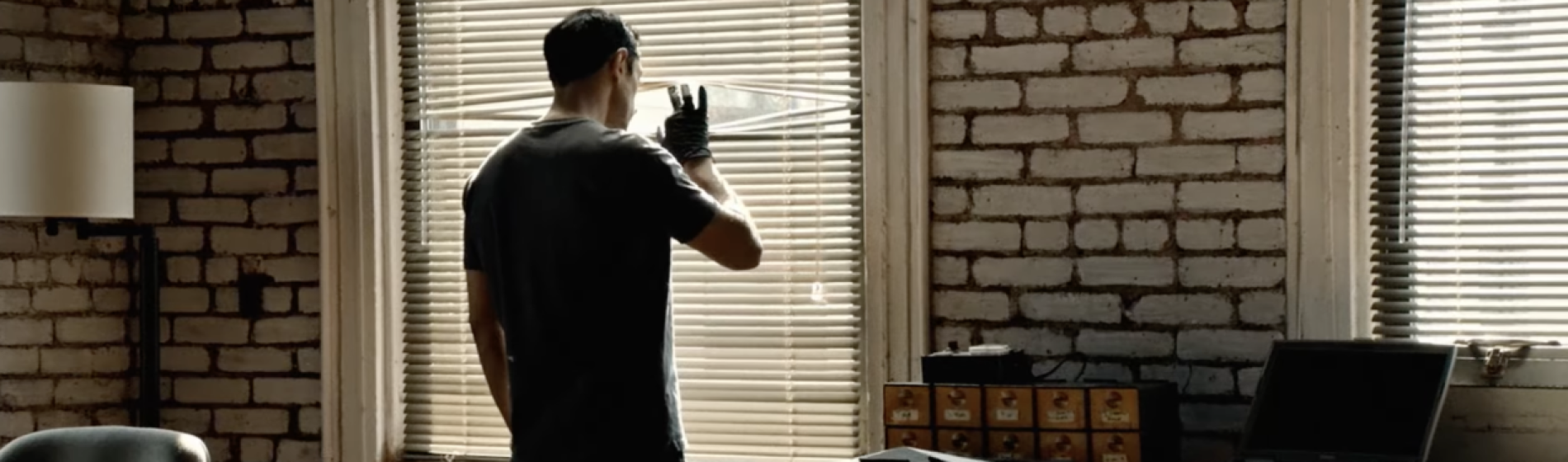
Mackenzie revels in the details that allow Ash to work like this. Like Michael Mann’s Thief , we follow Ash as he practices his particular set of skills. He rarely speaks during the first act, but with every scrunch or furrow of his brow, the audience feels the tension. Ahmed is reliably excellent (see his work in Sound of Metal ), and Relay is no different. He hardly speaks for the first 40 minutes, but it’s irrelevant. His face commands the camera. His character does eventually speak, but Ahmed is a strong enough actor that he could have gone silent the whole time. The performance reminds me of Gene Hackman’s career-best work in The Conversation .
For how difficult it is to find Ash, it’s infinitely harder to screw him over. Smartphones, omnipresent surveillance, and AI have made it virtually impossible to hide for long. To combat this, Ash manages his profession like his alcoholism. Every procedure has a set of steps. Every step must be followed diligently. He never meets his clients or the companies that pay him. But something about Sarah drives a change in Ash. She doesn’t just need an intermediary; she’s fighting for her life. And soon, Ash’s grip on the rules starts to slacken.
Justin Piasecki’s screenplay is compact, letting the actors do the work, and the fear in their eyes tells the rest. We watch the intricate procedures Ash utilizes to keep himself and the whistleblowers safe. It requires more patience than is perhaps granted in most cineplexes, but it’s a beauty to watch. You can sense the joy Mackenzie has in making a throwback to the paranoid thrillers of yore. Keeping the camera steady and letting Ahmed roam through the frame as we keep our eyes peeled for threats throughout. Your mileage may vary depending on how the third act strikes you. Some consider it an undisciplined resolution; I like to think that it’s the story paralleling the emotional state of the leads. It’s a bold choice that I hope audiences reward.
Relay hits theatres on August 22nd.