

“I love it. Are you kidding?” laughs Eleanor the Great star June Squibb when asked how she’s enjoying the new phase of her career. Squibb, speaking with press at the Toronto International Film Festival where Eleanor the Great had its North American premiere, gets her second leading role at age 95 after Thelma last year. The veteran character actor finds a natural groove in Scarlett Johansson ’s confident feature directorial debut , Eleanor the Great.
“I loved my career. I did some great things and some bad things, but I loved every minute of it, but this is different,” says Squibb. “It is different. You have a certain responsibility, but you also get a lot of the kudos that you didn’t get when you were supporting so it all evens out, but I’m having a great time.”
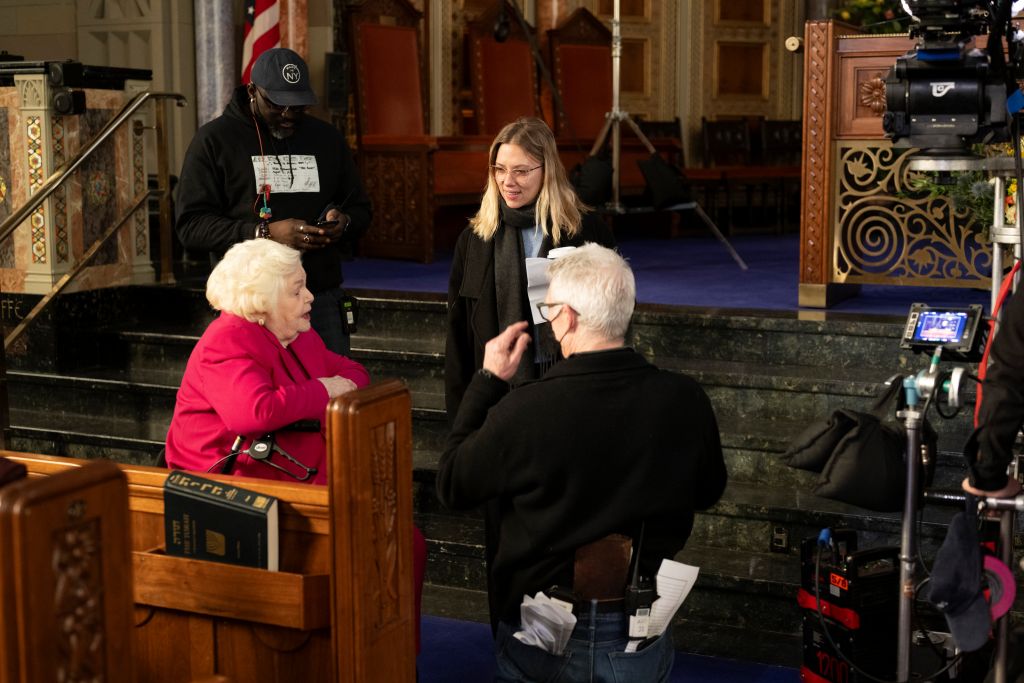
“I felt very much it was an extension of my work,” adds Johansson about jumping into the director’s seat for Eleanor the Great. “It didn’t feel so left field.”
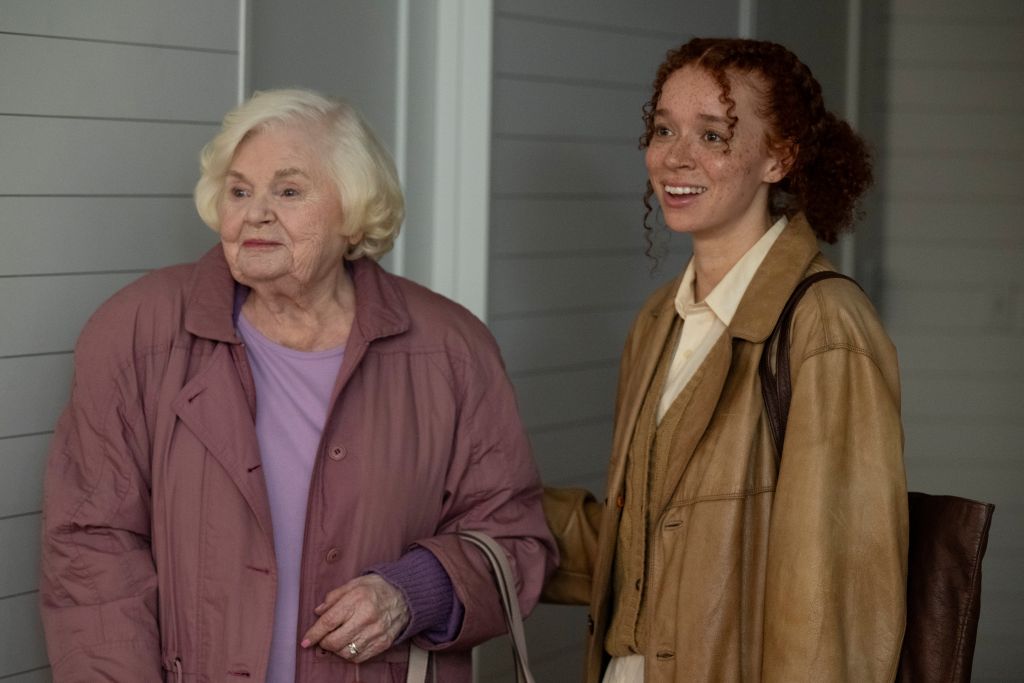
Johansson doesn’t appear in Eleanor the Great and instead gives the starring role duties to her veteran costar. Squibb enjoys a career-best performance as Eleanor navigates her grief, offering her signature sense of human in a performance that carries layers of history. This heartfelt character-driven dramedy follows Eleanor as he starts telling the stories of her late friend Bessie (Rita Zohar) in a Holocaust survivors’ support group. Inadvertently, the lie gets her in way over her head when a journalism student, Nina (Erin Kellyman) takes an interest in her story.
Johansson says she could draw upon positive experiences as an actor to shape her approach to directing actors. “I like the collaborative experience of the work that we do very, very much,” she notes. “I’m an actor who loves to be on set. I love to talk to people. Maybe it’s because I was a kid actor and grew up on set, but I’m not someone who needs to be alone in my room preparing. I really love the community that we have on set, so I think this was an extension of that passion.”
“She’s very decisive, which I love,” observes Squibb. “There’s nothing worse than a director who doesn’t answer you, or is like, ‘Oh, I’m not sure about that,’ but this one [Johansson] really knows immediately how she feels about things, and that’s just great. And she listens, and I felt that she was really with me in terms of how I work. She knew immediately what I was doing. So that made that easier.”
There’s a fine sense of art imitating life as Eleanor’s inadvertent dishonesty inspires her to connect with Judaism anew. Just as Squibb’s career trajectory shows it’s never too late to lead, Eleanor’s time sharing Bessie’s stories with the Holocaust survivors prompts her to prepare for the Bat Mitzvah she never had.
Johansson says this aspect of the script by newcomer Tory Kamen caught her interest. “The idea of legacy is a very important thing for me,” notes Johansson. “Personally, I grew up in New York. My mother grew up in New York, and her parents grew up in New York. My mom’s Ashkenazi, her father’s family was from out the outside of the Warsaw Ghetto and my grandmother was from Minsk.” Johansson says that part of the family felt distant to her because so many relatives were lost during the Holocaust, so Eleanor’s situation invites empathy in a scenario that might take audiences by surprise, but underscores the importance of keeping stories alive.
Watching Eleanor cope with the loss of her best friend by remembering her stories adds an intimate layer to what is, at heart, an intergenerational buddy comedy between Eleanor and the twentysomething Nina. The unlikely duo tours New York as Eleanor revisits old haunts, rejuvenated by Nina’s interest in her life. The student finds herself taken with the relationship too, unaware of the charade behind Eleanor’s yarns. The elder voice helps Nina cope with the recent loss of her mother. Johansson hopes that the nuances of the story invite a wider conversation about grief.
“You never know what’s going on in someone’s living room,” says Johansson. “You really don’t know what people are carrying around with them. You can be a lot of things at the same time. You can be in deep grieving, and then another part of you is getting through the day. You’re functioning, and your brain compartmentalizes. It seeps out in these different ways.”
Audiences can see this dynamic at play in Squibb’s layered performance as Eleanor moves back in with her emotionally distant daughter (Jessica Hecht) and grandson Max (Will Price). Squibb, best known for her acerbic comedic timing that’s made her a memorable scene stealer in films like Nebraska and About Schmidt , shows off her dramatic presence unlike ever before. Captivating close-ups let audiences feel the weight of heartache and loneliness as Eleanor’s weathered face breaks between cathartic sessions with Nina and the survivors, while Johansson cuts back and forth to powerful conversations between Eleanor and Bessie at their old kitchen table.
“This was a chance for the Holocaust to be talked about and to be thought about,” observes Squibb. The star says she never thought of Eleanor’s role of falling into Bessie’s stories as an act of deception. Rather, she sees it as an expression of love. “She loves this woman [Bessie] so much that she will not let her death be the end of this because it was too important.”
“A theme throughout this film that’s very important to me is forgiveness, and we certainly could use more of it,” adds Johansson. “Eleanor is in such a state of grief and loneliness and desperately trying to connect and to be seen. She also feels this urgency to honour her friend’s legacy. Her appropriation of this story is complicated.”
Johansson adds that Eleanor the Great embraces that complexity by inviting real survivors to play the compassionate members of the Holocaust support group. She notes that none of the participants had ever been on set before. However, they lend the film its lived-in sense of authenticity.
“It was just extraordinary how patient everyone was and so generous with their time and their own stories,” says Johansson.
Johansson says she’s benefitted from working with other actor-directors whose dynamic on set gave her guidance for leading with performers regardless of their experience levels. Besides name-checking her early experience with Robert Redford on The Horse Whisperer (this press event preceded Redford’s passing), she cites actor-director Jon Favreau’s approach to directing on films like Chef and Iron Man 2 .
“When you look back at it, you’re like, ‘Whoa, this cast was stacked: It’s Sam Rockwell, Mickey Rourke, Gwyneth, Robert [Downey, Jr.] – a lot of heavyweight actors and all very different personalities and extremes,” Johansson says of Iron Man 2. “I was so curious how he was working with everybody, and he said, ‘I essentially am like a therapist in some ways, but I’m observing the actor and I’m speaking in the language that they respond to. It’s different for each person.’” That advice readily lends itself to Eleanor the Great ’s own therapeutic process as Eleanor and Nina cope with their own losses, and Squibb and Johansson learn from each other in turn.
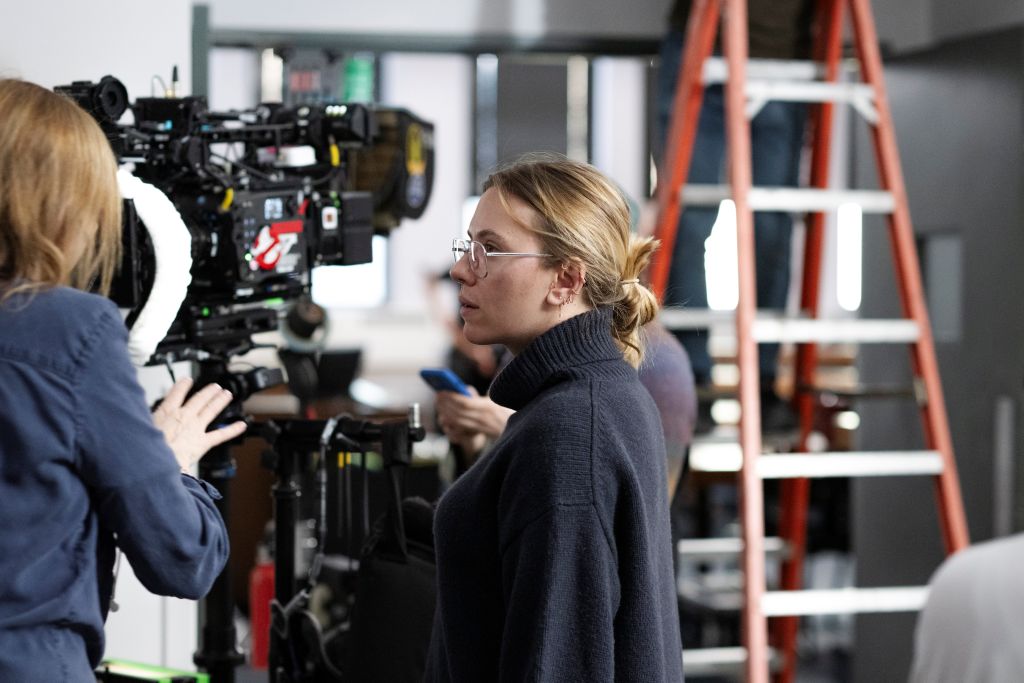
Johansson admits that taking stock of similar advice helps her confront the challenges of public life in Hollywood, first as an actor and then as a director in a field generally dominated by men. “That struggle is in relationship to a woman’s identity and what is expected of women. Laura Dern has a great speech about it in Marriage Story , that Noah [Baumbach] wrote,” observes Johansson. “But I still feel the pressure to be all of the things, whether you’re doing a job where you’re now directing a film: Is it because you’re in a certain phase of your life, or you know that you’re moved off from being someone who thinks about how the world perceives them from the outside, [so] now you can feel comfortable in this seat.”
Squibb, meanwhile, doesn’t look back with any regrets. “My first film, I was 61 [Woody Allen’s 1990 film Alice ]. But I’d had a long career in the theatre,” she reflects. “I think you’re a lot freer about things,” she continues when asked about starting her film career later in life. “You can say no a lot easier than you ever could—for me anyway, than I ever did as a young person.” Squibb hopes to do a western in the future, which, coincidentally, she notes is the next genre that her Nebraska and About Schmidt director Alexander Payne is working in—but whether there’s a role for her as the sheriff, villain, or something in between remains to be seen.
“I don’t think I have June’s stamina,” Johansson laughs when asked about starring in movies at 95. “I mean, who knows, but [her] career is so extraordinary.”
For now, Johansson’s eager to explore the new challenges on both sides of the camera. “I hope to continue to work on projects that are challenging, whatever that means,” says Johansson. “I think as far as finding stories that are personal to me. This one was extraordinary in that way. It fell into my lap in a way that was like, ‘I have to make this, I just know how to make it,’ which doesn’t happen often.”
Eleanor the Great opens in theatres Sept. 26 including TIFF Lightbox .