

It’s well-established that Toronto is a food lover’s dream. With cuisines from around the world at the city’s fingertips, Toronto is one place where you’ll never run out of incredible bites to eat.
At the pinnacle of this dynamic food scene is Chef Masaki Saito, the visionary behind Sushi Masaki Saito in Yorkville. He holds the distinction of being Canada’s first two-Michelin-starred chef, a testament to his exceptional talent and dedication to the art of Japanese cuisine. With his culinary celeb status, Chef Saito has ushered in a new and exciting era for Toronto’s dining landscape, but, as Still Single explores, his achievements have not been without sacrifice.
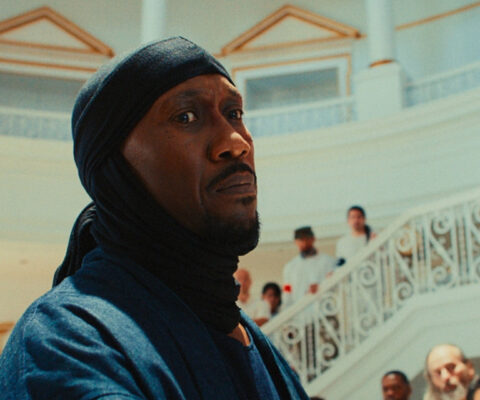
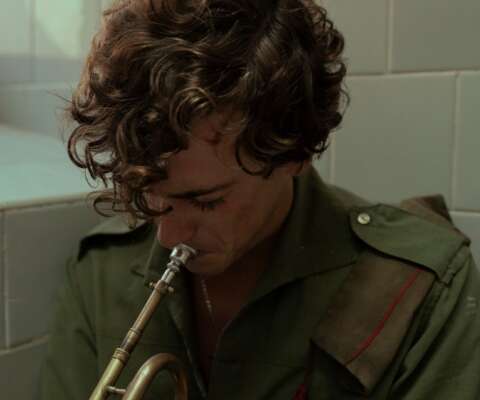
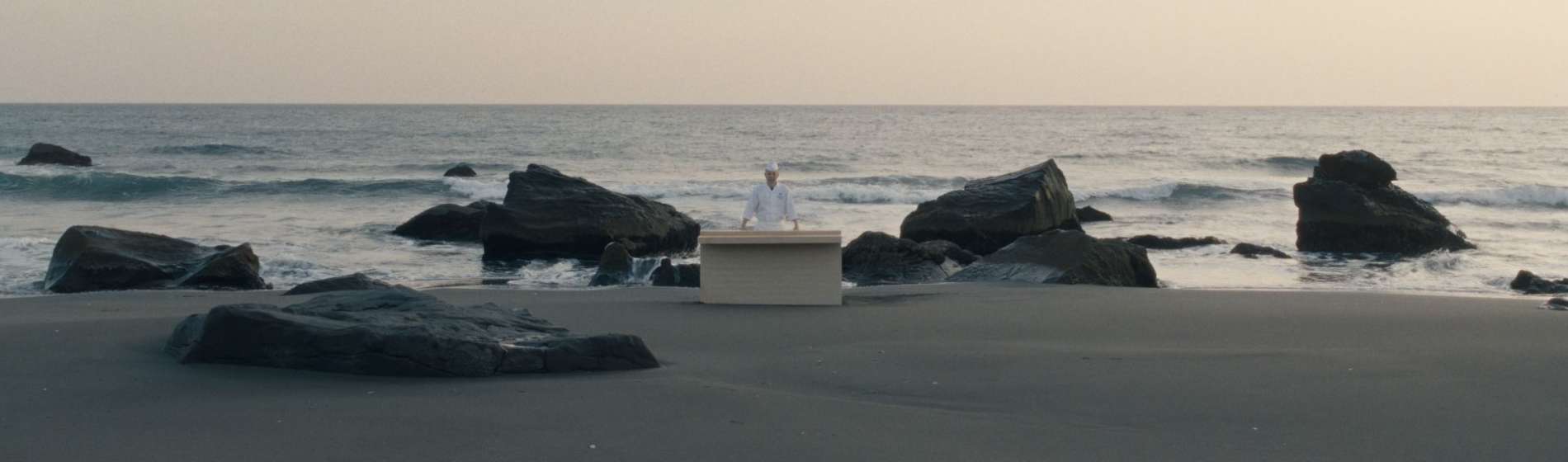
The TIFF documentary Still Single , directed by Jamal Burger and Jukan Tateisi, explores Chef Saito’s life in and out of the kitchen. The film celebrates his culinary achievements while sharing an unprecedented peek at his sometimes unpredictable and chaotic life outside of the kitchen in Toronto and in Japan.
That Shelf ’s Rachel West discussed the film with Chef Saito and Jamal Burger ahead of the film’s world premiere at TIFF.
Rachel West (RW): Congratulations on the film. How does it feel to have it premiering at TIFF?
Jamal Burger (JB): Having the film have its world premiere at TIFF feels surreal. Just being born and raised in Toronto and knowing that the world is coming to Toronto for this film festival means so much to me.
RW: The film’s title is Still Single , and it’s a reference to your personal life. Do you feel you’ve had to make a lot of sacrifices in your personal life to get where you are today?
Masaki Saito (MS): I didn’t feel the sacrifice. But the right answer is time and money and also relationship with friends, sleep. Like, I want to go party, but I have no time. I need to go to work. I need to wake up every morning, so I need to sleep as soon as possible. This point is, it is my sacrifice, but I didn’t feel it because I wanted it.
JB: What I do hope maybe the film can elicit and inspire people to think about is, what does it take to be the best? What sacrifices may be required to achieve a certain level? This is an example of sacrifice on various levels. These are spaces people can enter by watching the film, but at the end of the day, I do hope that they have their own journey with it, and maybe they find something that I didn’t even think about and can learn from them as well.
RW: You make a connection between food and emotion. Why is that so meaningful to you?
MS: Very difficult question and very, very important. What do you feel when you eat my sushi? And then what do you feel when you see me, [like my] movement. My job is like a conductor. What do you feel? What do you think? If you’re sad. If you are happy. [It’s] mental feeding with what you eat: Very important connections. It’s only a human [trait to make emotional connections with food]. Of course, a dog can eat, a lion, a tiger can eat, but when I’m happy, I want to eat.
RW: Is your persona, your personality, different behind closed doors, away from the kitchen?
MS: Big difference.
RW: Where do you most feel like yourself?
MS: In the kitchen. The monster [is] outside the kitchen. [I’m a] happy, but lonely man. I am always thinking, “Hurry, hurry, hurry, hurry!” This is the monster. I wear the chef suit in the kitchen, working is intense but after I finish, I pick a different, more unique character.
RW: Jamal, what was it like for you to get this kind of access to Chef Saito and his kitchen?
JB: It’s not something that we get to see or be a part of every day. That was my baseline going into it – I want to step into your space. It’s not going to be the most comfortable thing having me here with cameras in your small kitchen that’s built for cooking, not for cooking and filming. I’m going to be invading your privacy a bit, you know?
Having that opportunity to be in close proximity to Saito for over two years and to become his friend and to work closely with him was really special. I think it was extremely insightful because I got to experience a mindset associated [with] craftsmanship. Every day I was with him, seeing how he went about his days, seeing how he worked in the kitchen, seeing how he communicated, seeing his final result of all the hard work. It’s a really immersive experience of what goes into having the only two-star Michelin restaurant in [Toronto].
RW: Chef, what was the hardest part about letting the cameras into your life outside of the kitchen?
MS: Outside the kitchen was very, very stressful. First time in my life: Wake up. Camera. I go to my hometown. Camera. No free time. How can I get a girlfriend? So I stay single because of the camera.
JB: I earned his trust basically by saying, “Hey, before I even filmed this, before you even start filming, I want to get to know you.: Six months before we started filming, I did a three-week trip with him to Japan, and I met his parents. I mean, hindsight [being] 20/20, I would have had the camera, but I had a bunch of fun nights out with him and his friend Yasu. I really got to know him. I went to his small town of 30,000 people, and he was like, “See Jamal? You see how small it is here? You see how little there is here. This is why I left.” It was cool to get to have that moment with him before the camera was up because he and I both got to see the human in each other before we actually pressed play on anything.
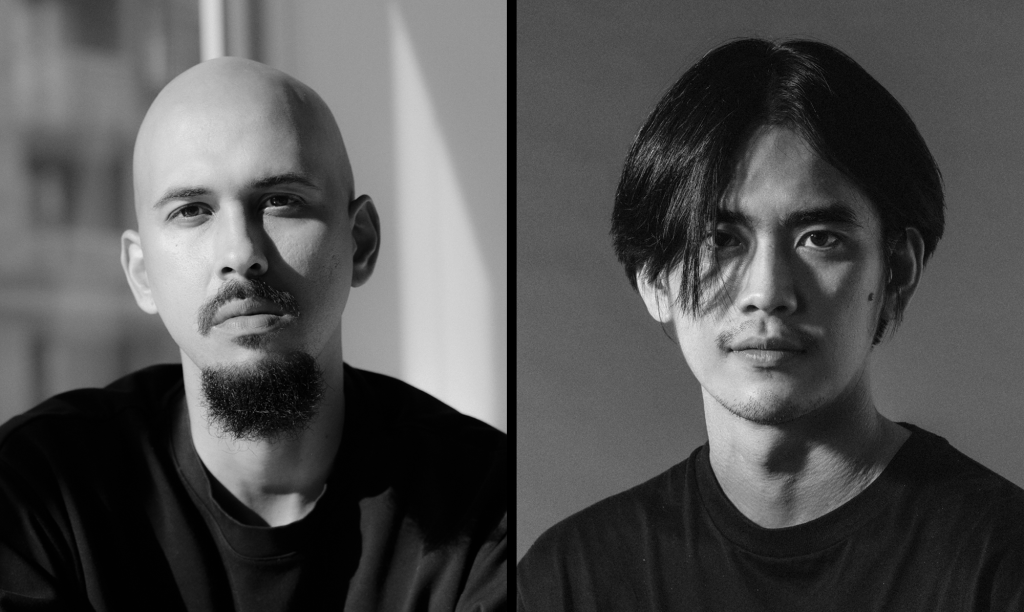
RW: You also have a co-director on this. What was it like collaborating with him?
JB: Honestly, the term artist for Jukan [Tateisi], in my mind, is an understatement. He’s creative on all levels – the way he thinks, the way he processes information. His participation, his collaboration with me from the ideation phase before we even started, all the way to the finished product and all the interviews in between, he was the most sensitive, respectful, collaborative person I could have ever asked to have on my team to bring this to life. Together, we found a sweet spot between our perspectives to arrive at this unified vision.
RW: Is it important for you to have your work recognized by Michelin, by other chefs, by your diners?
MS: Yes, I think so. If I get a Michelin star, I also get customers. This is very important for me and for my restaurant. Also for Canada. A lot of people are watching me to ask, “What is Saito doing right now?” We opened the restaurant, and they are watching me because there was nothing in Toronto, nothing in Canada. Very important for my employees also.
RW: Still Single is going to make people hungry when they’re watching. What is your ideal snack while you’re watching a movie?
MS: Of course, sushi. But also popcorn. It’s important to eat together, to share. At a party, it’s sushi.
JB: The answer has always been popcorn.
RW: Do you have a favourite movie?
MS: Titanic . I’m singing karaoke in the movie, “My Heart Will Go On.” I can play it on piano.
JB: That’s why we sing “My Heart Will Go On” because he just loves it so much. Well, one of my favourite Japanese movies is After Life by Hirokazu Koreeda. I also really enjoyed Nobody Knows by him. I love Close Up by Abbas Kiarostami and Taste of Cherry . And I like Camera Buff by Krzysztof Kieslowski.
RW: Besides directing Jamal, you also have a non-profit, Kickback . Would you like to share with our readers about that and talk a little bit about what keeps you motivated to give back to the community in that way.
JB: I’m a kid deep down in my heart. I sent an email to somebody when I was younger because I couldn’t afford a camera. I said, ‘If you buy me a camera, I’ll work for a year for free.’ He responded to my email, and he said, ‘Yeah.’ His only thing was, when you can give back, give back. I had a couple of good years as a photographer, and I wanted to give back. The first way I knew how to give back was by giving back sneakers, so that’s where the term Kickback came from.
Today, it’s evolved into this space and community where we’re really passionate about helping youth step into their potential. It’s clear that in different spaces there’s an unequal distribution of opportunity. I feel like I’m one of those people who got lucky, because if the person didn’t buy me a camera when I was a kid, I don’t know if I’d be here today. Maybe I’d be doing something else. I’m super passionate and motivated to try to help see the kids in the city who are most creative, most capable, and access some of the opportunities that really are a bit out of their control. If we can cultivate new opportunities and new networks by bringing people that are like-minded and like-spirited and share the belief of wanting to help their family and just do better, why not, you know?
We’re almost ten years old now. This film taught me a lot about having an organization while making movies. I’m excited to have that organization run itself as I step further into being fully focused on film. It’s it’s been a journey. It’s been a huge, incredible blessing to be able to make this film and still have an organization that’s doing a lot for the community.
Still Single premieres at TIFF on September 5, with additional screenings on Sept. 6 and 13.
There will be a sushi pop on Festival Street Sept. 5.
TIFF runs September 4 through 14, 2025. Follow along for all our coverage from the festival HERE .
Interview has been edited for length and clarity.