

Get ready for the biggest gag of awards season: the Oscar-nominated live action shorts are actually good! Yes, after serving cinematic broccoli and sadistic hell for many years running, the live action shorts learn to lighten up a bit. They still have substance, though, and serve a diverse offering that makes for a five-course delight!
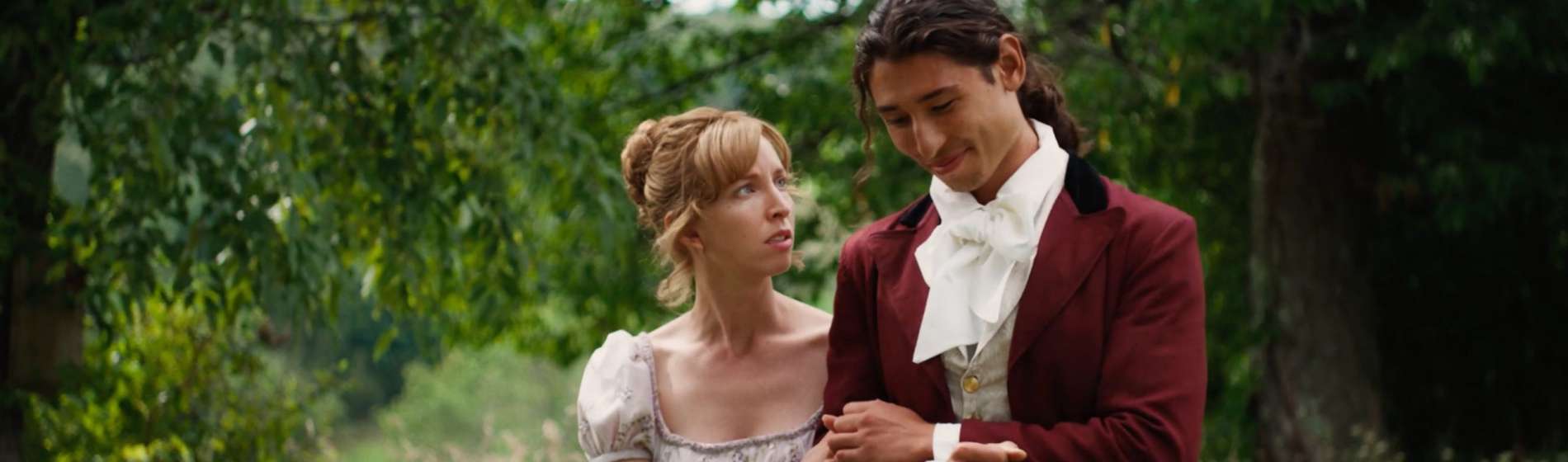
For example, the quintet features one of the funniest nominees in recent memory with Jane Austen’s Period Drama. This spot-on spoof of the Romantic author, whose books like Pride and Prejudice and Mansfield Park inspire one swoon-worthy adaptation after another, captures the spirit of Austen’s classist foibles with contemporary feminist sensibility.
Writers and directors Steve Pinder and Julia Aks go for broke and hit a home run with this lark that stars Aks as Estrogenia, or “Essy” for short, a comely maiden who almost receives a marriage proposal from her very hot suitor, Mr. Dickley (Ta’imua). But just as Mr. Dickley gets down on one knee and positions his eyes properly at crotch-level, he sees Essy’s virginal white dress dripping with”¦blood. Thus ensues a riotous comedy of manners as Essy and her sisters Labinia and Vagianna debate the propriety of explaining to a man how a lady’s bits work.
Every member of the cast commits to the joke perfectly. They dish about bloody alternatives and menstrual diarrhea with poise and grace. Jane Austen’s Period Comedy uses the manners of one era to critique social norms of another as contemporary men remain just as clueless as Mr. Dickley when it comes to women’s health. The film reflects a genuine appreciation for Austen’s sense and sensibility while ushering in contemporary voices informed by her work. Short and sweet and riotously funny, this nominee delivers satire at its finest. It’s a delight.
So too is A Friend of Dorothy , which features an outstanding performance by the great Miriam Margolyes that ranks among her best. She stars alongside newcomer Alistair Nwachukwu in this unlikely buddy comedy. JJ stops by Dorothy’s house after he accidentally kicks his soccer ball into her garden. However, as he helps her open a can of prunes in return and his eyes gaze upon her bountiful collection of plays and erotic art, these two strangers from different generations and walks of life instantly recognize each other as kindred spirits. Their conversations delicately straddle coded language and queer references as the elder imparts her wisdom to the younger, inquisitive chap.
Writer/director Lee Knight beautifully unfolds this story of intergenerational wisdom and friendship with respect and care. He smartly lets the strength of the two leads carry the film. Margolyes and Nwachukwu have magnetic chemistry, too, with the latter making a strong impression with what one hopes is a career that matches Margolyes’ longevity. Dorothy and JJ forge a bond that’s instantly believable and relatable, and their connection situates the film within larger conversations about family, neglect for the elderly, social determinism, and the different values instilled within a person depending on the degree of privilege life affords them. It’s a warm and wonderful film—and honestly, better than several of the Best Picture nominees.
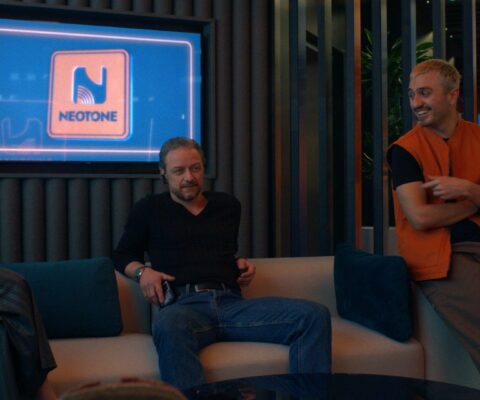
The shorts inevitably feature one total oddball, however, and that’s Two People Exchanging Saliva. The film has a huge roster of talent pushing it, including executive producers Julianne Moore and Isabelle Huppert, along with star Zar Amir Ebrahimi ( Holy Spider ) and narrator Vicky Krieps ( Corsage ), but it’s honestly hard to discern why. This one just seems weird for the sake of being weird.
The film directed by Natalie Musteata and Alexandre Singh imagines a dystopian setting where kissing is prohibited. People eat onions, chew garlic flavoured gum, and force breath-checks upon security guards. Brushing one’s teeth is a no-no too, and the local currency is slaps to the face instead of dollars. That’s all a fun bit of world building as a shopgirl Malaise (Luà na Bajrami) takes the interest of bored patron Angine (Amir), but the novelty wears thin. The transactional exchanges invite commentary about the capitalist impulses of society that favour material things over human connection, but it’s all too weird and alienating to coalesce. However, this year’s misfire still stands above many recent nominees in the category.
Alternatively, The Singers proves that a simple premise yields wondrous rewards. This smart film by Sam A. Davis invites viewers into a dank tavern where the bartender places a novel bet to his patrons. He promises a free beer and a $100 bill to the best singer in the pub. The wager serves to lift the spirits of the men, who mostly want to drink away their troubles, and it buoys them, connects them, and inspires them to see their fellow barflies anew.
As each man at the bar croons a tune, the patrons surprise each other as they reveal their hidden talents. The Singers, like Jane Austen’s Period Drama , delivers another strong ensemble piece too. Each man in the bar gets a moment to shine with introspective moments that evoke the backstories that drive the lonely hearts to drink, and hidden talents that spark curiosity about their backstories. The remarkable voices invite one to wonder about all the untold stories among the people with whom we share our spaces.
Finally, there are three strategies to predicting the winner among the Oscar-nominated live action shorts. More often than not, betting on the worst film usually notches a point in the Oscar pool, so Two People Exchanging Saliva might be the smart wager. Secondly, one can go for the film that feels the most “timely,” as with last year’s winner, the AI satire I Am Not a Robot. Alternatively, one friend with the best track record in this category usually just ticks the first box on the list assuming that voters do the same. Both of these strategies may pay off for Butcher’s Stain , the alphabetically favoured film about Gaza-Israeli relations.
It’s not the strongest film among the nominees, but nevertheless a compelling, if somewhat heavy-handed, story about prejudice. A Palestinian butcher, Samir (Omar Sameer), in an Israeli grocery store finds his job threatened when his supervisor tells him that an employee reportedly saw him tear down posters of the hostages in the break room. There’s a fair parable here as writer/director Meyer Levinson-Blount explores how people with different backgrounds and ideologies find neutral ground in a polarised landscape, but the film might be more effective if anyone else in the film had the depth of character that Samir does. Each of his Israeli colleagues is a one-note bigot as Samir experiences unfair prejudice in his workplace. A genuinely surprising plot twist, however, makes for a dramatically satisfying morale as Samir opts not to escalate the fight. Political votes might be swayed by his strength of spirit.