


Kids’ movies in the ‘80s felt like open invitations to trauma. Don’t get me wrong, I love The NeverEnding Story, The Transformers: The Movie, and E.T. — but they hail from an era when family films didn’t always treat their target audience with kid gloves. That generation of films was loaded with intense scares, heart-wrenching deaths, and emotional stakes that scarred audiences.
I bring this up because writer-director Seth Worley’s fantasy adventure Sketch is the modern successor to the ‘80s family films by directors like Joe Dante and Chris Columbus. Worley skillfully balances whimsy and heartache to create a smart and entertaining movie in the spirit of Gremlins and Honey, I Shrunk the Kids.
A dark cloud has hung over the Wyatt household after the family’s matriarch passed away. For Taylor (Tony Hale), losing his wife hurts so much that he avoids talking about it. He’s retreated inward, leaving his son Jack (Kue Lawrence) and daughter Amber (Bianca Belle) each sorting through their grief on their own.
Jack buries his feelings, like his dad, while Amber turns to a creative outlet. She starts sketching pictures in a notebook, scribbling down images of fantastic beasts tormenting Bowman (Kalon Cox), the boy who’s been bothering her.
When the sketchbook accidentally falls into a magical pond, Amber’s monstrous drawings come to life. Soon, nests of one-eyed spiders and other creepy critters show up around town, terrorizing the residents. Amber, Jack, and Bowman must work together to avoid harm while figuring out how to send the monsters back where they came from.
Sketch looks and feels like the whimsical Amblin-era family films that are now pop culture staples. It nails the formula: a sun-kissed suburban setting, a whimsical score, and emotionally wounded kids thrust into extraordinary circumstances. Worley recreates the nostalgic charms of films like Explorers while telling a story that feels of the current moment.
Belle, Lawrence, and Cox each get their moments to shine as the film’s leads. Belle and Lawrence adeptly handle the film’s weightier scenes, believably conveying all of Amber and Jack’s emotional complexities. And Cox repeatedly steals scenes as the crew’s wisecracking third wheel.
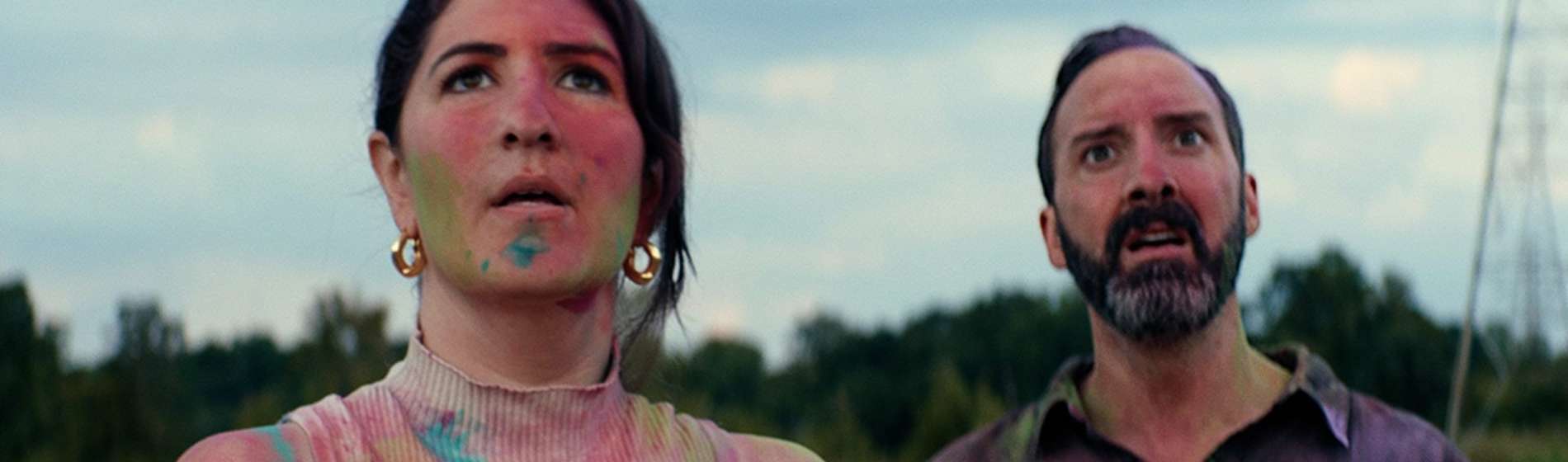
I enjoyed seeing Hale play the most grounded character in such an absurd movie. He excels at playing oddballs and buffoons, but he’s solid here as a beleaguered father who’s in it way over his head. He brings equal measures of love and sadness to the role, acting as the family’s emotional anchor. D’Arcy Carden also stands out as Taylor’s sister Liz. She’s the voice of reason in Tony’s life, telling him the truths he’s not ready to hear, while also delivering some of the film’s funniest lines.
Sketch’s visual effects department deserves plenty of praise. The film is loaded with playful creature designs that look like someone peeled them right off the pages of a child’s sketchbook. They’re stylish, surreal, and often unnerving. Most sketchbook creatures have a cutesy Muppet-quality, but a few of the creepier monsters will haunt younger viewers’ nightmares.
Sketch doesn’t have the sharp edges ‘80s kids’ films are famous for, but it doesn’t feel like the sanitized fluff we often see today. A good comparison is the scene in The Rise of Skywalker where fan favourite character Chewbacca seems to die when his ship explodes. It’s a shocking moment that the film immediately walks back, revealing he was on a different ship. This moment sums up how modern films often present the illusion of stakes instead of actually following through. In contrast, ’80s films would have killed off a beloved character like Chewbacca and let audiences live with the consequences.
In Sketch, grief is the engine driving the story. Heartache informs the characters’ wants and needs and the film never attempts to sweep their discomfort under the rug. Every meaningful choice they make centres on confronting pain they find too much to bear. By forcing characters (and the audience) to live with genuine discomfort, the film’s emotionally charged conclusion becomes all the more cathartic.
Despite its solemn themes, Sketch is delightful from start to finish. Worley has crafted a love letter to Amblin-era cinema, an adventure full of danger, excitement, and eye-popping special effects. But what most stands out is the film’s message about making space for our grief. Sketch shows us how through enduring heartache, we emerge as stronger, wiser, and more compassionate versions of ourselves.