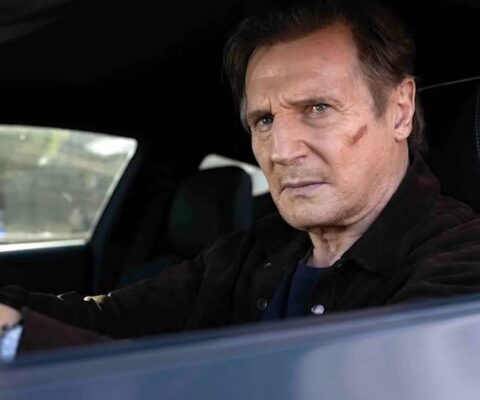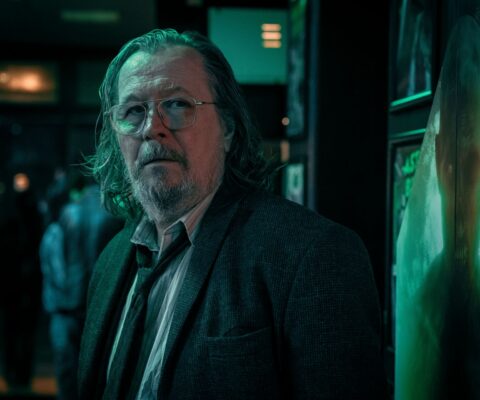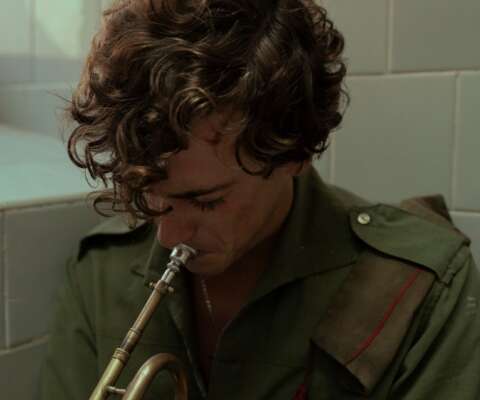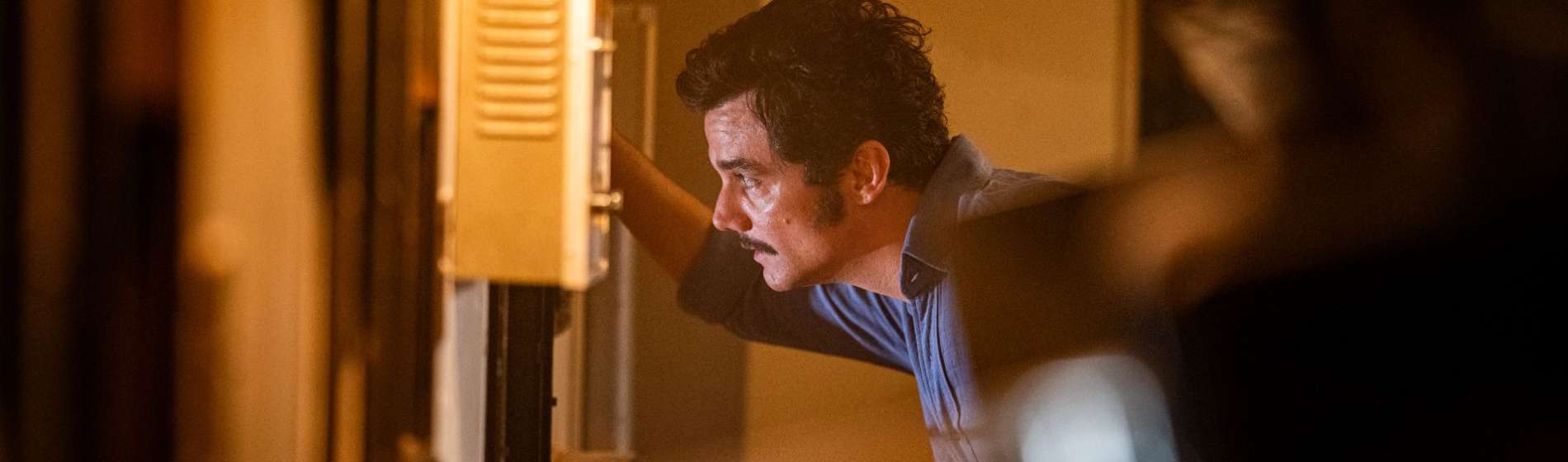


Strutting into theatres this weekend, The Secret Agent delivers an electrifyingly original big screen experience. It’s a cinephile’s playground as writer/director Kleber Mendonça Filho ( Bacurau ) transports audiences back to his hometown of Recife, Brazil, in February 1977. The chill of the dictatorship hangs in the air as suave bureaucrat Marcel (Wagner Moura) rolls into town with the air of a man of mystery. The Secret Agent unfolds as an unconventional spy flick as Marcel’s past catches up with him with some baddies on his tail. And when a dead shark turns up at a morgue with a human leg, but no corpse to accompany it, things get about as weird as MacunaÃma .
Mendonça Filho playfully roots Marcel’s odyssey through the red tape of the dictatorship in cinematic references. Marcel wades through stacks and stacks of paper with hopes of reclaiming his mother’s identity, and his search leads him on a journey better suited to James Bond than a paper pusher. But as the ultraviolent and super stylish tale with bountiful chest hair and killer legs intersects with Hollywood lore and nuggets of Cinema Novo, The Secret Agent frequently brings its hero back to the cinemas of Recife. These beautiful old movie houses host pictures of ghosts as the past haunts the present and fellow Brazilians seek guidance on how to emerge from the violent years of the dictatorship.
The film, which earned Mendonça Filho and Moura prizes at Cannes for Best Director and Best Actor, respectively, is appropriately getting laurels as a film buff’s favourite of 2025. It’s a frontrunner in several races for this year’s Oscars, including Best International Feature where it competes as Brazil’s official submission with hopes to repeat the upset win pulled by I’m Still Here last year. It’s a maverick ode to movies that’s deeply rooted in the cultural history housed within any cinema’s walls.
That Shelf spoke with Kleber Mendonça Filho and Wagner Moura earlier this year at the Toronto International Film Festival where The Secret Agent had its Canadian premiere.
I really like this film as a companion to your documentary Pictures of Ghosts , an essay film about old cinemas in Recife, with your use of movie theatres as scenes for the action. What has inspired you throughout your films to explore the spaces of movie theatres in Recife?
Kleber Mendonça Filho ( KMF): I’m fascinated by movie theatres. I’ve been photographing them since I was a teenager, really. When I finished journalism school, two projects that I did were about movie theatres. So it’s a constant theme in my life. I became a film critic and a journalist and a filmmaker, and it’s a recurring theme. I think Secret Agent is a film that would not exist without the seven or eight years I dedicated to making and finding material to develop Pictures of Ghosts , which is my previous film. They’re very different films. One is an essay, a documentary. The other is a classic narrative fiction, but they fed on each other, which I think is a beautiful thing.
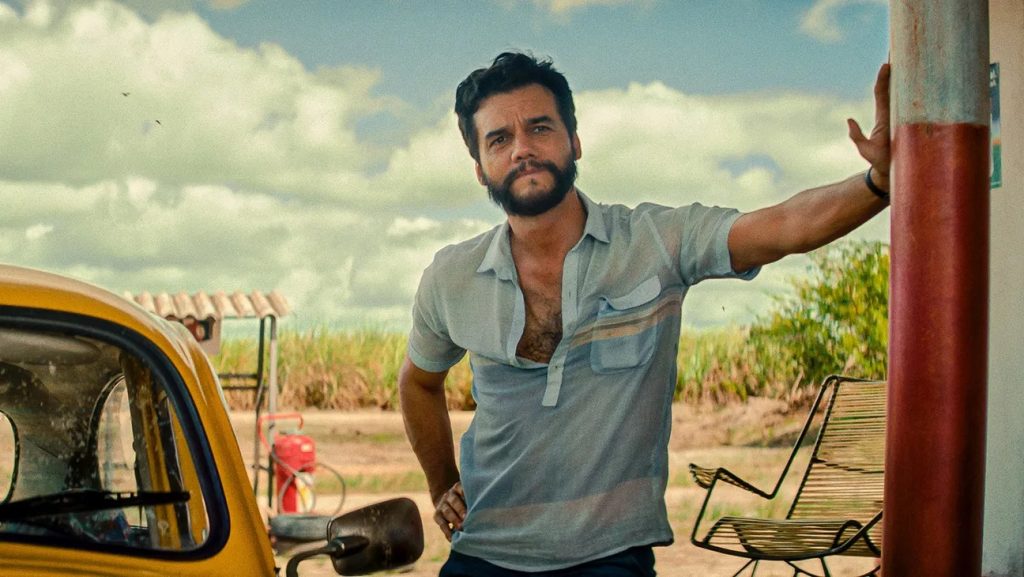
Wagner, how do the environments in which you’re doing a shoot, like the theatres and the spaces in the feed your character and your performance?
Wagner Moura (WM): We were back in the seventies, which was a time in the Brazilian history that I had explored with a film that I directed called Marighella . It was a film that took place during the dictatorship, so I was already very well aware of that. But personally, honestly, I went back to pictures of my parents and my father used to have a shirt just like that, like his with buttons undone up to here [he mimics his character’s revealing button-job] and where he used to put his pack of cigarettes on his left pocket and all that. But cinemas, I think they’re beautiful and it’s a shame that many movie theatres in Brazil became other things like became churches or—
KMF: Supermarkets.
WM: Supermarkets, restaurants and things like that,
KMF: Pharmacies.
WG: I’m fascinated by his previous film Pictures of Ghosts. It’s a beautiful film.
KMF: There’s an interesting connection: his own film, Marighella , has an important scene where the main character is found. And he’s in a cinema.
WM: That’s right. He gets arrested in a movie theatres.
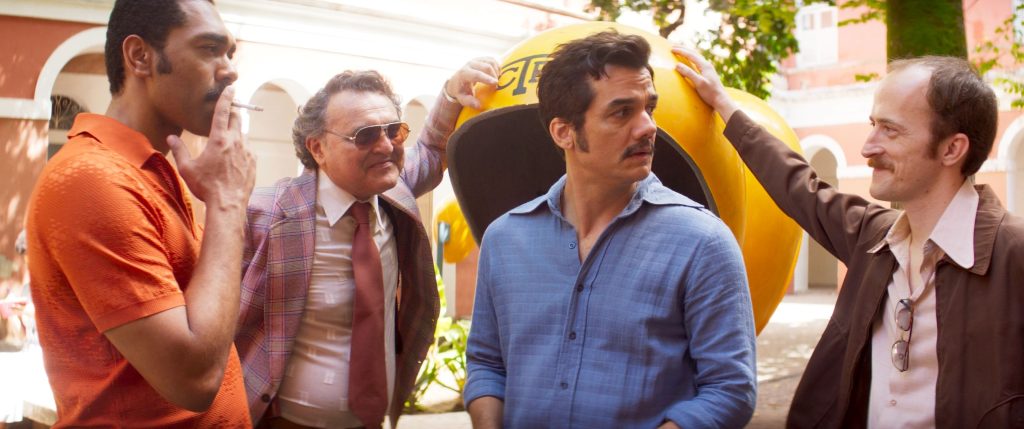
There’s so much to play with in The Secret Agent in terms of film references. I think audiences in Toronto would definitely recognize Jaws or James Bond, but what are maybe some of the Brazilian classics or other Easter eggs that audiences should look for?
KMF: In any film, even if it’s a contemporary film, the presence of popular culture, the things that we consume, the things that we buy and listen to and the books we read and films we see, they’re always interesting elements in narrative. But in a film that takes place in 1977, for me, it’s fascinating to have some cultural milestones from that time. For example, I found out while doing research with very old newspapers that in February, 1977, which is precisely when the film takes place, São Luiz Cinema was screening The Omen , Richard Donner’s horror classic. So that’s a film I quite like and it has an amazing sequence with the tricycle, and I wanted to put that in the film. Jaws , of course, was an amazing cultural milestone in the world in the seventies, and that had to be in the film. On top of it, Recife is a coastal city, which actually has a problem with sharks. So these are things that, when you add them together, they make complete sense and I hope they feel organic.
WM: You also mentioned Héctor Babenco’s Lúcio Flávio , right, as a reference?
KMF: Lúcio Flávio is a classic Brazilian film from 1977, so that is a very strong reference also for this film. It was seen by 6 million people at the time in cinemas. So it’s very natural for me to bring these elements when I’m making a film.
Earlier this year, Fernanda Torres won the Golden Globe, I’m Still Here won the Oscar, you both won at Cannes. Is Brazil having a new moment in cinema?
KMF: Brazil has very strong film production, but we are going through a really interesting moment when that film production is getting prestige. Walter Salles’ I’m Still Here did very well last year. Not only in Brazil, but internationally. And now The Secret Agent is. I mean, we’re travelling the world with this film and I usually go where the film takes me. I’m very curious to see where it’s taking me. And Wagner, of course, we’re together in this.
WM: We are. The Brazilian film production also is connected to the political moment that Brazil is going through right now. We went through a very bad moment back from 2018 to 2022. And I think that the moment that we are going through, Brazil is actually becoming a template of democracy in the world right now. It of course reflects and any country that is a plain democracy likes culture, likes films, likes cinema, and the opposite’s the truth.
KMF: We’re not afraid of culture. Only fascists are afraid of culture.
And sharks!
KMF: And sharks.
The Secret Agent is now playing in select theatres.