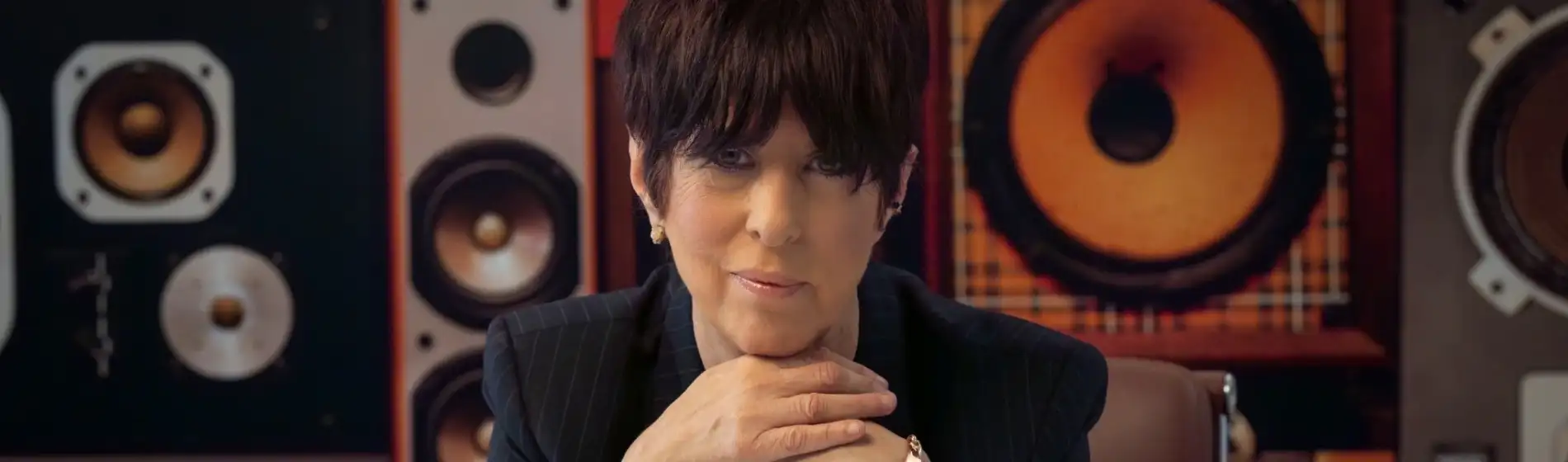



The Oscars have come and gone and, despite the fact that she’s made it very clear to voters that she really wants to win, Diane Warren lost the Best Original Song for the eighth year in a row (and the seventeeth time overall). Yes, she got an Honorary Award a few years ago, but we all know it’s not the same (there’s a reason some people’s EGOTs have asterisks on them).
Warren’s first nomination was in 1988, for as unlikely an Oscar candidate as Mannequin, and despite a number of enjoyable ballads over the years the prize has still managed to elude her. In more recent years, it seems like the music department is purposely negging her, nominating her for movies that, when the nominations are released, some of us have never even heard of. (And do I regret watching the movie about flaming hot Cheetos to complete an Oscar Death Race? Yes)
This year’s documentary, Diane Warren: Relentless, for which she received her most recent unsuccessful nomination, revealed that winning is of utmost importance to Warren and that, when it doesn’t happen, it causes quite an unhappy night in her household, where friends and staff are gathered around the screen and spend the rest of the night deflated. Looking back over the years, one wonders about the wisdom of denying her the prize: sure, no one expected anyone to beat the song from Titanic, but the songs from Tarzan and Monsters Inc. weren’t exactly shoe-ins and maybe there were times they could have thrown an Oscar her way?
Do we even know why we still have this category? I’m not sorry about it, it’s great to find ways to get the likes of Björk and Annie Lennox into Oscar contention, but it’s a category that is as removed from measuring the quality of the overall film as they get. Music came to the movies a few years after sound did, and categories for Song and Score were added in 1934, to acknowledge the work being done in the studio system’s thriving output of musicals, which no longer exists. Today, the options for this category are usually songs that play over end credits and can’t always be attributed with having made a notable contribution to the film itself, though of course there are plenty of exceptions. There are a number of choices that have also made the voting body seem tone deaf, and for my money, these are the ten worst examples.
10. “Whatever Will Be, Will Be (Que Sera, Sera)”
by Jay Livingston and Ray Evans
from The Man Who Knew Too Much (Alfred Hitchcock, 1956)
Yes, I know it’s one of the most beloved songs in history and your grandmothers all sang it to you when you were picking your career in kindergarten, but it’s also an earworm that–please, can we be honest?–is a strange choice for a Hitchcock thriller. Perhaps there’s an irony in having Doris Day sing it while terrified for her son’s life, but this many years later it feels like a jarring counterpoint to the action and something plugged in to the film as a way to sell it. The film itself is a lesser effort nestled in a very fertile period for the Master of Suspense, a remake of his 1934 thriller of the same name that opens up the action to more exotic places but isn’t as shrewd as the original film. James Stewart and Day are a couple travelling through North Africa whose dream vacation becomes a nightmare when their son is kidnapped, which they learn is connected to Stewart’s having unwittingly learned of an assassination plot after helping a man who was stabbed in front of him in a Marrakesh market. Back in London, the couple work with the police to foil the murder plot and get their son back in one piece, which necessitates, in what might be the campiest moment in Hitchcock’s oeuvre, Day’s singing this song to help locate him.
DID IT WIN OVER DIANE? This movie came out the year Diane was born, actually, but it did beat a couple of lovely tunes including the beautiful duet “True Love” from High Society, and the title track from Douglas Sirk’s Written on the Wind.
9. “Zip-A-Dee-Doo-Dah”
by Allie Wrubel; Ray Gilbert
from Song of the South (Wilfred Jackson, Harve Foster, 1946)
Made during a time when simplistic renderings of the Good Ole’ South were made to take advantage of the market south of the Mason-Dixon line which, with its higher rates of unemployment than the northern states, made for busier movie theatres, this film also bears the presence of the sugary sweet tune that was later associated with commercials for Disney theme parks and cruise lines before the Mouse House decided to bury it and this film in its vault and avoid admitting it as part of their legacy (it’s not streaming on Disney Plus and is hard to find via legitimate means). The film itself stars Bobby Driscoll, who became a child star and later established the unfortunate stereotype of former child stars with his death at the age of 31, as a boy who is brought to his grandmother’s plantation and, distraught over his father’s having left his mother behind while they work out their marital differences, attempts to run away. He is interrupted in his escape by the loveable Uncle Remus (James Baskett, his Special Oscar a whole other chapter in problematic histories), who tells him stories of Brer Rabbit that mirror the child’s own conundrum and moves the film into animated sequences, which unfortunately aren’t that much more entertaining than the dull live-action scenes. Inspired by Joel Chandler Harris’s stories (which he took from traditional Gullah tales).
DID IT WIN OVER DIANE? Of course not, but it did beat Frank Loesser’s beautiful “I Wish I Didn’t Love You So” from The Perils of Pauline.
8. “(I’m Gonna) Love Me Again”
Music by Elton John; Lyric by Bernie Taupin
from Rocketman (Dexter Fletcher, 2019)
I loved Fletcher’s musical biopic a hell of a lot more than Bohemian Rhapsody the previous fall, particularly its making Elton John’s life into an actual musical in which the songs are performed as emotional expressions of the subject’s coming of age rather than the more typical jukebox pastiche, in which the songs are sung diegetically. After a film full of Elton and Bernie’s classic hits, however, it doesn’t exactly bode well for good times ahead when the end credits are accompanied by a jaunty and enjoyable but wholly familiar tune that sounds pretty much the same as most of what the duo had written in the past, and it seemed a bit silly that the Academy decided to reward them (in Elton’s case, for the second time) with an Oscar for it. The film itself is highly recommended, Taron Egerton is wonderful in the lead and impressively sings and dances up a storm, never less than endearing as a man whose need for love allows him to get easily lost in indulgence, and who comes across as much more amicable than the real guy ever did.
DID IT WIN OVER DIANE? Yes, and it is one of the times she was nominated for a movie no one heard of before the nominations, in this case a low-quality Christian drama called Breakthrough, in which Chrissie Metz prays her son back to health after he has a near-death experience falling through the ice. Warren’s song, “I’m Standing With You,” received a nice performance on the night of the ceremony but didn’t exactly break the mold of Warren’s power ballads. I liked Cynthia Erivo‘s song from Harriet more that year, but given that no one in this category truly needed it, they could have just given it to Diane and gotten it over with.
7. “City Of Stars”
Music by Justin Hurwitz; Lyric by Benj Pasek and Justin Paul
from La La Land (Damien Chazelle, 2016)
In their heyday in the thirties and forties, movie musicals were a genre that had stars like Astaire and Rogers doing up to ninety takes of one dance number, and the result was of such mechanical perfection that they made everyone think they could do it too. No offense to the hard work being done by stars Ryan Gosling and Emma Stone in this highly overrated tale of an aspiring jazz musician and struggling actress who fall in love and break up when they can’t get their calendars to align, but it’s obvious in their dance numbers that the industry that supported and churned out musicals no longer exists, as these are clearly people, talented and beautiful though they may be, who have learned these exact steps for this particular number and will forget them as soon as they’re done. It doesn’t help that Chazelle’s tribute to films of yesteryear, a musical that for some reason has elements of Rebel Without a Cause and How to Marry a Millionaire as tonal inspirations, is scored with a series of atonal songs from a musical team who usually do much better work (their songs in The Greatest Showman feel like they were originally written for a different film, but they’re also pretty). The Academy nominated two songs from this film, the other being an audition number that Jessica Chaffin rightly pointed out sounds like a warped version of “The Rainbow Connection,” while the winner feels like “Zip-A-Dee-Doo-Dah” is being played at the wrong speed.
DID IT WIN OVER DIANE? No, but Emma Stone won over Isabelle Huppert and we might never get over it. The song’s fellow nominees included an okay song from Moana, but the voters should have indulged themselves and gone with Justin Timberlake’s “Can’t Stop the Feeling” (from Trolls), which provided that year’s Oscar show with one of it’s best ever opening numbers.
6. “Things Have Changed”
Music and Lyric by Bob Dylan
from Wonder Boys (Curtis Hanson, 2000)
Dylan was touring on the night of the Oscar ceremony and performed his song via satellite, then when the envelope was opened accepted his award remotely as well. The audience couldn’t be more pleased, because who doesn’t want Bob Dylan to have an Oscar, but do you remember this song or how it goes? It’s hardly “I Shall Be Released,” and the only positive to this win is the fact that it gave an Oscar to one of my favourite films of the year, one that was woefully under-represented in the nominations at the 73rd Academy Awards. Michael Douglas gives his best performance since Wall Street as a college professor who has the weekend from hell fall in his lap when his married girlfriend (Frances McDormand) announces she’s pregnant, his troubled but gifted student (Tobey Maguire) asks for his help, and his agent (Robert Downey Jr.) descends upon him to pressure him about the book that he has been promising to deliver for almost a decade. Steve Kloves’ script, Dante Spinotti’s cinematography and Hanson’s direction are all top-tier.
DID IT WIN OVER DIANE? No, and it didn’t exactly rob anyone either. Randy Newman’s song from Meet the Parents sounds like every other song he wrote, I don’t remember how the song from Crouching Tiger, Hidden Dragon goes as much as I do Joan Rivers on the red carpet being amazed that the late singer Coco Lee could speak English, and Sting didn’t knock it out of the park with his sad ballad from, of all things, The Emperor’s New Groove. Björk, making history with a dress that is still being talked about twenty-five years later, could have been rewarded for “I’ve Seen It All” from Dancer in the Dark, but I’m not surprised to learn that she isn’t everyone’s cup of tea, nor was I shocked that of the three rock stars nominated this year, the voters went for the most vintage among them.
5. “We Belong Together”
Music and Lyric by Randy Newman
from Toy Story 3 (Lee Unkrich, 2010)
Before there was Diane Warren, there was Randy Newman, who was nominated fourteen times in twenty years, including losing three in one night (1999), before he finally got up on that stage, winning a Best Song Oscar for “If I Didn’t Have You” from Monsters, Inc. Pixar commissioned a tune from him for just about every movie they put out after his initial success with the first Toy Story, and nine years after his first Oscar, he won again and even he must have wondered why. All of Newman’s songs sound the same. I’m pretty sure all his songs for the Toy Story movies ARE the same, and it’s ridiculous that he has two consolation Oscars when Diane has none. The film itself was also one whose charms eluded me, receiving nominations for Best Picture and Screenplay for an entry that didn’t come close to the sheen of the two previous films. In this chapter, Andy has grown up and is ready to go to college, and his beloved toys are accidentally whisked away to a children’s day care centre as donations. Imagine Woody and Buzz’s terror when they discover that the giant pink Huggy Bear who lords over the toys in their new home is actually an insensitive tyrant who puts them in the room with unruly toddlers who torture them night after night. This one is neither a classic nor a dog, the themes of friendship and loyalty are as touching as ever, but it doesn’t have the same polish.
DID IT WIN OVER DIANE? No. Only four songs even rated a nomination that year, and all were about as forgettable as Newman’s: Alan Menken (for Tangled) already had enough Oscars, A.R. Rahman (for 127 Hours) had just won two years earlier, and no one knows what the song from Country Strong is (and after Gwyneth sang it on the show, off-key, we still didn’t).
4. “I Need To Wake Up”
Music and Lyric by Melissa Etheridge
from An Inconvenient Truth (Davis Guggenheim, 2006)
I begrudge Etheridge no happy events, she broke doors open at a time when people were far too easily shocked that a sensible middle-aged woman could be a lesbian, but this song didn’t get any less boring when she performed it at the Oscar ceremony. Like her award-winning tune, Guggenheim’s film is itself is also more valuable for its message than its style, a sobering look at the realities of global warming that avoids flashy techniques and instead puts across a linear, factual narrative that appeals directly to your intelligence (an element that, in the years since, we have learned is in short supply, particularly in regards to this issue). Al Gore’s skill as charismatic speaker is put to excellent use as Guggenheim films his worldwide lecture about the environment and the serious turn it has taken in the years since carbon dioxide emissions have reached their height, and human ignorance and greed have exacerbated the problem to no end.
DID IT WIN OVER DIANE? No. Three gorgeous songs from Dreamgirls, and we’re still in the era of Randy Newman being nominated for everything (in this case a song from Cars that I also don’t remember, but I can bust out Jennifer Hudson’s “Love You I Do” in my sleep, and frequently do).
3. “Writing’s on the Wall”
Music and Lyric by Jimmy Napes and Sam Smith
from Spectre (Sam Mendes, 2015)
James Bond theme songs were virtually ignored by the Academy for most of the franchise’s history, only three of them received any nominations before Adele won for Skyfall, but the voting body decided to make it a habit after that and gave the prize to the next two Daniel Craig adventures that followed. Smith’s theme song is up there with Chris Cornell’s for being among the least memorable Bond tunes ever written, a bland affair that has never come anywhere close to the attention given to the one that preceded or that which followed (Billie Eilish’s “No Time to Die”). The film itself is my least favourite of the Craig Bonds, a choppy adventure that never coalesces, in which Blofeld is brought back to the series (unimaginatively) and a few cool action sequences interrupt a series of quite boring conversations (where’s Javier Bardem to stroke a thigh when you need him). Mendes never fully works out where between sophisticated grittiness and ridiculous fantasy he wants to land but if, like me, you love a Bond movie even when it’s not great, you’ll still have a great time. Smith made something of a meme of themselves when their speech, in reference to a comment by Ian McKellen, mistakenly took credit for being the first openly gay man (as they identified themselves at the time) to win an Oscar, which the internet had a wonderful time lampooning in its clever, savage way.
DID IT WIN OVER DIANE? Yes, and given the weight placed on Lady Gaga’s performance of “Til It Happens To You” at the ceremony, which included a stage full of extras who all got a hug from Brie Larson, it seemed like her win was a distinct possibility this year. The problem is that the movie, The Hunting Ground, a very informative and absorbing documentary about sexual assault on college campuses, wasn’t known to most people until the nominations came out (and is better known now for the controversy over claims made against the filmmakers about its information). A lot of Warren’s ballads sound the same, I say with affection, but Gaga’s involvement in this one gives the tune a new twist that makes it one of Diane’s more interesting nominees (and while she remains still unrewarded in the competitive category, Gaga would go on to win the Best Song Oscar three years later). They truly could have given her this one.
2. “El Mal”
Music by Clément Ducol and Camille; Lyric by Clément Ducol, Camille and Jacques Audiard
from Emilia Pérez (Jacques Audiard, 2024)
The noise over this film’s disastrous Oscar campaign far overshadows discussion about the finished product: between star Karla Sofia Gascon‘s checkered Twitter past and its presentation of a flawed trans character (who I thought was cool, and I personally find the demand for purity in representation is cultish and flawed), it rarely occurred to anyone to point out that the film was also a musical whose songs were, for the most part, forgettable, and whose plot petered out to a rather bland outcome at the end. The Academy nominated two of the film’s songs and I liked the other one more, a more traditional pop tune performed Selena Gomez called “Mi Camino.” The winner, as performed by a truly excellent (if category-fraud-anointed) Zoe Saldaña, was as inscrutable as Audiard’s overall intentions with this very strange tale, of a Mexican cartel kingpin who finds that her achieving her goal of gender confirmation surgery doesn’t erase the darkness of her past. Then there was the acceptance speech by the song’s writers, in which singer/composer Camille decided to start warbling on stage long after names were read out and the orchestra had started playing them off, which made us realize that the Academy was purposely negging Diane Warren by having her attend ceremonies only to have such nonsense rubbed in her face.
DID IT WIN OVER DIANE? Yes, and while Tyler Perry’s The Six Triple Eight was another egregious, if well-intentioned, example of his making immature dramas out of worthy stories, Warren’s tune “The Journey” was one of the loveliest she’d composed in years and would well have deserved the prize. Once again, it’s likely that the voters’ desire to avoid rewarding the film itself kept it from earning votes.
1. “Talk To The Animals”
Music and Lyrics by Leslie Bricusse
from Doctor Dolittle (Richard Fleischer, 1967)
It’s not that bold a choice on my part, you can find plenty of articles bemoaning the fact that this song won an Oscar that also point out that, even on the night of the ceremony, there were sounds of audible disapproval as Bricusse walked up to the stage to accept his prize. Rex Harrison’s “talking in pitch” idea of singing, which he used to great effect in My Fair Lady, is wearing thin as a method of getting him through a role by this point, and the film itself, a famously overblown disaster whose magnificently troubled production history you can read about in Mark Harris’s fantastic book Pictures At A Revolution, has a kitsch appeal now, but at the time was derided, to say the least, by critics. The film’s two Oscars, plus an outrageous nomination for Best Picture, can only be attributed to the fact that big studios could win votes if they put out enough free food at lavish member screenings.
DID IT WIN OVER DIANE? No, but among the classics it beat are “The Bare Necessities” from The Jungle Book, the lovely “The Look Of Love” from Casino Royale (later resurrected by Austin Powers) and the title song from the even kitschier (but awesome) Thoroughly Modern Millie.
And just so you don’t think I’m all about the negative, here’s my 10 favourite Best Original Song winners:
10. “In the Cool, Cool, Cool of the Evening” from Here Comes the Groom — Music by Hoagy Carmichael; Lyrics by Johnny Mercer
9. “Let the River Run” from Working Girl — Music and Lyric by Carly Simon
8. “Never on Sunday” from Never on Sunday — Music and Lyrics by Manos Hadjidakis
7. “Last Dance” from Thank God It’s Friday — Music and Lyrics by Paul Jabara
6. “Moon River” from Breakfast at Tiffany’s — Music by Henry Mancini; Lyrics by Johnny Mercer
5. “Flashdance…What a Feeling” from Flashdance — Music by Giorgio Moroder; Lyric by Keith Forsey and Irene Cara
4. “Over the Rainbow” from The Wizard of Oz — Music by Harold Arlen; Lyrics by E. Y. Harburg
3. “The Way You Look Tonight” from Swing Time — Music by Jerome Kern; Lyrics by Dorothy Fields
2. “The Windmills of Your Mind” from The Thomas Crown Affair — Music by Michel Legrand; Lyrics by Alan Bergman and Marilyn Bergman