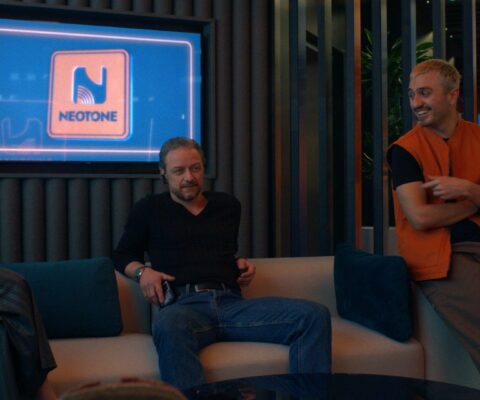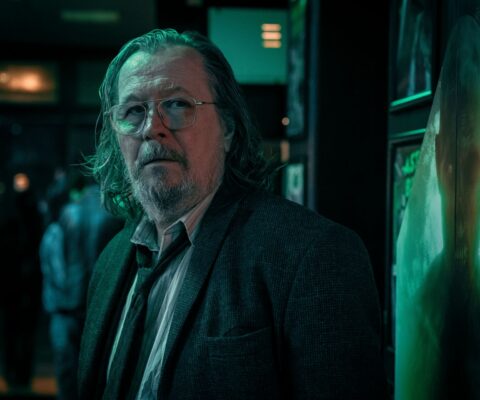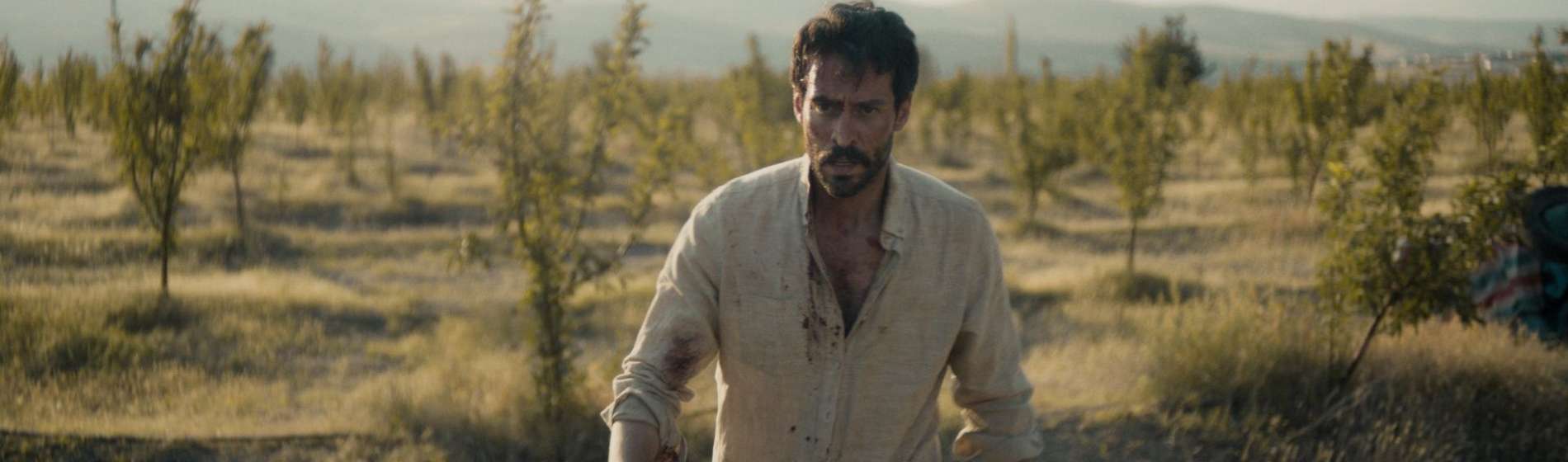


It’s difficult to discuss The Things You Kill without treading into spoiler territory. Sure, one could dance around plot points like an influencer plugging the new Marvel movie, yet this is a film that not only invites but demands healthy debate and active engagement.
So, when a major twist comes halfway and—spoiler alert—the film features the switcheroo of all switcheroos, writer/director Alireza Khatami pulls off a twist that proves as enthralling as it is disorienting. A viewer gets thrown for a loop when literature professor Ali (Ekin Koç) exits the picture and Reza (Erkan Kolçak Köstendil) a ruffian who helps him out as a hired hand, takes his place. The action continues as normal, but with the supporting player bumped up to the lead and our dashing anti-hero gone altogether.
The film asks what kind of society makes room for such violent men. The twist arrives shortly after not one but two acts of violence disrupt Ali’s family. The tremors of domestic violence ripple into his home as Ali commits a grievous crime of his own with hopes to break the cycle. Anchored by two riveting performances by the leads, The Things You Kill unfolds a shape-shifting puzzle.
Khatami, meanwhile, clearly wants audiences to work as they piece things together. It’s not a film where all the pieces fit together on a first watch. But it invites repeat viewings and still surprises as new details emerge and shift elements of the story.
The film’s challenging nature makes it a bold choice, too, as Canada’s submission in the Oscar race for Best International Feature. But also a curious one since it seemingly played everywhere in the world but Canada leading up to the Oscars. It’s too bad that audiences locally couldn’t champion the film, but it’s worth the wait. What follows is That Shelf ’s unfortunately delayed conversation with Khatami from the award season circuit.
Pat Mullen: I understand that you first tried to make The Things You Kill in Iran and you encountered censorship. Can you talk a bit more about why the issue of patricide would encounter censorship?
Alireza Khatami: The East follows the Abrahamic tradition, which is the killing of the son Ishmael, getting sacrificed. You don’t see the killing of the father. Patricide is not the tradition in that region. The figure of father is often very respected, very almost a holy figure.
Why not just make the film in Canada?
When I wrote the story, I wasn’t living in Canada. I’ve been in Canada for six years. We started the story eight years ago. Yeah. The story was shaped already and then I came here, it was COVID, which delayed my paperwork and everything to work out and to receive support. It was very late for us so I had already set up there [in Turkey].
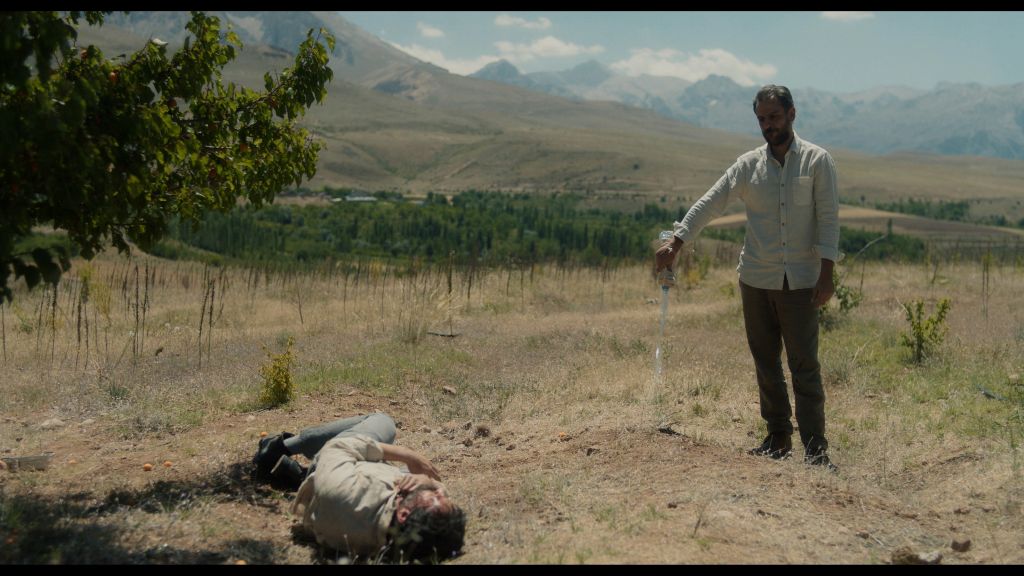
But the Turkish setting adds so much character to the film. How did that shape the story but also the formal choices you make?
That was part of the script. We wanted that kind of landscape and we went and looked everywhere to find that. So that was part of the imagination. We needed that and we found it and Turkey offered this amazing variety of locations, the style, et cetera. And also a great set of great ensemble actors.
What were you looking for when casting Ali and Reza? There were such good foils to one another, but they’re not doppelgangers, either.
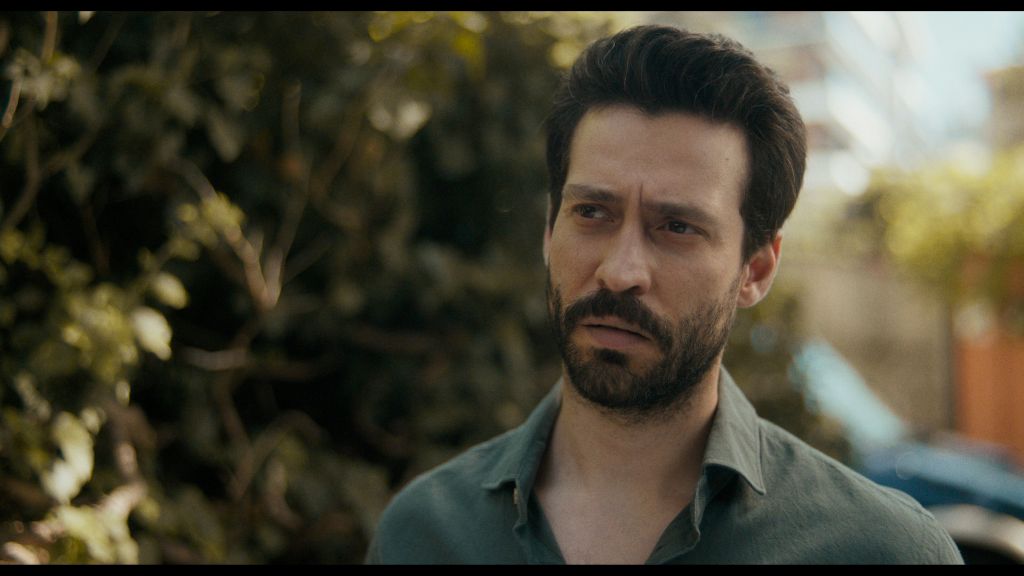
We wanted that parallel but we didn’t want them to look alike. I wanted them to look sharply distinct and also have a different way of performance. Ali in the film, the way Ekin Koç renders him, it’s very reserved. He doesn’t give much. It’s the art of restraint. On the other hand, Erkan Kolçak Köstendil who plays Reza is very generous in the way of expressing and giving things, but at the same time, they had to be on the same plane. It could not be completely far from each other. It had to be from the same nuance, in the style of performances of today in 2025. We wanted them to have a completely different style because we didn’t want the audience to even suspect there is a switch coming. We wanted them to be completely surprised to the point of disorientation.
It’s funny you said that. I first saw The Things You Kill during Sundance but it was on the online platform, so when the switch came, I was so thrown for a loop that I rewound the film. You can’t do that in a theatre!
That was part of it. Even in the script writing, when it came to that page, a lot of people call and say, “Hey, I think you’ve made a mistake at that page. Then I wrote a note that they did not read it wrong. I have to write it in the pitch. The way I designed it is that the first half of the film is a film you think you know because there’s the Brown filmmaker making a social realist drama: “I think I know that film.” I let them come in being invested in the film.
When you are so confident, I pull the rug and then two things happen. First, you’re completely disoriented: “What?” But you cannot leave because it’s too late now. You have to fight your way back into the film. Now the second half you want it, you could leave. You didn’t, you really worked your way back into the film. That creates a very interesting Brechtian distance: now you’re invested.
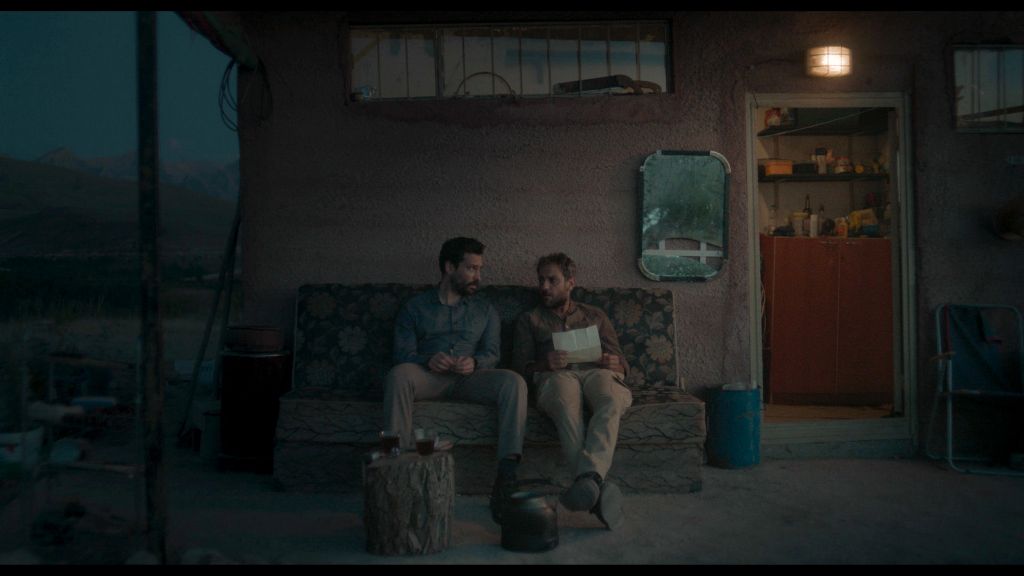
It makes you reevaluate everything you saw beforehand. What throws me off is that the wife doesn’t seem to notice that it’s a different man. Then I’m trying to think back and be like, “Were these guys ever in the same space at the same time with another person who acknowledged both of them?”
I really wanted a movie to be rewatched. I designed it in a way that you can watch it twice and three times or four times and still every time we discover something. I put a lot of buried treasures here and there for a rewatch. It took me eight years to make this film. I don’t want it to die in three watches. I want this film to remain alive in 20, 30 years. That’s a very important criteria for me.
It’s interesting seeing this compared to with your other features and the role of magical realism. This one seems the most “real.”
It’s very grounded in reality. I didn’t want this to be a copy of other people. I wanted it to look like me: me, that dilemma of the character is real. It’s not some parable, it’s not some allegory. That’s a real dilemma. What do I do with my dad? How do I talk to my sisters? I wanted this to be super grounded and that’s at least my signature.
And how has your family responded to the film?
They have not seen it. I don’t want them to see it. [Laughs and covers face.] This will be a disaster! There will be consequences.
Hopefully it is changing the conversation and it holds up in 20 years.
Hoping…I don’t believe that art changes things, but I’m hoping that it renders things visible. The very structure of patriarchy. We see many images of this figure father in the city. My job is to say, “Hey, have you seen this?” It’s in the hospital, it’s in the office, it’s in the school, it’s in the home, it’s everywhere. Have you noticed this? That’s my role.
There would be a conversation may bring change, but I’m not even interested in that. I’m just saying, “Can we agree that this exists or am I crazy?” I always have this fear. Is it me alone or do you see that as well? Do you see who runs this country? In Canada, we do not go far, do we? True bureaucrats. Do you know that the mayor was the brother of another mayor, or the former Prime Minister was the son of Prime Minister? Do we see it or am I crazy? That’s my job.
The scene where the bureaucrat is evaluating the plan for the well could easily happen here.
Absolutely. It’s a fracking business in Canada.
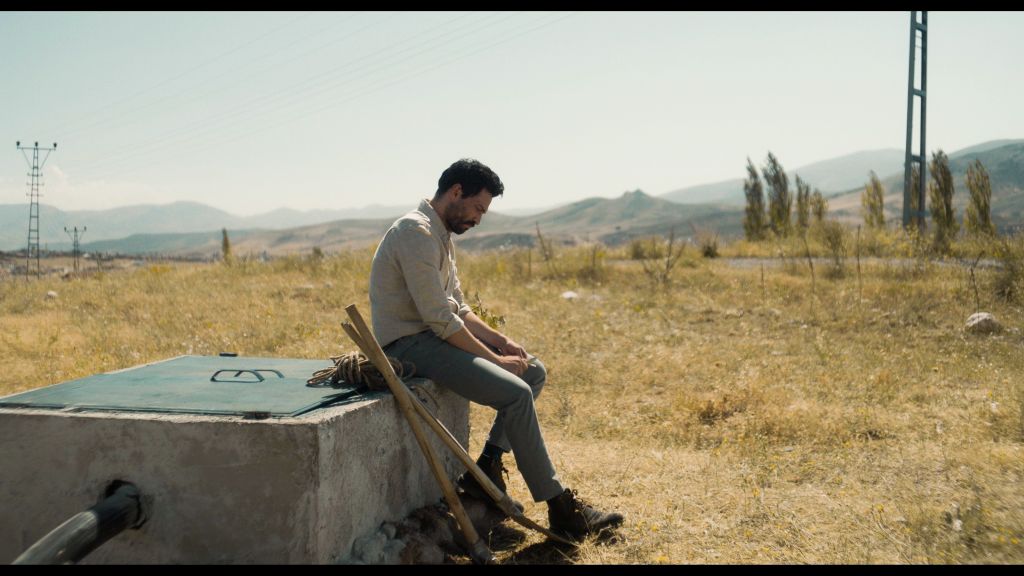
In terms of doppelgangers, though, so again, I saw this film at Sundance and then in September I saw Jafar Panahi’s It Was Just an Accident and was really surprised by the parallels between your film and his: in terms of the story, the visuals like the burial, even the ending. When I was watching It Was Just an Accident , I was thinking, “This shot is so familiar.” Did you notice the parallels?
In the fact that they want to bury somebody. It’s come from language. In Farsi, a curse is to bury somebody alive. That’s the ultimate revenge: to bury somebody alive. So that appears in that way. Panahi thinks the problem is that man; the problem is this regime. I don’t think this is the problem. The problem is me. I think one of us wrong. It’s very, very easy to say the liberal humanist [view]. But no: the problem is me.
I wasn’t a fan of the other film to be honest. I’m just saying this because when I watched your film a second time, I went through the credits to see if he served as a consultant somewhere and maybe stole an idea. Or lifted something in the eight years it took to get this film made.
No, no, no. I like when politics is a capital P. That film [ It Was Just an Accident ], I have no interest in making. But 20 years later, who knows what regime’s at work or who is not?
It’s interesting when you say “the problem is me” because I think that works really well with the doubling of the characters. Throughout the film you’re wondering if it’s a ghost story or a manifestation of an inner self?
We decided that we treat the story very literally. We don’t discuss metaphors, nothing. Ali and Reza are two different people. This is how we shot the film. At the beginning there was suggestion that the actors should watch each other. I wanted them to be completely different, authentic, distinct performances. You’re two different people: live your life that way. That’s how we can put it together.
There is an element of ontology in the film, especially the end. The story, to me, is a story of man whose narrative breaks down, which is a masculine narrative. Masculinity for me is always in crisis. It’s all about the size of this or that, so masculinity is always in crisis. Here is a man who realizes his masculine narrative has a crack. The sister comes and gives a narrative and as soon as cracks emerges, Reza comes. Reza says [metaphorically] to Ali, “Don’t worry, I’ll hold your narrative together.” But the female comes and every time, a piece of this narrative falls, to the point that Reza realizes that he cannot hold it together. He goes asking for help from the female members of the society for help. “Pacify my narrative?”
At the end, Ali comes to a new narrative of his life. And that narrative is that there is no simple narrative. That’s why the wife asks, “Did your mom tell you bedside stories?” She liked stories. She liked puzzles. “Puzzle,” in Turkish, translates to “the story you don’t know.” That is the true story. Life is a mystery. Can you hold it in your hand? Can you witness to this? It’s not so simple. That’s the core of the story and that’s why, at the very end when we think everything is okay, the ghosts are back.
And we hear the knocking that started the film. Ali’s background is in literature. Are there literary figures who inspired the story?
Season of Migration to the North is one of the major, major inspirations. That’s the story of somebody who comes back from England, goes to Sudan, tries to revive a life there and realizes he needs a friend there. Some readings have argued the two are the same man. That is a major inspiration for me and it’s one of the sharpest post-colonial novels of all time from Sudan.
With Ali’s work in literature and the conversation about translation, language and word choices play a strong role in The Things You Kill. But languages don’t always have the right words to fit. As this film is traveling and playing in different countries, how is the translation of the story changing based on the different language of the subtitles?
I’m obsessed with the subtitles to make sure. I have sat down and gone through every word in French, English, Farsi, to the point of arguing on this word or that word for hours. With these few, I have done my best. I don’t know how the translation in Spanish has been or Italian has been yet, but what have been translated well in other languages is the pain of the film.
We live in a patriarchal world, a late capitalists’ world is a patriarchal all run by old men, 80 years old. This is the world we live in, so many people connect right away. They understand the pain of where it comes from. It doesn’t matter where you’re from. In Switzerland, still you get less paid for the same job if you’re a woman. So that has translated well: the core. I’m sure a couple of words here and there aren’t right. I have been involved with subtitles. This is a piece of my heart.
But going back to the question that started this conversation, how has Iran’s ongoing history of censorship shaped you as a filmmaker?
I have not made films with censorship, so I refuse to believe that censorship makes your films better. That’s bullshit to me. It forces people to be more ambiguous and use images to have multiple readings so they can escape censorship. That is very “novel” for the North American because in North America everything is words, right? You have to talk, talk, talk, talk, talk. Talking is a puritan tradition: a priest has to take a verse and open it up and explain it. The same people started the Ivy League schools. So this Puritan tradition becomes the tradition of America. This one, I couldn’t make it in Iran.
What’s the future for filmmakers in Iran?
Whenever the cinema of a country gets attention, I’m scared that they’re going to be bombed. Stories comes first. The West, by setting a festival as a state tool, has used this to view certain dissidents, certain disagreements or oppositions to the governments of certain regions and then they present that as art. There was a time we saw a lot of movies from Afghanistan. Now we don’t see it anymore because that market, they’re done with that country. It’s in ruins now. So I’m very distrustful of awards, of festival strategies. The only institution that has something to say which is valid is time. Time will tell. I spent eight years making this film. I’m hoping that it’s alive in 20 years. If it is, I’ve done my job. So what happens to Iranian cinema? Some artists tell stories with a capital P. They will not get the recognition, but they will last. A lot of people who are collecting awards and accolades, they will disappear over time. It doesn’t matter how much you put them in the spotlight.