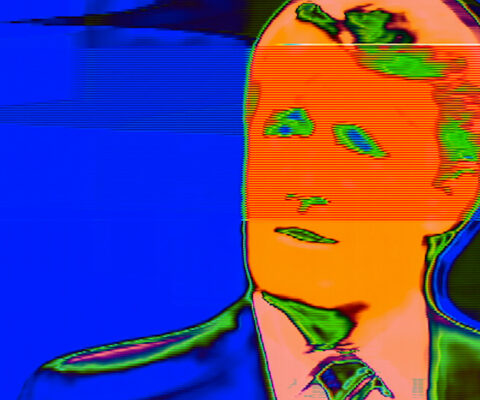


For young queer people, finding first love likely conjures a sensation that, unfortunately, may be universal among LGBTQ+ experiences. The feeling evokes magnetic pang of a crush, but also the undercurrent of fear that sometimes comes with it. Leviticus captures the horror of being made to associate love with fear. It’s a bone-shaking film that burrows under the skin, much like the fatal attraction that complicates first love. This moody horror film thrillingly reclaims images of transgression, punishment, and pain that have long characterised queer representation.
Writer/director Adrian Chiarella delivers a nerve-wracking feature debut that daringly probes the supposedly monstrous nature of queer desire. Leviticus brings audiences to the small town of Bacchus Marsh, Australia where teenagers Naim (Joe Bird) and Ryan (Stacy Clausen) ferociously explore the hunger of first love. The boys rendezvous in an abandoned factory since, unlike their classmates, they can’t neck in the hallways or schoolyard. Their courting involves an act of boisterous play. Boys will be boys, and they start things off a little rough. That violence comes back to bite them.
One betrayal leads to another. Both boys soon find themselves kneeling before a strange man known as the deliverance preacher (Nicholas Hope). Their isolated town holds strong to the Catholic beliefs that settlers brought with them as the colonized the land. The community, Naim’s mom (Mia Wasikowska) included, favours the fire and brimstone, Old Testament kind of faith, as the title Leviticus suggests. They don’t preach love, nor do they practice empathy and compassion. They value repression, shame, and desire in this horribly Victorian corner of Melbourne’s outskirts.
The deliverance preacher casts a spell before the boys. He aims to drive the wickedness from them by fire. However, Naim learns the horror of trying to pray the gay away when Ryan randomly attacks him one day. He starts seeing Ryan everywhere he goes. Each time it leads to violence. It’s as if Ryan preys upon him when he feels most alone.
The preacher’s spell casts the demon in the form of the person one loves most. Naim and Ryan therefore can’t trust their emotions. Feeling love and experiencing fear go hand in hand. That’s always been their reality, but the threat of physical violence usurps the feat of being found out. (Although the threat of physical violence lingers throughout, since monsters take many forms.) Their neighbours teach them that queer desire is a wickedness that needs to be eradicated. The monster proves so strong, however, that Ryan stalks Naim even in the loneliest of places and preys upon him when he feels most alone. The sensation that centres him now threatens him.
The boys eventually confront the beast when they learn it’s safe to do so. Places that once provided comfort, like Naim’s cozy little home, become sites of terror. Meanwhile, former dangers zones that once were to be avoided are now benign, as crowded corridors and public transit put them in the company of witnesses who keep the monsters as bay. But the boys can’t quite trust each other comfortably any longer. Even a moment of shared ecstasy in the corner of a busy space invites the risk of a little death.
Leviticus crafts a taut piece of psychological horror that connects the gloomy, unforgiving landscape, and the sense of isolation it evokes, with the emotional and psychological terror that follows both these boys. The film explores the obvious horror of conversion therapy and outdated Puritanical practices that “correct” one’s human drives. Moreover, Chiarella deeply understands and conveys the psychology of being queer in a Catholic upbringing. Leviticus conjures an all-too real world where running from one’s desires is an everyday horror.
Extraordinary performances by Bird and Clausen wrestle with this monster of guilt, shame, and longing. But a great current of love unites Naim and Ryan as they confront their vulnerability to defeat the monster and, in turn, the community that rejects them. The actors bravely take these characters to mature emotional states for such young characters, all the way delivering some jaw-dropping physical work to sell the scares. Leviticus adds to a growing canon of films that suggest that some of the meatiest and most challenging roles really do come in horror movies. There are great scared-as-shit reactions from Bird, while Clausen plays a brooding menace who terrifies while also seeming afraid of his own skin.
It would be a mistake, however, to categorize Leviticus with the pretentious moniker of “elevated horror.” Through the haunting realism of Chiarella’s direction, the stark naturalism of Tyson Perkins’ cinematography, and the emotional authenticity of the beast at its core, Leviticus offers something more grounded. It’s a restorative work of horror cinema that confronts the real monsters that exist in plain sight, in institutions, in relationships, and in values that make people fear themselves and their communities. As Naim and Ryan refuse to run from each other any longer, Leviticus flips the monster back on those who choose to fear love, rather than return it.