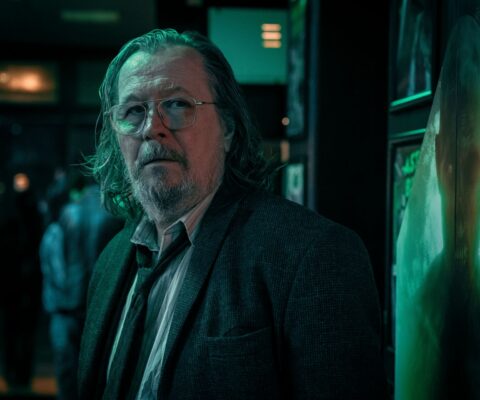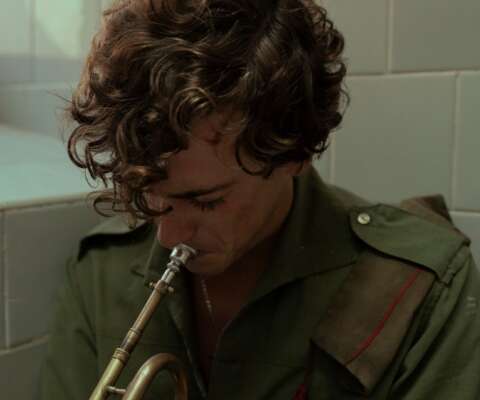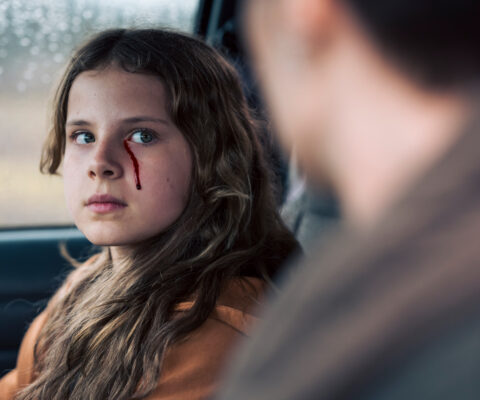


Not every Daniel Day-Lewis movie, unfortunately, is the event we hope it to be. The three-time Oscar winning actor, arguably one of the finest screen performers of all time, only does a movie every few years. He comes out of retirement less frequently than Steven Soderbergh used to. With films like Gangs of New York (2002), There Will Be Blood (2007), Nine (2009), Lincoln (2012), and Phantom Thread (2017) marking every-few-years cinematic occasions, and frequently delivering upon expectations (less so, in Nine ’s case, although I’ll always defend that film), the bar inevitably has to drop some time. Unfortunately, that’s the case with Day-Lewis’s return to the screen after an eight year absence. It’s a pity since Anemone obviously serves as one of his most personal films.
The drama marks the feature directorial debut of Day-Lewis’s son, Ronan Day-Lewis, with a screenplay they wrote together. At its heart, Anemone could be a quietly moving tale about a son growing up in his father’s shadow. But little comes through this ambitious intimate family drama. Ronan sure knows his way around actors, but there’s less evidence of the Miller gene at play. His mom, filmmaker Rebecca Miller—daughter of playwright Arthur Miller—might have rescued the film if they made it a family affair. The script for Anemone just can’t sustain itself with the elusive story that becomes overwhelmed by the visuals and insufferable pacing.
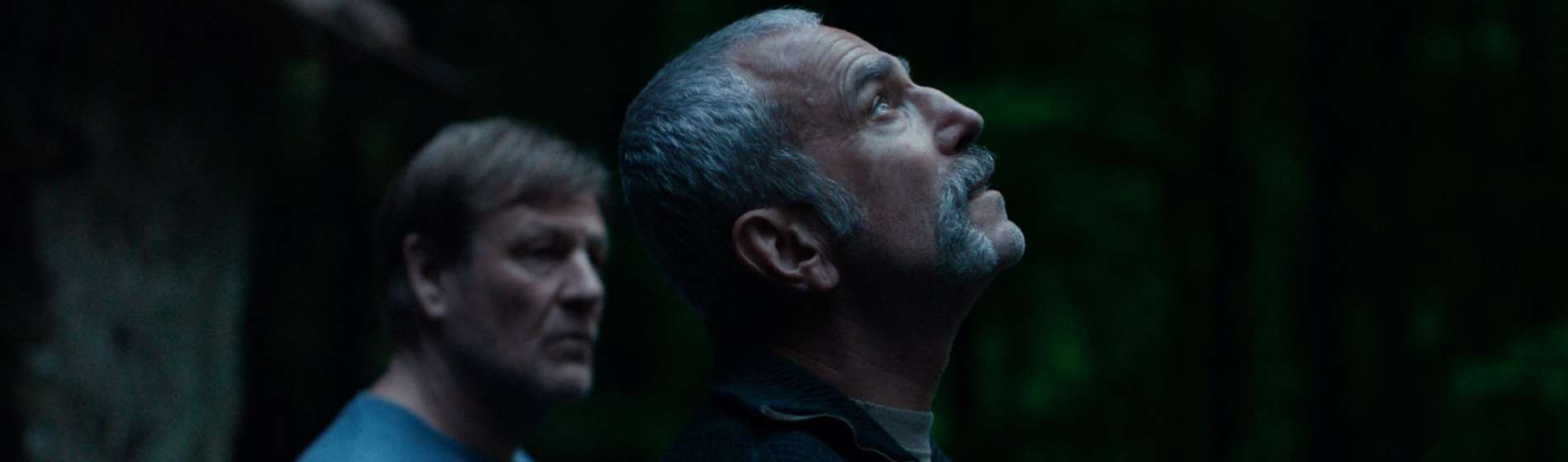
Anemone explores the pain of absence that shakes a family as brothers Ray (Day-Lewis) and Jem (Sean Bean) Stoker reunite after 20 years. Jem leaves his son Brian (Samuel Bottomley) and wife Nessa (Samantha Morton) to visit Ray’s isolated cabin the woods. The brothers haven’t seen each other in 20 years and Jem breaks open the envelope marked “emergencies only” with Ray’s coordinates. He needs Ray to correct a dire family situation. Jem’s son—actually, Ray’s biological son—displays a violent streak that demands attention.
20 years apart leaves a lot left unsaid, but Anemone doesn’t hurry to bridge the silence. When Jem arrives at Ray’s cabin, the brothers grunt and mostly sit in silence. They hunt, they eat, they drink, and they brood. The film’s elliptical way of structuring the story weaves from one moment to the next. Time moves fleetingly and tediously as the brothers feel each other out. There’s little sense of the duration of Jem’s visit, or Ray’s interest in the surprise visit.
Moreover, Ray seems to have resigned himself to being a hermit. His exile keeps him a prisoner of the demons he seemingly harbours. Ray surrounds his quaint cabin with little white flowers that Jem identifies as anemones. He observes that they’re the flowers their dad liked. They also symbolize remembrance and protection against bad spirits. Ray tends to the flowers in search of atonement and to ward off anyone who might come looking for him.
Day-Lewis’s performance is both a thing of beauty and borderline self-parody. His mercurial temperament invites powerful shifts in consciousness as Ray remembers the past. But the idea of the great method actor roughing it out alone in a hut and eating squirrels treads making the star a bit too grandiose for the sake of it. (While working as a teaching assistant in a film studies class back in 2010, I literally explained method acting by using the fake example of Daniel Day-Lewis preparing for a film called Hermit by basically describing Anemone. )
There’s great potential here, but one could easily walk into Anemone an hour into the story without missing many beats. The film meanders senselessly, withholding as much information as possible to the point of leaving viewers hopelessly adrift. There’s only so much that the brooding cinematography by Ben Fordesman can do to say what Ronan can’t quite express with his visually striking but thematically incoherent frames. The moody compositions can’t develop the emotional or enigmatic stakes to invest one in this family’s tragedy. Extended periods of silence—brothers sitting by the fire, Samantha Morton sullenly eating crisps—and beautiful landscape shots paired with a throbbing soundtrack don’t coalesce here. It’s just too loose and too detached, with the latter obviously reflective of the fractured relationships within this family, but it’s a cold movie.
The painstakingly elusive nature of the plotting, moreover, doesn’t do justice to the performances. Silent acting can be a screen performer’s showpiece, but we’re not given enough context for some soul-searching moments to have meaning. Anemone overcompensates for its long stretches of silence by giving each star one or two monologues. Day-Lewis gets two—one about defecating on an old rival and one about an act of violence, the latter echoing Bill the Butcher’s bravura speech from Gangs of New York . These moments do give Day-Lewis time to shine, but the sheer randomness of the speeches undercuts their power. They go on and on, and one can hardly remember where they began by the time they find their way to the end.
Bean, meanwhile, gives a fine brooding performance, while Morton offers pensive melancholy, but Anemone has too many loose parts to gel emotionally. The monologues eventually fill in snippets of the past, as both brothers served for the Brits during the Troubles, while actions from Ray’s past haunt Brian in the present. What really mutes the payoff, however, is a total Magnolia rip-off of an ending as an act of god rouses the family from its slumber. It’s a hauntingly shot sequence, but like many things that appear in Anemone , it’s seemingly random for the sake of it.
This family has its set of troubles. The Day-Lewis family, however, will surely be fine. Maybe Ronan can coax Daniel to collaborate again to rightly “eventize” his next screen performance.