


What makes war films so difficult to sit through is not just the violence, but the humanity buried underneath it. Young men are sent to slaughter one another in the name of absent leaders. The genre is drenched in blood, brutality, and devastation as it forces audience to watch soldiers scream for their mothers while their bodies are torn apart. The best war films leave one shaken to the core as they offer a glimpse into the horrifying realities of battle. Yet Coward , the latest film from Lukas Dhont ( Close ), moves in an entirely different direction. Rather than focusing on combat, Dhont lingers behind the battle lines, exploring how people attempt to survive emotionally in the aftermath of unimaginable suffering. The result is a deeply tender portrait of love, grief, and the healing power that art can offer in the face of humankind at its absolute worst.
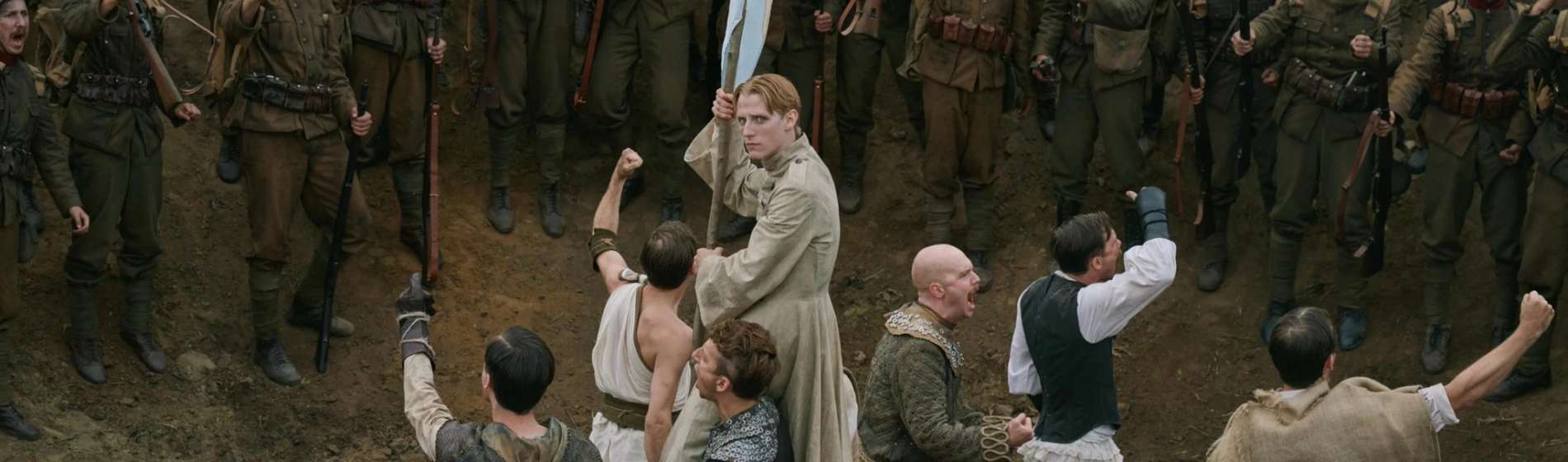
Coward opens with Pierre (Emmanuel Macchia) and his fellow soldiers singing tunes on their way to the Western Front. They are enthusiastic and filled with life as they are all ready to kill some Germans. They all believe they will be home by Christmas. But soon, they find out that this war is nothing like what the propaganda said it would be. They find it to be hell on Earth as they spend days in the trenches covered in death and under constant bombardment. Some become numb to the war, while others are driven mad, and many, like Pierre, just want to go home. But the penalty of desertion hangs heavily over their heads.
To boost morale, several soldiers who are either temporarily or permanently barred from combat due to injury are assigned to put together entertainment for their fellow comrades behind the lines. This unit is led by Francis (Valentin Campagne, Case 137 ), a very flamboyant gay man who is as talented a tailor as he is a showman. What starts off as a creative partnership turns into a love affair between Pierre and Francis as they cope with the terrifying reality of war.
Coward tells a deceptively simple story: two men falling in love during the First World War. Yet that simplicity ultimately becomes the film’s greatest strength. As it allows Dhont to craft a thematically rich story about love, grief, and healing, which causes Coward to feel radically different from most war films. The genre typically focuses on either frightened young men being thrown into battle or hardened soldiers turned into killing machines by war itself. While Coward centres men who are unprepared for war, Dhont is far more interested in how they survive it emotionally, rather than the spectacle of them surviving the violence and misery that engulfs their daily lives.
Francis is open about his attraction toward Pierre, while Pierre remains hesitant and uncertain of what he feels. But eventually, beneath a snowfall of drifting sawdust, the two finally embrace. Through both their love for one another and their shared passion for performance, they manage to find moments of healing amidst unimaginable devastation. Whether they are staging heartbreaking ballads, patriotic propaganda, or simple crooning feel-good numbers, the performances become a temporary refuge from the horrors waiting beyond the trenches.
Dhont directs Coward with an overwhelming sense of intimacy and sincerity. Although the film gives audiences glimpses of the trenches and no-man’s-land, Dhont never turns the war itself into a spectacle. Instead, the focus remains behind the lines on these two men and the fragile love they build during a dark time. The camerawork feels deeply humane, lingering on quiet glances and small moments of tenderness rather than the brutality of violence. Meanwhile, the songs and theatrical performances range from uplifting to heartbreaking to outright unsettling. They reflecting the emotional instability of a world collapsing around the soldiers. The performances from Macchia, making his film acting debut, and Campagne are nothing short of extraordinary. Together, they capture the exhaustion, fear, longing, and desperation of men simply trying to emotionally survive one of the bloodiest wars in history.
Coward separates itself from the endless sea of war films by refusing to glorify the destruction of war. Rather than dwelling on the brutality of combat, Dhont crafts a story centred on the healing power of love and art. Even as the world around these characters falls into violence and despair, the film argues that human connection and artistic expression remain forces capable of preserving our humanity. In the end, Coward becomes less about war itself and more about the fragile beauty people cling to in order to survive it.