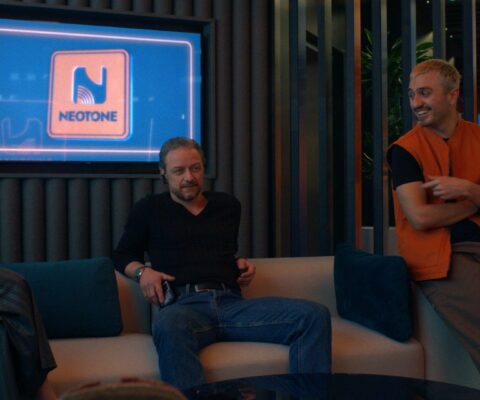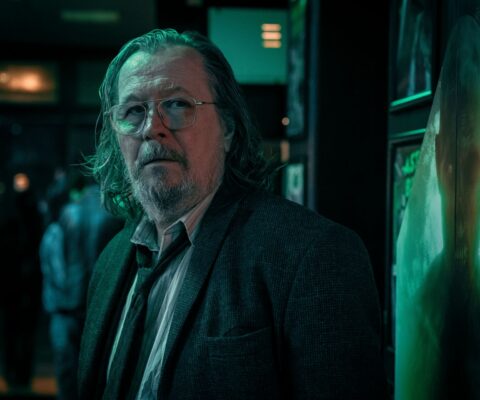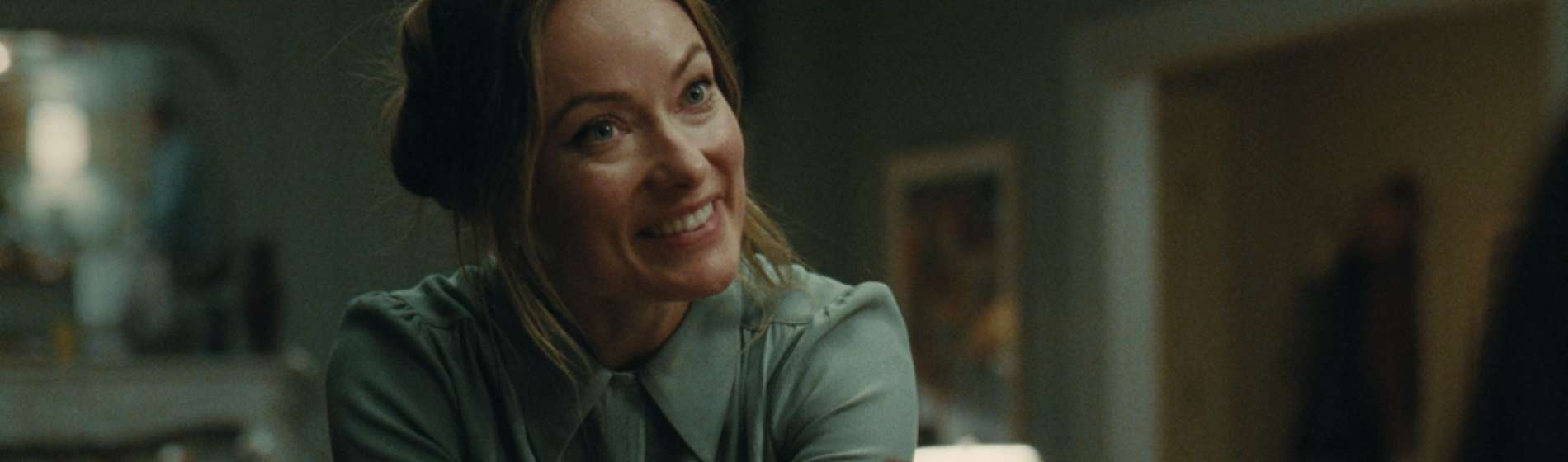


The Invite ends with a dedication to Diane Keaton. As star and director Olivia Wilde tells press during a recent virtual event, “no one would have felt this movie more” than the late screen icon. Wilde speaks passionately about the time she played Keaton’s daughter in the 2015 comedy Love the Coopers. The film’s a minor entry in both their filmographies, save for the collision of kindred spirits.
Wilde mentions Keaton’s influence directly, but also name-checks Woody Allen films throughout the conversation. It’s evident that the Annie Hall star influenced her as both an actor and a filmmaker, as he spirit of Keaton’s comedic flare resonates throughout the madcap humour of The Invite.
“She was so inspiring to me as a mentor — obviously as a director herself, famously discovering [cinematographer] Janusz Kaminski before Steven Spielberg did — and she really believed in the boldness it takes to direct,” says Wilde. “As an actress, she defined the most interesting kind of woman I’d ever seen onscreen. Annie Hall was a lightbulb moment for me in terms of the kind of characters I wanted to play. Diane evolved that vulnerable, empathetic, idiosyncratic woman who operates on instinct and impulse and heart, and turned her into someone who could also be incredibly intelligent and complex.”
Wilde does her mentor proud as both an actor and director with The Invite . The arthouse hit of the summer proves Wilde a comedic force. Her highly meme-able film and performance (jamón, anyone?) strikes comedy gold by probing layers of empathy and vulnerability as her character Angela hosts a disastrous dinner party with hopes that her swinging neighbours, Piña and Hawk (Penélope Cruz and Edward Norton), can help revive her stifling marriage with Joe (Seth Rogen). The film adapts Cesc Guy’s comedy Sentimental ( The People Upstairs ) a hit Spanish comedy that’s already enjoyed several remakes in different countries.
“I thought what story is so relevant across so many different cultures? There must be a very authentic core to it,” says Wilde. “So I watched the original Spanish film, which of course was based on the play, and I loved it. I was rolling around laughing, thinking, this is such a simple premise that is so fertile for adaptation.”
The script by Rashida Jones and Will McCormack enjoys a twist of cultural flavour. American attitudes to fidelity and polyamory create great comedic sparks as Angela tries to spice things up with Joe, Piña , and Hawk surprisingly being down to play. Jones, speaking in a separate virtual event, says that The Invite reflects what she feels is a decidedly American ethos of self-improvement and relationship care.
“Americans — especially people our age who’ve been in long-term relationships — are obsessed with this notion that we can, or must, improve our relationships, and that there’s room to do that, especially through podcasts,” says Jones. “Modern therapy comes from podcast culture now: people spend time commuting, sitting on a train or the subway, listening to relationship experts tell them how to navigate the dysfunction in their own home. That feels very particularly American. It felt very personal to Will and me, since we live in LA and spend a lot of time in the car listening to podcasts.”
“There’s something about these incredible therapists: Esther Perel, Terry Real, Orna from Couples Therapy ,” adds McCormack, an Oscar winner for the short film If Anything Happens, I Love You . “We all ingest all of these brilliant people and examine our relationships, and how we live, and how hard it is to be in a long-term relationship. It felt like it was in the ether — these are things we talk about culturally.”
Wilde notes that she actually brought Perel on board The Invite as a consultant while workshopping the script with her cast. “We were trying to embrace the idea that a relationship could contain several relationships — that maybe every relationship is destined to end at some point, but you may start a new relationship with that same person,” says Wilde.
As the night becomes increasingly chaotic, with events inching closer to the bedroom and some partner-swapping, Angela and Joe confront the failures of their marriage that inspires them to seek refuge in Piña and Hawk’s openness. But the film adds to and reflects this relationship guru mentality by showing both couples that sex isn’t the answer. It’s a spicy ingredient, sure, but any relationship needs work and emotional labour to stay fresh as the dynamic changes over time. “Marinating in that concept as we made the film made me far less cynical about long-term relationships and marriage, because I love the concept of the freedom to reinvent and evolve, both individually and as a couple,” observes Wilde.
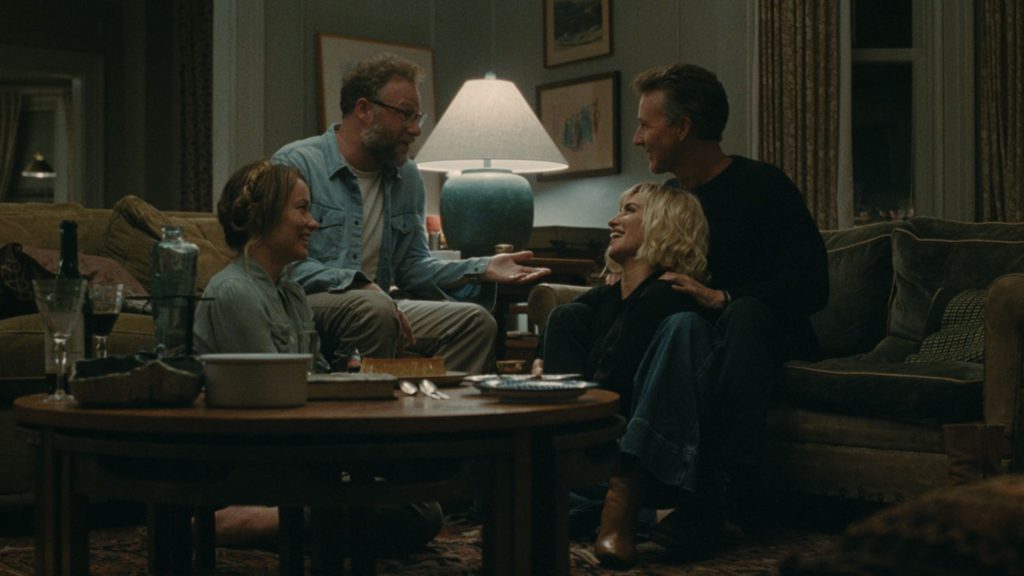
The Invite underscores this idea of a suffocating marriage by harnessing the energy of Angela and Joe’s lived-in apartment. The film adds to the great canon of chamber pieces thanks to the dramatic and comedic energy that the single location injects into the material. Jones notes that the writing had to carefully imagine the space of the apartment, which Joe inherited from his parents and Angela is constantly renovating after they merged with the neighbouring unit to make one enviably super-sized upgrade.
“We had a lot of conversations early on about the geography — it’s so important, with the windows and where they are,” explains Jones. (Piña and Hawk can see into Angela and Joe’s apartment via a window in the hallway.) “We pictured a kind of light well where the apartment could wrap around, so the characters could see each other as well as hear each other, because of the great window moment. We had a lot of conversations very early on before we started writing about the layouts of the apartments and how they might be slightly different. Like, one is a little larger than the other one, so it covers more ground.”
Most of the action in The Invite centres in the living room with some flow back and forth from the kitchen, while the couples eventually split up. Joe invites Piña to his disorderly office/man cave to smoke a joint while Angela gives Hawk a tour of her renovations. The distinct spaces of the apartment offer windows into the different personalities that shape the marriage.
“In the gorgeous production design by Jade Healy — an absolute legend — there’s that ‘hot box’ of Joe’s office studio, suspended in the middle of the apartment,” Jones continues. “It’s contained but not. It’s a little symbolic of Joe. He can’t even smoke weed there because it’s not private enough. He’s contained all his mess and hoarding and disorganization into that one room. The other room that was always a thing for us was the bedroom — the last place to be designed, because it’s the last place either of them thinks about. Nothing’s going on in there. Joe grew up there, it was once his parents’ bedroom, and they just don’t think about it, because it’s not a showpiece. They’re the only two people to enjoy it, but they don’t enjoy it. That’s extremely meaningful and pretty sad.”
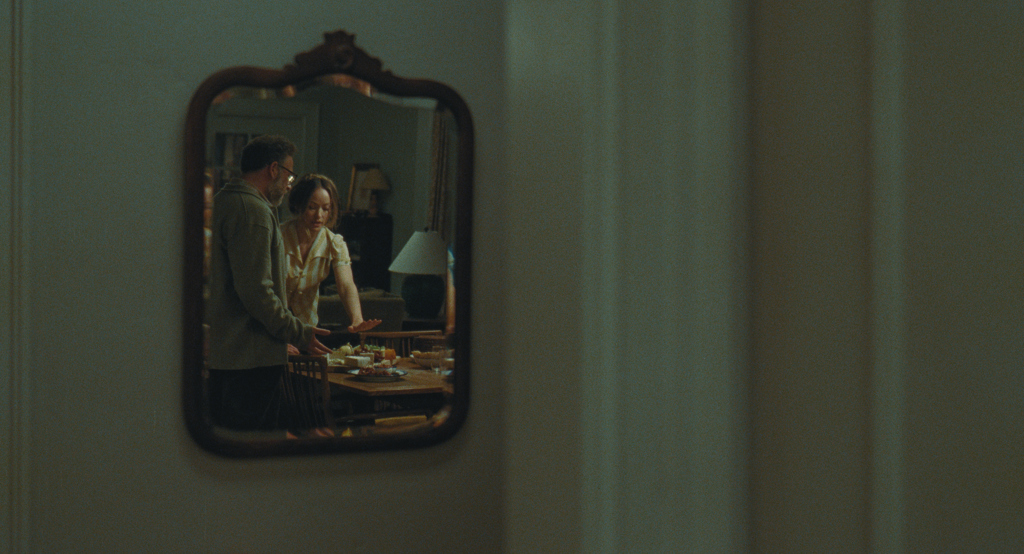
“The apartment is so sequestered — so many compartments, different worlds within each, not a lot of flow, no open space where they all connect. But there are so many mirrors, so a lot of it feels voyeuristic: the space you can’t get through, but you can see, so there’s a longing to it,” adds McCormack. He also notes that the writing process inevitably fed off imagined stories that come from living in an apartment. “I had neighbours in New York where I never figured out who was the whimper and who was the growler [a reference to Piña and Hawk’s audible amorousness], and they never invited me, they never came over. But everyone who’s ever lived in an apartment building knows there’s a whole universe within it.”
Wilde echoes the writers and says the production design of the apartment became crucial to developing the characters and the dynamic. She adds that much of the “house tour” scenes when the couples split up featuring improvisation, but aspects of the comedy draw from the great inter-departmental synergy between the cast and crew.
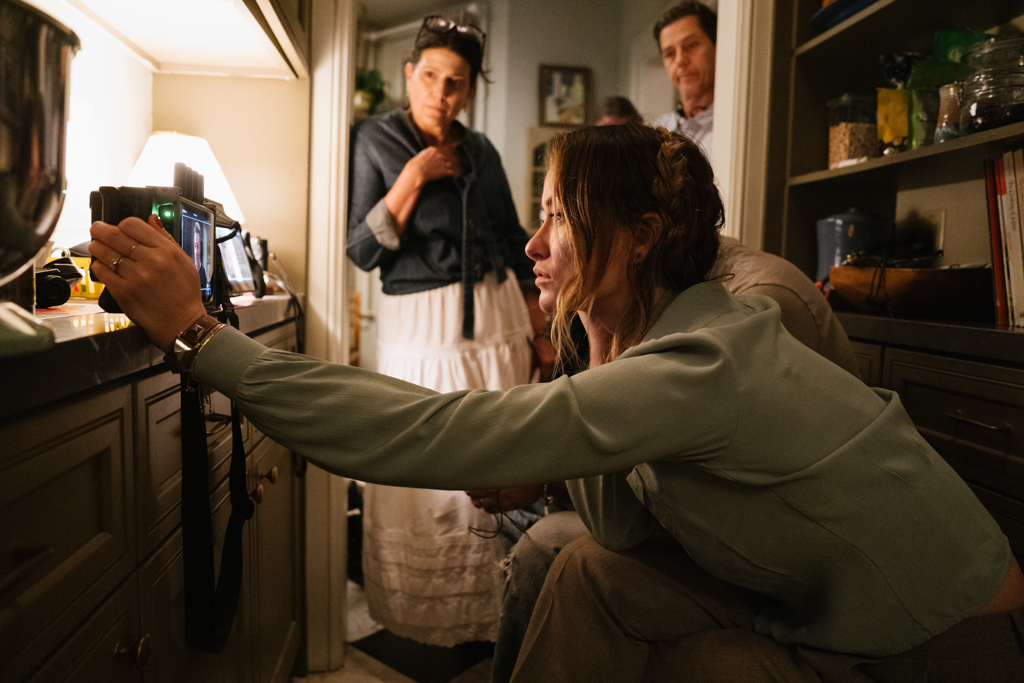
“We used every square inch of this set — we understood it so well in prep that we knew exactly how to film it, depending on where the actors organically found themselves in rehearsal,” says Wilde. “We embraced frames within frames — mirrors, glass, barriers that represented emotional boundaries. It was so fun to design, and I don’t think we could have done it had we shot on location. We had to design it very specifically, without making it feel overly considered or overdone. Joe’s character grew up there but can’t really afford to decorate it the way it’s ‘meant’ to be, so it’s a mix of vintage pieces and cheaper, DIY materials.”
The “tour” features a great example of the ways in which the physical space informs the film. In one scene, Angela shows Hawk a wing of the apartment that’s still a work in progress. Three splashes of colour boast the shades of green that Angela’s considering for the house. She says it’s impossible to choose, but her minty green shirt matches one swathe perfectly to say otherwise, indicating and obvious preference, but also a forced laissez-faire attitude that’s her idea of flirting.
“Arianne Phillips, our costume designer, came up with the idea of Angela’s shirt matching the colour of the walls — which took a huge amount of work, because she had to keep re-dyeing the fabric every time we changed the wall colour,” laughs Wilde. “In fact, the whole scene about the paint colours came from a real conversation with my production designer, who kept asking me which of three colours I wanted for the walls — to me they all looked the same, and she asked if I was colourblind. I said, ‘Thank you, we’re putting that in the movie.’ I could go on and on about that apartment.”
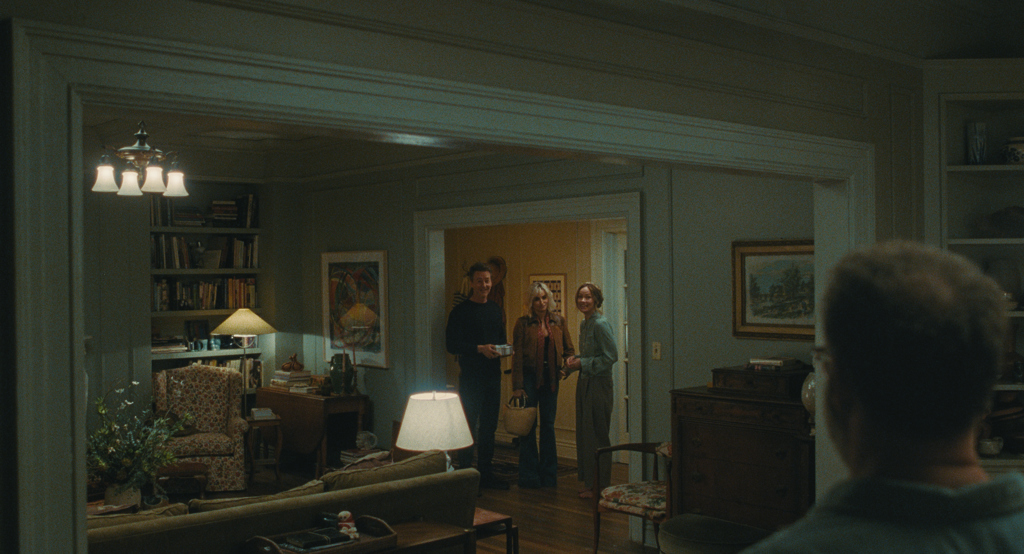
The ways in which these aspects of the production click illustrate why The Invite demands repeat viewings. A first pass offers an actors’ showpiece, but a closer glance reveals a film that’s as meticulously staged as Angela’s dinner. (Albeit with far better execution.)
Wilde adds that she found inspiration in the cinematography of Who’s Afraid of Virginia Woolf? —the most obvious reference for The Invite as two couples endure a night of fun and games—when it came to visualizing a chamber piece cinematically. “In terms of capturing behavior in material that’s clearly written, at its core, as a play, it became about letting the camera language evolve with the audience’s emotional experience of the characters. That was inspired by Mike Nichols in Who’s Afraid of Virginia Woolf? — you can feel the cinematography adjust as the characters get drunker and more emotional. The camera itself seems to get drunker, and you get closer.”
She says the camera also had to respond to actors by observing and harnessing their own movements within the space. “As an example, when Piña and Hawk first enter the apartment, everyone else is captured in a static, locked-off shot, while Piña is on a Steadicam, because she moves differently through the space and feels emotionally different, so the visual language for her is different too,” says Wilde.
“Something about this film as a whole is that there’s an extraordinary, unusual amount of authorship each actor brought to their own character — I can’t overstate how much they contributed,” Wilde adds.
She’s quick to credit everyone around her, but that’s also what proves her worth as a director. It’s probably no coincidence that Diane Keaton herself once wrote, “I believe my job as the director is to listen.”