


It has been nine years since Russian director Andrey Zvyagintsev’s feature film Levitathan . He has spent much of this period in exile after harshly criticizing Russia’s unjust invasion of Ukraine. While the majority of his films have been critical of the Russian government, they have always remained localized and viewed as a metaphor for said body. Minotaur follows that direction, but it marks possibly his most daring and most critical film yet.
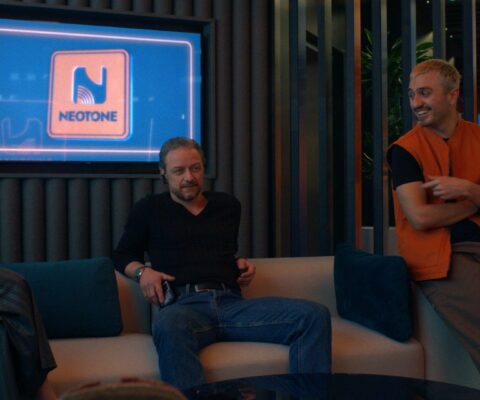
When Gleb (Dmitriy Mazurov), a successful company director, finds himself under siege from mounting corporate pressure, an increasingly unstable world, and the discovery of his wife’s affair, the collapse of his carefully ordered life accelerates towards violence. On paper, Minotaur’s scale appears to be small as it focuses on the daily struggles of a man living in Russia after the invasion of Ukraine. When Gleb is not sitting in his luxurious home with his family, he navigates the struggles of his influential corporation in Russia. The shipping embargoes have made his work difficult due to it causing production shortages. His work is therefore about to become more difficult when he is forced to devise a list of employees to be drafted for war.
Although Gleb is against the war and the forced drafts, he complies due to fear of retaliation. The cruelty of Russian bureaucracy has worn him down over the years, making him cold and hostile, especially toward his wife, Galina (Iris Lebedeva). Although he tries to separate himself from the Russian system in his luxurious home, he will gladly abuse that system when he needs it.
Zvyagintsev is not only examining the war in Ukraine and the corruption embedded within the Russian state through the lens of a man being crushed by it, but also how that corruption gradually infects the individual himself. Minotaur becomes a compelling deconstruction of the Russian government and the consequences that corruption has on its ordinary citizens. More than simply depicting a government that terrorizes its people, Zvyagintsev explores how that system reshapes them and turns them into reflections of the very forces that oppress them. The result is a bleak, nihilistic, and unsettlingly honest portrait of a society trapped in an endless cycle of corruption and violence.
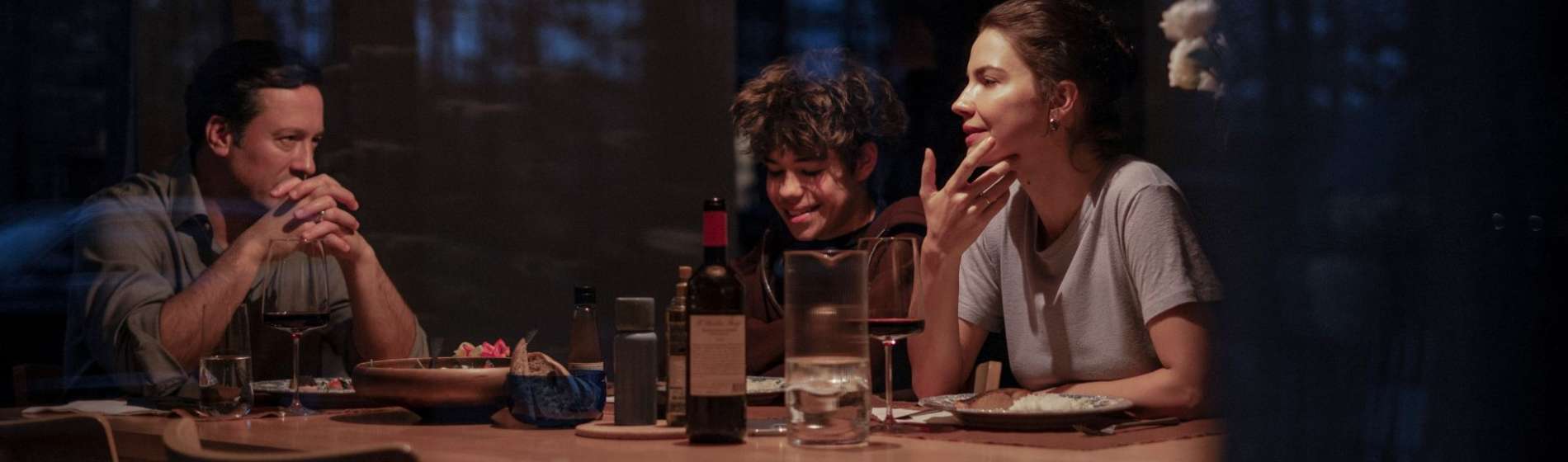
Through wide-angle lenses, long takes, and a muted colour palette, Zvyagintsev fully immerses the audience in the world of this family. Despite their wealth and apparent comfort, every scene is filled with tension. Yet that pressure does not stem directly from the war or the political corruption surrounding them. Instead, it emerges from Galina’s affair and the collapse of her marriage to Gleb.
Tired of his cold demeanour and his emotional distancing, she longs to break free and reclaim her life. Gleb, however, refuses to let go, clinging to the past and the control he once had. That conflict steadily escalates until it inevitably erupts.
Incredible performances from Mazurov and Lebedeva ground Minotaur in its political allegory and deeply human emotions. Gleb’s desire for absolute control mirrors Russia’s relationship with Ukraine. Meanwhile, Galina’s search for freedom and self-determination evokes Ukraine’s struggle for peace and sovereignty. What makes the performances even more effective is that neither actor reduces his or her character to a political symbol. Both performers reveal the humanity beneath the conflict, suggesting that these characters are not inherently cruel or selfish, but they are individuals shaped and ultimately damaged by the system around them.
Minotaur is another haunting portrait from Zvyangistev of a nation at war with both its neighbours and itself. By grounding his political commentary in the intimate collapse of a marriage, Zvyangistev transforms a geopolitical conflict into something deeply personal and emotionally devastating. As with all of his films, the director offers no easy answers, nor does he suggest that things will improve. Minotaur shows that in a world where corruption breeds more corruption, where power consumes humanity, and freedom becomes a dream. Bleak, intelligent, and painfully relevant, it stands as one of the most compelling films from the Cannes Film Festival as it examines modern Russia and the human cost of the system that governs it.