


The end of the Second World War was also the beginning of American domination over the film market. My dad and my grandmother used to tell me that the movies they saw in Athenian cinemas in the 1930s were mostly German, French, and Hungarian until after the Nazis were defeated, and then Hollywood fully took over their screens. It’s a cultural force that continues to this day: outside of India, even the strongest domestic film market in any country sits in second place to American products, which remains the case despite the appearance of a higher number of foreign productions in the Oscar lists during the last few years.
At the same time, American audiences of the post-war years also increased their interest in the places that they believed they had saved. The 1950s saw a huge rise in attendance of foreign films, particularly Italian and French, later Japanese and, with the popularity of Ingmar Bergman at the end of the decade, Swedish. Where the promotion of post-war prosperity saw Hollywood selling candy-coloured dreams from their fantasy factory spewing, endless Technicolour indulgences starring Marilyn Monroe and Rock Hudson, European and Asian cinema told complicated and painful stories that showed a world trying to rebuild itself after the devastation of the previous decade. It would lead to even greater popularity for foreign cinema in the 1960s, as the more permissive standards of European movies would draw American audiences who desired to see more nudity and sex, which itself would result in a response by American cinema to revolutionize in the seventies.
The heyday of the 1950s is where this all began, however. Here are my favourite non-American films of that decade.
10. Nights of Cabiria
Le notti di Cabiria
Federico Fellini, 1957
A streetwalking sex worker who, in Fellini’s magical conception of his wife, has a nearly sexless innocence about her, hopes for the best despite life always giving her the worst. Fellini had made an international splash with La Strada, but I’ve always loved Cabiria a bit more. The sequence where she goes on a religious pilgrimage and begs the Madonna to forgive her sins breaks through the optimistic outer shell and provides the vulnerable centre of Giulietta Masina’s entire film acting career. Later the inspiration for the musical Sweet Charity , this is Fellini blending his neorealist training with his own brand of fantasy better than any other film he ever made. It’s his last release before his 1960 extravaganza would take over the world.
Honorable mention: Fellini made La Strada a year earlier, winning Oscars for both films, plus for Italian releases, Vittorio De Sica made one of his finest films with Umberto D. in 1952.
9. Nazarin
Luis Buñuel, 1959
A young Spanish priest (Francisco Rabal) ministering to a dusty corner of Mexico City is run out of town when he is discovered giving shelter to an injured prostitute. She and another woman love his completely selfless nature and are willing to do whatever it takes to help him, following him wherever he goes. Buñuel pokes fun at modern religious hypocrisy by pointing out that if Jesus Christ were to show up and walk among morally upstanding Christians today, his holiness would be rejected, but as always gives us this message with his usual dollop of sly wit.
Honorable mention: The director that Hitchcock once named the best of the artform got his international breakthrough at the beginning of the decade with the Mexican film Los Olvidados (1950).
8. Wild Strawberries
Smultronstället
Ingmar Bergman , 1957
A professor in his twilight years has been invited to a ceremony honoring his lengthy career in bacteriology, rejecting the offer of train tickets and deciding to get there by driving the long journey with his daughter-in-law (the always riveting Ingrid Thulin). Their conversations, which include her plans to divorce his son, and the passengers they pick up along the way inspire ruminations on his past and re-evaluations of how he is seen by the people in his life. This is Bergman’s most powerfully introspective work.
Honorable mention: Two of my favourite Bergman films are also from the fifties, Smiles of a Summer Night (1955) and The Seventh Seal (1957).
7. The 400 Blows
Les quatre cents coups
François Truffaut, 1959
A classic coming-of-age masterpiece about a young boy (Jean-Pierre Léaud) growing up in Paris with a negligent mother and an assortment of charismatic friends. He enjoys moments of childish fun but also gets himself into serious trouble at equal turns, suffering his disadvantages as long as he can before finally running away from it all. This beautiful and sensitively directed milestone was followed by sequels in which Léaud continued his intelligent and intuitive characterization.
Honorable mention: The Wages of Fear by Henri-Georges Clouzot should be on this list, but I’ve written about it recently . Clouzot also made The Mystery of Picasso a year after that, and Jules Dassin made Rififi (1955) in exile in France.
6. Pather Panchali
Song of the Little Road
Satyajit Ray , 1955
This stunning debut by master filmmaker Ray is about a boy named Apu who witnesses the hardships that his family struggles through in the face of poverty and lost dreams in their beautiful rural village. Every single image is deep with layer upon layer of beauty and detail, so vibrantly alive with the nature of India’s geography that you’d swear the black-and-white photography was actually reaching out to you in full colour.
Honorable mention: Panchali was the first of a trilogy of films about Apu, followed by Apajarito (1956) and The World of Apu (1959), plus his 1958 The Music Room is a must-see.
5. Breaking the Sound Barrier
The Sound Barrier
David Lean, 1952
Following his service in World War II, Nigel Patrick marries the beautiful Ann Todd and goes home to meet her father (Ralph Richardson), a self-made aeronautics tycoon who hires him as test pilot while working on his plan to put the new technology of jet engines into common use in place of propeller airplanes. His fixation on this goal frequently leaves out the human consideration, and it’s up to Todd to suffer the emotional devastation of the tragedies that this voyage of discovery leaves in its wake. Every aspect of this film is top-drawer, from the crisp and gorgeous photography, the outstanding visual effects, the superb aerial footage, beautiful production design, sterling direction by Lean and perfectly marvellous cast.
Honorable mention: After being blacklisted and before going to France, Dassin went to the UK where he made the wonderful Night and the City (1950), while Lean also directed the brilliant Hobson’s Choice (1954). The great Anthony Asquith gave us the best ever film version of an Oscar Wilde play, The Importance of Being Earnest in 1952.
4. Rashomon
Akira Kurosawa, 1950
The rape of a noblewoman (Machiko Kyô) and the murder of her husband are recounted by different ‘witnesses’, all of whom have completely different takes on the situation, including one from the spirit world. Kurosawa’s breakthrough film is still one of the most fascinating examinations of the power of sympathy in narrative and the nature of truth, but it also shows off his talent for creating masterful visuals while never letting go of the emotional power of his characters and their conflicts. The photography gleams like silver lightning.
Honorable mention: Inagaki’s Samurai Trilogy is scintillating from beginning to end, while Kurosawa also contributed his masterful Throne of Blood (1957), Seven Samurai (1954) and The Hidden Fortress (1958) in this decade.
3. Ordet
Carl Theodor Dreyer, 1955
Dreyer does absolutely nothing to hide the stage origins of this magnificent film, and yet his unobtrusive camerawork is magically able to capture intimacy with very little visible effort. A Danish farmer lives with his three sons on their peaceful, wealthy countryside estate. One has turned atheist, the other is in love with a fundamentalist preacher’s daughter, and the third is so steeped in his theological studies that he has gone mad and now believes himself to be Jesus Christ. An outrageous turn of the plot in its concluding moments would be a shark-jump under any other director, but Dreyer’s ability to simultaneously bring spiritual mystery and scientific rigour to his craft makes it feel not only possible but necessary. A masterpiece.
2. Sansho the Bailiff
SanshŠDayū
Kenji Mizoguchi, 1954
A local governor who has angered his superiors with his generosity needs to escape quickly, saving his family’s lives by sending them ahead in the hopes that they will reach safety before he does. His wife falls into the hands of rough brigands who send her to a remote island and force her to work in a brothel, while their two children are made to be slaves at the estate of a minister’s brutal bailiff. The years pass, the children grow, they never forget their origins or their desire to reunite with their parents, but, and here’s the part that really breaks your heart: Their family exists in a past that can never be recovered. It’s one of the most emotionally affecting movies I’ve ever seen, one of those rare films that truly captures the depths of sorrow that life can deliver, but the poignancy that Mizoguchi finds in a famous Japanese legend of revenge and redemption also inspires the joy that can only be felt when watching cinema reach the highest achievements of the artform.
Honorable mention: Mizoguchi’s other masterpiece, Life of Oharu , was released in 1952.
1. Tokyo Story
TÅkyÅ Monogatari
Yasujiro Ozu, 1953
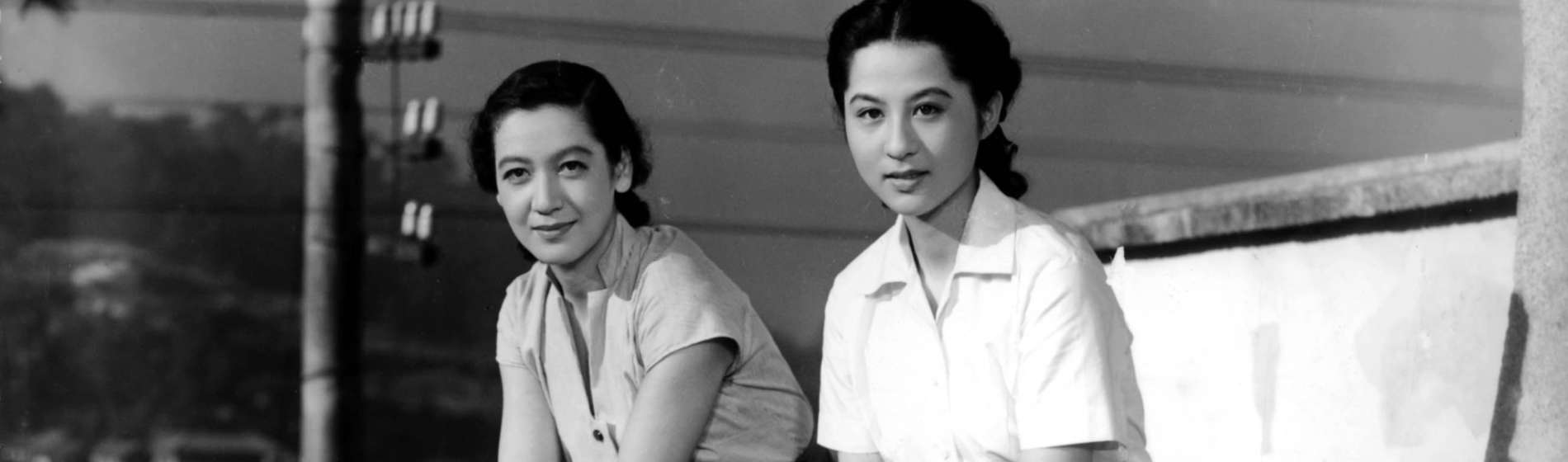
This is my bid for the greatest film ever made, so naturally it’s going to top this list (and I realize I’ve already written about it a number of times in this column , sorry/not sorry). An elderly couple travel from their small town to the big city of Tokyo to visit their successful children. Their son and daughter, both working and running their own households, pass their parents off to their widowed sister-in-law (a career defining performance by Setsuko Hara), the only one of the group who treats the couple with any genuine affection. Heartbreaking in its sincerity, the film is Ozu at his most brilliantly complex; he doesn’t soften the harshness of the children’s indifference to their parents, but he treats them with a great deal of sympathy as people who are caught up in the demands of their own lives. A film that pulls you in multiple directions, breaking your heart and putting it back together in time for the elegiac ending.
Honorable mention: Ozu made a lot of perfect movies in his prolific decade, among them The Flavour of Green Tea Over Rice (1952), Early Summer (1951) and Floating Weeds (1959).