


When Billy Wilder released Sunset Boulevard , the popular critical reaction was that it was going to kill the movie business, for how could anyone stand to watch the products of the dream factory after learning what was behind the magic?
Movies about moviemaking had been made plenty of times before Wilder’s classic, but they were mostly tales of dreamers making it in the big time and rarely took the cynical tone of the tale of Norma Desmond. After Sunset’s massive success and three Oscars, however, films about filmmaking became material that Hollywood would mine far more often.
There are all kinds of these movies, about the industry itself and biopics about famous actors and directors, but I wanted for this list to focus on movies that are specifically about the making of a movie (fictional or real). These are my ten favourites.
10. Ed Wood
Tim Burton, 1994
Burton makes what is possibly his masterpiece in this exploration of the career of Edward D. Wood, Jr., shot in dreamy black and white to resemble one of Wood’s own projects. Centred around the creation of Wood’s most famous work, Plan 9 From Outer Space , it has a touching understanding for Wood’s complicated status as an artist. His concern for technical rigour wasn’t exactly high (including letting Styrofoam gravestones flop over on camera) but the personal honesty and passion he imbued in his films made him a genuine auteur. Martin Landau’s Oscar-winning turn as Bela Lugosi, living in the post-haze of his Dracula fame and dying slowly of heroin addiction in a lost suburb of Los Angeles, is the performance of his career, a powerful glimpse of the sorrow behind his frightening mask.
9. Pain and Glory
Dolor y gloria
Pedro Almodóvar, 2019
Almodóvar often makes meta references to films and filmmakers in his work, Broken Embraces and Bad Education could also be on this list, but there’s a balance of grace and harshness that I particularly love about this examination of his present-day ailments and their effect on his memories of childhood. Antonio Banderas , once the director’s frequent muse and now his amanuensis, plays an Almodóvar-esque filmmaker (complete with spiky hair) who has reached his sixties saddled with a pile of physical and mental health problems. His emotions are riled up by a reunion with an actor from his past that colours his reminiscences of his concerned and harried mother when he was a child (played, with her usual tired perfection, by Penélope Cruz). Scenes that turn out to be a movie being made in front of our eyes bring up thoughts of Fellini, though the emotional resonance of this poignant experience make this one more like Intervista than 8 1/2 .
8. Two Weeks in Another Town
Vincente Minnelli, 1962
Minnelli’s most famous Inside Hollywood movie is The Bad and the Beautiful , but I have an affection for the darker tones of this industry expose set in the buzzing city of Rome, where Hollywood responded to the popularity of epics set in ancient times by setting up shop there in the early sixties. Kirk Douglas plays a movie star whose best days are behind him, brought out of his relaxation at a rehab clinic and asked to join his friend Edward G. Robinson on the set of a trashy romance movie that he is directing. Minnelli never got enough credit for some of the more dramatic films that he made after the success of Gigi , this one was a noted failure at the box office and it’s a shame. It has an uncompromising cynicism but it also features Douglas at his most sympathetic since playing Vincent Van Gogh. It also culminates in a fantastic car chase that is the best expressionistic use of bad rear projection photography you’ll ever see.
7. Dolemite Is My Name
Craig Brewer, 2019
Reaching his mid-forties and feeling like his opportunities to make it in show business have passed him by, Rudy Ray Moore (Eddie Murphy) sees his past attempts at music as failures that he might not ever overcome until one night, the inspiration of a vagrant leads to his creating a character that he performs on incredibly popular comedy records and, eventually, a film in which he stars and directs. Screenwriters Scott Alexander and Larry Karaszewski follow their past successes with biopics about creative outsiders with another energetic look at an artist who beat the odds and, despite the fact that they’re not particularly interested in the character’s internal contradictions, what played as dishonest and defensive in a similar portrayal of Larry Flynt is sincere admiration and affection here. Murphy gives one of his richest and most exciting performances in years, backed by a cast of supporting players who all shine, especially Wesley Snipes as character actor turned director D’Urville Martin and Da’Vine Joy Randolph, stealing the show as Moore’s self-proclaimed protégé and eventual good buddy Lady Reed (aka “Queen Bee”).
6. Nouvelle Vague
Richard Linklater , 2025
Linklater made two hangout movies that went behind the scenes in 2025, one about theatre ( Blue Moon ) and this one, which I highly preferred, about cinema, specifically the movie that has come to define a movement. Jean-Luc Godard watches in frustration as his friends and colleagues achieve instant fame with their entries in the French New Wave, so he moves ahead on a little project based on an outline written by his buddy Truffaut, the tale of a petty thief on the lam and the girl he gets mixed up with that pays tribute to the Poverty Row gangster movies that he has been watching on a loop at the Cinematheque Française. Linklater, in a roundabout and never overly preachy way, suggests that for artists to make a difference they can’t be easy people, and that in particular the industrial, commercial machine that is applied to filmmaking is not always a direct line to making the films that capture an audience’s imagination. Filmed on grainy black and white stock, with dialogue entirely spoken in French, Linklater not only pays tribute to Breathless , he recreates the film itself, eliciting marvelous performances that are ruled over by Zoey Deutch’s awe-inspiring command of the screen as Jean Seberg .
5. Through the Olive Trees
ZÄ«r-e DerakhtÄn-e ZeytÅ«n
Abbas Kiarostami , 1994
Kiarostami has by now established himself not only as an experimenter in fictional/documentary hybrids, but has also made it a common expectation that his films will explore the act and art of filmmaking itself. He casts actor Mohamad Ali Keshavarz as an unnamed, fictionalized version of himself, a director who has come to the village of Koker to film a movie that is basically the 1992 film And Life Goes On , focused on a scene between a husband and wife that is constantly being upended by the male actor’s romantic obsession with his co-star. Of course, when Kiarostami does Day for Night he’s going to populate it with the tropes of his own filmmaking, there are lengthy, gorgeous scenes of shots taken from moving cars, and moments of magical spontaneity that arise from the various strangers that Keshavarz meets in his quest to accomplish some very simple shots. One of his most entertaining and delightful comedies.
4. Day for Night
La Nuit américaine
François Truffaut, 1973
Truffaut plays himself as a frustrated director who has every possible problem befall his latest project, from an emotionally unstable male lead, a lead actress who needs a lot of personal attention (and “tub butter”), and an insecure character actress (Valentina Cortese in a remarkable, Oscar-nominated performance) who was once an ingénue and is now unhappy about playing mothers. There’s a death, a destruction of equipment and complications with stuntmen, but in the end Truffaut makes sure we know he’s still happier to be doing his job than anybody else’s in the world. The sense of joy that the story displays in the middle of all the chaos is just one of the reasons that you will get no end of pleasure from watching this milestone classic. Winner of the Best Foreign-Language Oscar of 1973, then the following year the film earned Truffaut his only Oscar nomination for directing.
3. The Stunt Man
Richard Rush, 1980
Peter O’Toole is a riot as a filmmaker who believes himself to be a deity while everyone else think he’s Satan; his obsessive mania with getting a scene just right results in the death of a stunt man, leading him to hire a totally inexperienced passerby (Steve Railsback) as a replacement. In getting to know the movie business, Railsback also befriends the film’s leading actress (an excellent Barbara Hershey) and learns to enjoy his work until he realizes that O’Toole is so determined to get the film done right that he’ll risk his safety as easily as he did his predecessor’s. Mixing reality and fiction with incredible finesse, Rush’s masterpiece is an excellent combination of studio-style commercial film making and top-shelf artistry, one of the highlights of the early eighties.
2. Singin’ in the Rain
Stanley Donen, Gene Kelly, 1952
It’s a movie I love even though it’s also one I associate with people who are philistines about old movies. (Uou hear a lot of “I don’t like musicals but I love Singin’ In the Rain, ” which is nonsense.) Gene Kelly plays a movie star during a time when silent films were switching over to synchronized sound and the careers of many Hollywood luminaries were going down the drain. His new film is being refitted as a talkie, but his usual leading lady (Jean Hagen, earning a very deserved Oscar nomination), gorgeous on screen but a venomous diva off it, has a grating voice and tawks with a very strong accent that belies her classy lucks. To save both their hides, he comes up with the idea of dubbing her dialogue with the lovelier voice of a sweet ingénue (Debbie Reynolds, herself a sweet ingénue), but she turns out to be appealing for more than just her voice. Climaxing with the wonderful title piece, which features Kelly dancing down a rain-soaked street (which was actually partly milk to make sure it read on screen), the film brilliantly skewers the movie industry with as much affection as it does winking cynicism.
1. 8 1/2
Otto E Mezzo
Federico Fellini, 1963
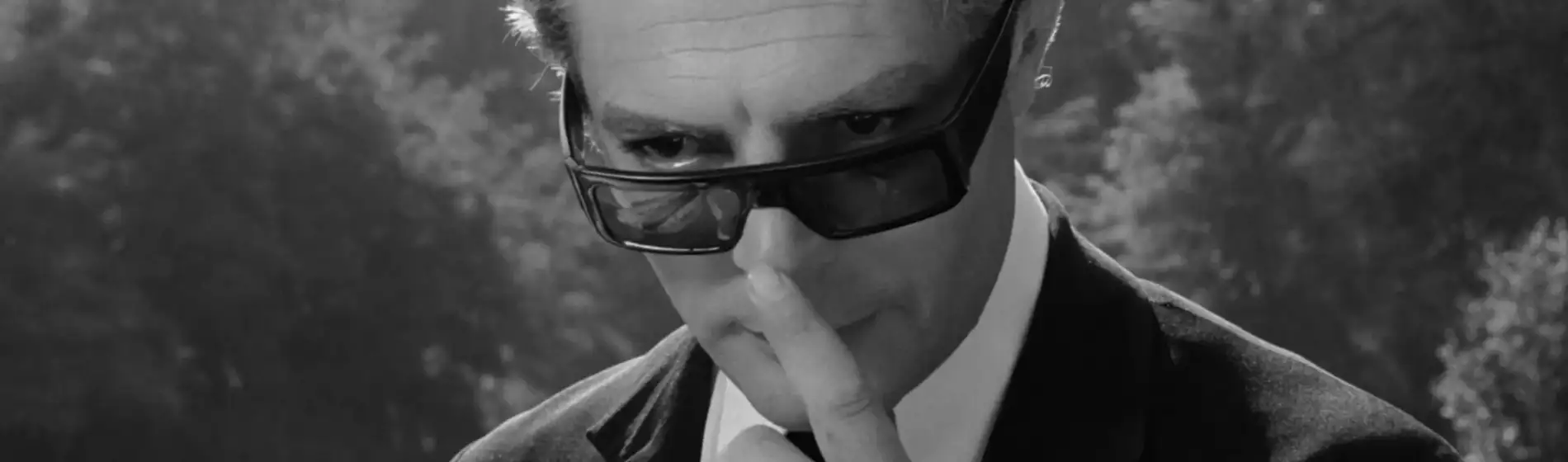
As a movie about the making of a movie, this one couldn’t be more self-referential: the movie that the main character, Guido Anselmo (played by Fellini’s most frequent alter ego Marcello Mastroianni) is making is the movie you’re watching. Struggling to come up with an idea for his next project, something that plagued Fellini after the massive success of La Dolce Vita , Guido deals with the complications of his love life (an angry wife, played by Anouk Aimee, and a voluptuous mistress, played by Sandra Milo) and reflects on the memories of childhood that shaped his ideas of romance and art. The characters playing various roles appear in other scenes as actors waiting for their moment, and you’ll often see members of Guido’s costume cerw preparing clothing that will then be seen in a later sequence. The heat of creativity and the various fears and insecurities it inspires has rarely been presented in so dazzling, and yet so naked and vulnerable, a manner. Its artistry is still exciting after fifty years, and its beauty as a monochrome filmed in stark blacks and whites still makes it one of the most visually dazzling films ever made.