

The Toronto International Film Festival (TIFF) celebrates its golden anniversary this September. While it nearly felt as if TIFF might have gone full Hot Docs 2024 this week with the controversy surrounding the reversal and then the reversal of the reversal of festival selection The Road Between Us, clear heads prevailed and it’s time to go on with the show.
TIFF has weathered many storms since it began as the Festival of Festivals back in 1976. But for all complaining that the festival inspires—some warranted, some not—there is arguably no other time of year that excites Torontonians so much, except perhaps the first whiff of patio season once the snow melts.
In the spirit of celebrating 50 years of TIFF, That Shelf invited its contributors to share their memories of previous festivals. Our critics picked their brains to remember the first film they saw at the festival, the best film(s) they screened over the years, pro tips, and hidden gems. And, in a nod to our contributor Bil Antoniou’s Riviera Rats’ podcast, we made the “Dinde d’Or” an honorary gong in perhaps the survey’s most competitive answer: the most egregiously bad film you saw at TIFF. Without the bitter, the sweet isn’t as sweet, as Jason Lee said in the not-TIFF-selection Vanilla Sky.
Please join us in giving 50 cheers to 50 years of TIFF. Like the Scotiabank escalator, it will keep on trucking. – Pat Mullen
First TIFF Film
I know I saw some stuff in the early-’90s, but the first one I remember going to as an audience member was Patrice Laconte’s Ridicule (1996), a film I saw months after having missed it at my first Cannes. That was the film that made me want to return the next year as press, and after loads of hustling, I became one of the first online journalist ever to cover TIFF, with Curtis Hanson’s L.A. Confidential followed by John Sayles’ Men with Guns as the first films I wrote about in my “Plebian Diary” for the NY-based Filmscouts. – Jason Gorber
Models by Ulrich Seidl. The 1999 film was part of a retrospective on the director in 2001. – Courtney Small
Keane (2004) – Lodge Kerrigan’s intimate look at grief and loss features an excellent Damian Lewis in one of his first leading roles as a father re-living his daughter’s abduction daily by returning to the scene in hopes of finding some small clue. As he spirals deeper into a mentally disturbed state, he forms a strong bond with a young girl (an excellent Abigail Breslin) and her mother (Amy Ryan). An in-depth Q&A followed, with both Kerrigan and Lewis. The movie felt like an emotional gut-punch and opened my eyes to what I could experience at TIFF, and why it was worth venturing farther than the big-name titles. I haven’t missed a festival since. – Emma Badame
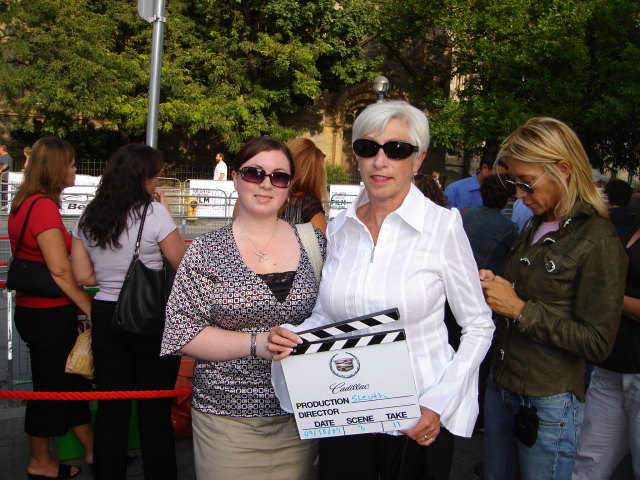
Thank You for Smoking (2005). – Rachel West.
The first film I ever saw at TIFF was Jack White’s musical documentary about their tour, The White Stripes Under Great White Northern Lights (2009). At the end of the premiere, Jack and Meg White came out to say hello. Pretty cool. – Alex Southey
In 2009, on a whim Labour Day weekend, my brother and I decided it would be fun to do TIFF since we’d both finished university. We ventured into the chaos of Single Ticket Day—on dial-up internet!—and landed on Sook Yin Lee’s Year of the Carnivore for opening night. The film was a lot of fun and inspired a hunger for more. – Pat Mullen
The first movie I saw at TIFF was Jason Reitman’s The Front Runner in 2018. As a TIFF newbie, I was just happy to get a ticket to a film playing the festival until I actually saw the movie… – Ethan Dayton
American Son at TIFF 2019. Completely forgettable. It only went up from there. – Shawn Peer
Best Film You Ever Saw at TIFF
I’ve only been participating in TIFF consistently for the past four years, which haven’t exactly featured the best programming in the festival’s history but the best film I’ve ever seen at TIFF was Florian Zeller’s The Father in 2020. I don’t think I’ve ever cried harder during a film’s ending. – ED
This one is like picking a favourite child, but if I had to whittle it down to just one, it would be Andrea Arnold’s Fish Tank. A truly visceral coming-of-age tale that only Arnold could have produced, its riveting central performance (from Katie Jarvis — a performer with no prior experience) has haunted me for over a decade. Her portrayal of Mia, a socially isolated teen desperate for attention and affection, captures the hopelessness of generations living on England’s bleak Council Estates like nothing I’ve seen before or since. Add to that a magnetic yet vaguely disturbing performance from Michael Fassbender (now a festival veteran) in the role of Mia’s mother’s new boyfriend, and you’ve got a recipe for the perfect TIFF film: an inexpensive indie film with stellar storytelling and performances that sticks with you long after the credits roll. An honourable mention goes to The Disappearance of Eleanor Rigby. – EB
Knives Out at TIFF 2019 was an absolute blast to see with a full crowd at the festival. I’m looking forward to having that memory come full circle this year with Wake Up, Dead Man. – SP
I will say that the second Moonlight screening, where Jonathan Demme was in the crowd and asked a question, was a special experience. I’ve seen many great films at the festival, but that one truly felt like the audience was all on the same wavelength emotionally. – CS
There were few things more shattering than 2012’s The Act of Killing. The audience response at the Drive screening was one of the best I ever sat through at Ryerson, and my beloved Uptown was home to screenings of masterpieces like Crouching Tiger, Hidden Dragon, Punch-Drunk Love, and Ichi the Killer, along with other films that debuted Cannes that I would later get to see in Toronto. Still, if I had to pick a true TIFF premiere that completely rocked my world, a selection that I saw only because I had time between two other films and slipped into the Varsity’s screening room knowing nothing about what I was in for, it would be Wes Anderson’s Rushmore. Back then, I saw myself as the precocious Max Fischer, and now, all these years later, I empathise deeply with the tired bemusement of Brian Cox’s character at the obnoxious students proclivities for chaos. It changes how I loved music and film in fundamental ways, and its exceptional qualities echo to this day. – JG
There are too many to name, but I saw some of my all-time favourites at the festival: The Hunt, Brooklyn, Beginners, An Education, Prisoners, Three Billboards Outside Ebbing, Missouri, Parasite, and more. I keep a list of every film I have watched at TIFF on Letterboxd and I’m up to over 540. – RW
Honestly? The White Stripes Under Great White Northern Lights. Not only did it do justice to the band, it did justice to touring across Canada. Part of what helped it achieve this is White and co. choosing interesting locations to play shows. It wasn’t only amphitheatre after amphitheatre. – AS
I’m happy to hold down the fort as Wild’s number one fan. The drama by Jean-Marc Vallée (and Cheryl Strayed) was my first screening in my first year as accredited press, and it was one of those right movie, right moment films. I think the final sequence of the film may be one of the most perfectly constructed pieces of cinema ever with the way that Vallée weaves Witherspoon’s performance, Yves Bélanger’s camerawork, that haunting Simon & Garfunkel cue, and that crappy CGI fox as they come together for such a beautifully executed gut punch. (Just the planning that goes into visualizing that moment, capturing the shots along the way, and pulling it off? Chef’s kiss.) I have an annual tradition where I revisit past TIFF favourites each summer to pump me up for the festival. Wild is always the one I reach for first and every year. – PM
Dinde d’Or
Aggro Dr1ft. It was barely a movie to begin with. It never even received a wide release in theatres, and having seen it, it’s obvious as to why. – SP
I often refer to the second Thursday of TIFF as “Throwaway Thursday” because they’ve proven time and again that they will roll out the red carpet whatever hot garbage the stars are willing to come out for after the American press have gone home. Case in point: the irredeemably basic The Cobbler, directed by Tom McCarthy and starring Adam Sandler. Not a joke landed, except the one on the people who got dressed and paid premium pricing to see The Cobbler. I’ve seen a number of films at the festival that weren’t my cup of tea, were misfires, or tried something new that didn’t quite work, but I’ve generally been able to recognize why they were programmed. This is the most I ever felt cheated for how badly the festival wasted my time. (Bonus hall of shame mention goes to the junket at Coffee Oysters Champagne where they served neither coffee, nor oysters, nor champagne.) – PM
I used to be far more adventurous at the festival, seeing more than 70 titles while feeling an almost pathological need to cram as may in as possible, fearing (justifiably, back then) that to miss a film at the fest would mean that the opportunity to see it later was basically nil. Coupled with the fact that I basically never bail on a film when I commit, I’ve sat through some truly egregious titles. Gun to head (something I craved mid-film, at times), I’m giving a shout out to James Toback’s Black and White, a film that was so shitty the audience was laughing at it, and when a fire alarm went off mid-way, only three of us returned to finish it. I’m betting the film may have its charms in retrospect, but the same cannot be said for a film that I still am teased about from the friend I dragged to: Cameron Labine’s Control Alt Delete about a computer dude who drills a hole into the side of his monitor to fuck it. There have been some stellar Canadian films that have played the fest, of course, but the list of duds from the festival will have an obvious over-representation of reprehensible titles given the local need to showcase filmmakers, regardless of the calibre of their output. – JG
Dashcam is a recent one that was so offensively bad I couldn’t believe it was programmed. With the exception of The Edge of Seventeen, the closing night film is usually one of the worst films of the festival. – RW
DEAR. EVAN. HANSEN. Enough said. – ED
Mary Shelley. No doubt a bunch of talented actors populate that film, and there is an interesting story there, but Mary Shelley is not the rendering of that interesting story that it should be… not even a little bit. – AS
This one is hard, because I often unintentionally cast these turkeys from my brain immediately upon leaving the theatre, but I’d have to say True Things. I went in with high expectations, as Ruth Wilson and Tom Burke are both favourites of mine, who are generally mesmerizing; however, the script didn’t do either actor justice and fell flat at every point, despite the talents (and chemistry) on display. The worst movies to me are the frustrating ones, where you can see there’s a good movie in there somewhere, but something gets in the way. There’s no subtlety, and nothing new to say about toxic relationships and the damage we do to ourselves. Runner Up: The Son (this play destroyed me when I saw it in London, but for some reason the film version lacked any of the emotion of the stage production. So disappointing.) – EB
Twentynine Palms was the closest I ever got to walking out on a film. I stayed till the end, but it was a chore to get through. – CS
The Biggest Change You’ve Noticed in the Festival
There is no denying that ticket prices have skyrocketed in years, which has priced many outside the festival. On the film critic side, the festival has gotten far more inclusive, which is nice to see. – CS
For better or worse, the festival feels less intimate than it once did. It could be the full shift to the few blocks of King Street from the more insular Yorkville, but everything feels oversized and overwhelming in a way it didn’t used to. I miss some of the more low-key venues like Isabel Bader, Ryerson, or even the Cumberland (yes, I’ve been coming that long). And though the Royal Alex is a nice addition, I’ll always miss taking in films at the Elgin. There’s no other venue that can live up to that grandeur. Scotiabank feels particularly soulless and seems to remove any sense of excitement, especially once you dodge a million other lines, make it up the stairs (because the escalator is out again), and finally get to your seat. That said, one thing that has improved significantly is accessibility. The festival is FAR easier to navigate as someone with mobility issues, and I applaud those advances! – EB
I can’t say I’ve had enough TIFF experience to notice any really big changes, but I’d say the biggest one was the removal of Bulgari’s iconic Anne Hathaway and Zendaya ad, which needs to be brought back to festival screenings. – ED
I’ve gone from feeling that TIFF was on the precipice of greatness or becoming the most important film festival of the season, to seeing it slowly lose that position over the last decade. There was a clear sense that Toronto was the centre of the cinematic world, and as the industry and audiences have changed, the glory years have faded from the peak period, which feels increasingly distant. – JG
The energy. It’s hard to really explain it, but perhaps a “great reset” was forced by the COVID years. TIFF 2019, to put it mildly, was an absolute fucking grind. TIFF 2020 and ’21 then introduced truly staggering levels of PR gatekeeping from distributors and film reps. While it seems there’s no putting Pandora’s monsters back in the box on that front for some U.S. firms, TIFF ’23 onward inspired a reality check that being awful isn’t the most effective strategy for endearing people to your films, while the festival itself seems to be finding itself anew existentially–something that’s still clearly a work-in-progress. Last year especially, though, TIFF mostly found major How Stella Got Her Groove Back vibes with everyone seemingly getting on the same page. It seemed like people realised that writers and cinephiles wanting to see their films was a good thing, and that we should all work together to get the most out of the festival. The films were great, the interviews were happening, the parties were roaring. It was exhausting, but in the good way. – PM
There has been a shift to a celebrity focus and the overpriced “premium” experience. Film lovers are being priced out of the festival and the resale of tickets well over face value last year was appalling. TIFF isn’t “the people’s festival” and it hasn’t been for a long time. – RW
The number of influencers at the premieres and red carpets. While controversial, they have asked great questions, at least from what I’ve seen. – SP
Best Celebrity Encounter
I told Amy Adams I loved her on the red carpet and she said “Thank you.” It was awesome! – ED
Some of the best encounters are the ones that come out of left field. In 2013, I was at a press junket patiently waiting to interview Emma Thompson and Pierce Brosnan for The Love Punch. I was the last journalist for that session, so I’d gotten comfy in a chair in the hallway, waiting my turn. Someone sat down beside me, but I didn’t look up because there was so much hustle and bustle going on; you learn to just ignore it. Then a very familiar voice asked me what movies I’d seen at the festival so far. The film’s stars were taking a break to stretch their legs, use the restroom, and so on, and Brosnan had decided it was the perfect opportunity to get some recommendations on what to see at the festival. We talked for about five minutes, half of which became an impromptu gush session about the amazing Meryl Streep. We had both seen August: Osage County the day prior, and he talked about being in awe of her, even after working with her on Mamma Mia. When I was finally called into the interview, about two minutes after he’d gone back in, Brosnan greeted me warmly (as did the amazing Dame Thompson), and a fun interview with both put a perfect bow on the loveliest celeb encounter I’ve ever had–not just at TIFF! Bonus Mentions…Two fantastic elevator encounters: One with the gentlemanly Benedict Cumberbatch (after interviewing him for The Imitation Game), the other with the canine star of Seven Psychopaths, who had his very own tiny press pass. – EB
I saw the back of Matt Damon’s head, which was pretty exciting! Peak Bourne days. – AS
I interacted with Pixar chief creative officer Pete Docter on the street without even realizing it was him until after. He even complimented me on my knowledge of lighting.— SP
I ran into Aaron Pierre (aka. Mufasa) at the TIFF Lightbox the year Clement Virgo’s Brother played and got to tell him how great his performance was in that film. However, an all-time starstruck moment happened outside the Cumberland cinema in 2002 when I saw Roger Ebert and his wife Chaz walking on one side of the street and Leonard Maltin and his wife Alice walking on the other. – CS
Mads Mikkelsen spending hours hanging out at the Scotiabank Theatre? A late-’90s Tom Cruise looking so radiant I almost believed the nonsense he was spewing about the “government censorship” of Eyes Wide Shut? Thanking every cast member of The Big Lebowski over several years? Getting on an elevator with an effusive Roberto Benigni so often it became a bit of a running gag? Buying a bagel for a then-impoverished David Gordon Green who was about to collapse before our interview from starvation? Watching Rare Exports and thinking the one person in the planet I had to tell about it was Guillermo Del Toro, only to see him in the hallway minutes after the screening? The best and worst behaviour of A-listers on 9/11? If I had to choose, I’ll pick the hour I spent with the members of The Funk Brothers at the lobby of the Four Seasons following the premiere of Standing in the Shadows of Motown, nerding out about music and getting loads of stories that were too salacious and nerdy for any public-facing film. – JG
I’ve been lucky to have spent over 14 years working as an entertainment producer and journalist on the film beat, so you name them, I’ve interviewed them at TIFF. Everyone from Colin Farrell and Viola Davis to Saoirse Ronan and Hugh Jackman. But my favourite encounter was in my pre-press days when Brendan Gleeson sat behind me for the premiere of Neil Jordan’s Ondine. I turned around to tell him I was a big fan and had seen his film Perrier’s Bounty the night before. He patted me on the hand, called me a “sweet dear” and chatted a bit. I refrained from telling him we both share March 29 as our birthday to not look like a total weirdo. – RW
Getting to spend an hour having coffee with Barbara Kopple at TIFF 2019 may be the highlight of my professionally life. She was in town for the world premiere of her Iranian hostage crisis doc Desert One, and it was fun to talk about her film and career, debating Argo (she loved it), getting to cover everything from Harlan County USA (my pick for the best documentary ever made) to her Woody Allen film to the time Bruce Springsteen saved American Dream and her work with D.A. Pennebaker and company. But what I love most was that she was just as excited about the movies as I was, asking how this person’s film was or if I’d seen another doc in the festival. Honourable mentions: Last year, I skipped the Substance brunch with Demi Moore to interview Malala, and she asked what else I was doing that day. I told her I was going to an off-the-grid screening of Maria hosted by Angelina Jolie, and she was playfully jealous. When the interview ended, Malala (we’re on a first name basis now), teased, “Say hi to Angelina!” – PM
Pro Tip
The first week of the festival is crazy busy and you have get in line an hour before high-profile press screenings to have a good chance at getting in. But after that, it’s not as bad, as more low-profile movies are playing. – SP
Talk to people. Ask them what they’ve seen, what they’ve loved, what they’ve hated. I have found some amazing hidden gems I wouldn’t have seen if my seatmate or line buddy hadn’t mentioned it. – RW
Bank as much coverage as you can during the summer and Labour Day weekend. Go into the festival feeling like you don’t owe anyone anything so you can just enjoy it. Also, your festival tote should be a travelling pharmacy: Vitamin C, B12, Echinacea, mints, apple cider vinegar pills (keeps the junk food at bay), Advil, hand sanitizer, caffeine pills. And a cocktail in the freezer for when you get home! – PM
Never watch four subtitled films back-to-back (especially when I was doing seven films a day). Your brain starts treating things like a book after the third film, where chapter one (the first film) is somehow attached to the last title, and you get positively delirious while trying to keep all the characters and plot points apart. Stick an English language film in the middle and you’re good to go for a mental reset. – JG
Never give up if you can’t get a ticket to a screening you really want to see. You will prevail in the end. – ED
Pace yourself! You don’t have to see everything on the first weekend or the first few days. If you’re attending the entire festival, leave some time to catch films in the second half. Chat to people in line or in the seats next to you, and keep an eye on recommendations from your favourite sites and critics, to find out what films are worth seeing that may not have been on your radar. Those precious word-of-mouth gems may become your favourites of the fortnight. (And always remember to stock your bag/tote with water, notepads, snacks, tissues for those tearjerkers, and anything else to get you through a day of festing!) – EB
Do not overload on the star-studded / buzzed titles. Some of the best TIFF experiences will come from the smaller films that you took a chance on simply because it fit in your schedule. – CS
The best crowd to see a film with is a seniors’ crowd. They’re quiet. They don’t check their phones. They don’t participate in TikTok in-theatre trends. They get a discount and they see films early in the day. They know what’s up and we should follow suit. I wouldn’t quite recommend picking movies to see solely based on if you think the audience for it is a seniors’ audience, but it’s not a bad bit of knowledge to keep in your back pocket. – AS
The One Festival Film You Saw that Really Should Have Gone Places
So many! But perhaps the one that surprised me the most was The End We Start From. A fantastic adaptation of Megan Hunter’s novella, the film stars Jodie Comer (at the height of her fame) as a mother fighting for the survival of herself and her newborn in the face of a sudden climate disaster. Directed by Mahalia Belo, from a fantastic script by Alice Birch, it struck the right notes of both terror and hope in the face of a crumbling world, and featured excellent supporting performances from Katherine Watson and Joel Fry, as well as great cameos from stalwarts Benedict Cumberbatch and Mark Strong. Produced by BBC Films, the BFI, and Cumberbatch’s SunnyMarch, it did well in the U.K. (earning nods at the British Independent Film Awards), but never secured a Canadian distributor. Given the pedigree on the production side and the assembled talent, it truly surprised me that this one didn’t play more on this side of the pond. – EB
His Three Daughters. One of the best movies of TIFF 2023 and its shame it didn’t get the awards recognition it deserved, especially the screenplay and Natasha Lyonne. – SP
I’d have to pick Edgar Wright’s Last Night in Soho, which is criminally underrated and underseen, in my not so humble opinion. Between the hauntingly vibrant visuals, phenomenal soundtrack, and standout performances from Anya Taylor-Joy and Thomasin Mackenzie, this movie should be on everyone’s watch list. – ED
Letter to the Editor. Alan Berliner’s love letter to the printed word, composed entirely out of excerpts from the once venerable New York Times, is one of several reminders to festivalgoers that they absolutely should not sleep on the TIFF Docs slate. The docs often knock it out of the park, and are becoming increasingly harder to see outside of the festival circuit in today’s risk averse climate. It’s also sad to think about all the great films at TIFF ’19 that teed up a strong festival premiere and just never got to find an audience with the 2020 rollout they anticipated. – PM
The Lost Okoroshi is a vibe that I wish more people had experienced. It’s a colourful work that was rich in culture and mysticism. – CS
It did get some recognition, and a spot on Crave/HBO’s platform, but Daniel Roher’s documentary Once Were Brothers: Robbie Robertson and the Band is a real gem, made by an extremely talented filmmaker who went on to create the Oscar-winning, much more widely viewed and beloved Navalny. – AS
I really adored Jaco Van Dormael’s Mr. Nobody, and I have warm memories of that screening as yet unsullied by the unopened Blu-ray I’ve had on my shelf for years. Yet the pick that comes to mind is Dylan Kidd’s P.S., starring Laura Linney and Topher Grace. I remember being engrossed with the film, so much so that the film I saw immediately after at the Elgin, Alexander Payne’s Sideways, underwhelmed. I doubt either film will hold up on closer inspection, but at the time I was convinced they would find their audiences long after the festival wrapped. – JG
Veronica. An all-around great Spanish-language horror movie that was part of Contemporary World Cinema. Far scarier than any recent Midnight Madness offerings. – RW