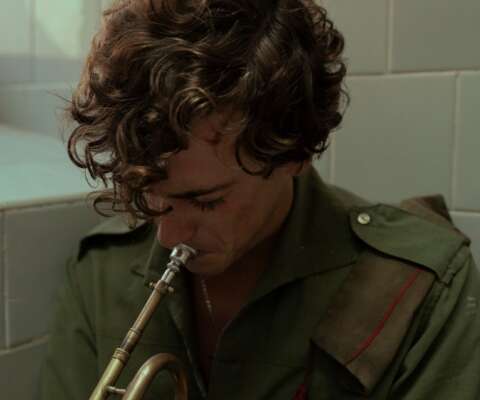



Remembrance Day, originally Armistice Day and known as Veterans Day in the USA, was inaugurated to commemorate the end of the the First World War in 1919. It’s a solemn occasion that remains an opportunity to remember and reflect. As a child of a survivor of the Second World War, it holds a particular importance to me and, even when working from home, I do my best to remember a moment of silence at 11:00 in the morning.
War, of course, is not something one need reach back into history for, as it continues to be a scourge on human civilization that prevents our cooperative progression, while also being, ironically, something that is responsible for a great deal of social progress.
The cinema has long been concerned with war, remembering those of the past, reflecting those of the present, condemning its failure or boosting morale for those still going through it (or in many cases, both). There are all sorts of war movies, some about home fires kept burning, others about the politics that lead to their beginnings, in fact there are so many different kinds of war movies that I could probably create five or six lists without any overlaps (and it would mean my writing about The English Patient yet again).
For this month’s list, I’ve decided to stick only to those war movies that involve the battlefield in some way, these are ten favourites:
10. Paths of Glory
Stanley Kubrick, 1957
Kubrick was a teenager at the onset of the Second World War and the experiences on the battlefield would remain a preoccupation in his robust if not prolific filmography. The man who was preoccupied with themes of dehumanization could find no better subject with which to tackle the subject head on. Kirk Douglas is terrific as an army officer who takes on the task of defending three soldiers accused of cowardice in a military court martial, following their regiment’s failure to take a hill during a battle in what would erroneously be later referred to as The Great War. Their sadistic commander (George Macready) is trying to cover up his shame for his own failure and scapegoating his subordinates, giving Douglas quite the job to do in what is obviously a show trial. A superb film that, like most of Kubrick’s work, is achieved on a magnificent technical level as well as an intellectual one. It’s his first true masterpiece and only one of two Kubrick films on this list. (You’re welcome, film bros!)
9. The Deer Hunter
Michael Cimino, 1978
Film critic Michael Gebert noted that the realism of this film’s battle scenes are on par with Rambo, and he’s right, but it’s the way Cimino captures the mess left behind that makes this film worthy (which goes against my intentions with this list, sue me). A group of friends, all workers in a Midwestern steel factory, celebrate their pal’s wedding before heading off to Vietnam in search of glory and heroism. Only one of them (Robert De Niro) comes back in one piece (and that’s only physically), and now must contend with the betrayal he feels at seeing his injured friend (John Savage) ignored and his best friend (Christopher Walken) gone insane. Meryl Streep scored her first Oscar nomination as the girlfriend who doesn’t go overseas but has participated in her own battles by the time the men return. Superbly written and magnificently directed by Michael Cimino, who went on to infamy with his next project, Heaven’s Gate.
8. Waltz With Bashir
Ari Folman, 2008
This extraordinary achievement in cinema combines animation, documentary and fantasy as Folman investigates the ways that trauma can block access to memory. A friend tells him of a recurring dream he keeps having that is connected to their experience serving in the Israeli army in the 1982 Lebanon War. Folman realizes that he has images in his own mind that he cannot piece together and begins a series of interviews with others involved, presenting it in a form of animation that is haunting and dreamlike, overlaid with one of the most effective musical scores of the decade.
7. Platoon
Oliver Stone, 1986
Vietnam angst in the seventies led to Vietnam dramatizations in the eighties, peaking with this exceptionally compelling Oscar-winner. The rigorous experiences of a platoon of soldiers are seen through the eyes of a green recruit (Charlie Sheen) whose family’s money could have kept him home were it not for his desire to serve his country and avoid the unfair trappings of class. Once there, his naive eyes are opened wide to the reality of the conflict, a topsy-turvy world where the most dangerous enemy is actually playing on his side of the fence. Stone’s direction was never this taut again, his screenplay rich with character detail that would become cliches in many of the copycat movies to follow.
6. Letters From Iwo Jima
Clint Eastwood, 2006
Eastwood made two films in 2006 about the battle of Iwo Jima, one in English taking the American side (Flags of Our Fathers), the other in Japanese from the perspective of that side of the war. The latter is without a doubt the superior of the two (and for me the best American movie of its year), focusing on one young soldier in the days before the American landing, when soldiers realize that their government and military have all but abandoned them, through to the devastation of the actual fight when low morale leads to heavy losses and dangerous personality conflicts. Eastwood creates a war film that achieves some gorgeous moments of introspection that feel natural (particularly for those who find Terrence Malick’s grass-in-the-wind melancholia in The Thin Red Line too much to swallow) and by the last third, when the men really stop to think about what it means to be human, reaches a level of pure majesty.
5. 1917
Sam Mendes, 2019
Inspired by tales Mendes was told by his grandfather, this instant classic stars George MacKay and Dean-Charles Chapman as two soldiers who are three years into exhausting battle, informed by their commanding officer (Colin Firth) that they must undertake a dangerous mission to save another unit from what they don’t realize is a trap. The only way for the message to be received is for these two men to cross no man’s land into German-controlled areas of the bombed out French countryside, vulnerable to all manner of attack from land or air, and needing to keep their wits about them as they come into contact with the odd straggling solder or, in one particularly devastating sequence, an airplane that is shot out of the sky. Filmed in what has been, through excellent digital blending, rendered as one long continuous take (well, two if you take into account the one character’s blackout midway through the film), this is the war movie version of Mad Max: Fury Road: a smoothly photographed voyage across a barren terrain whose efficient plotting strips every moment down to its essence (you either survive or you don’t), orienting its movement in a single direction as the characters push forward to their goal.
4. Apocalypse Now
Francis Ford Coppola, 1979
Coppola moves Joseph Conrad’s Heart of Darkness to Vietnam during the war, with Martin Sheen taking a long trip down a river to find an army leader (Marlon Brando) who has cut himself off from regular communication with his base commanders. That’s what it’s about, but the experience of watching it, learning of its massively complicated production history and then taking in the full, four-hour version is an experience beyond narrative description.
3. Full Metal Jacket
Stanley Kubrick, 1987
This one does hit the battlefield, though it’s the first half set in boot camp training that sets it apart from other films about Vietnam. It concerns a green draftee (a perfectly cast Matthew Modine) who experiences the horrors of boot camp (led by a terrifyingly brilliant R. Lee Ermey) and then gets sent out into the field as a journalist. Kubrick explores his favourite theme of dehumanization in his most thorough manner, by including disturbing images and situations that are liberally depicted throughout both halves. Adapted from Michael Herr’s novel The Short-Timers, it also provided Kubrick with his last Oscar nomination before his death in 1999.
2. Dunkirk
Christopher Nolan, 2017
British and French soldiers, approximately 400,000 in number, have been pushed back in battle to the French town of Dunkirk, their only possibility for evacuation the wide open sea behind them. Told with a shockingly spare narrative style, in three separate timelines that it moves between effortlessly, this film offers no back stories to its individuals. Nolan’s superb war epic is his leanest, strongest film yet, and possibly the most powerfully intense look at a World War II battle since Overlord. The heroism that reaches cult-of-personality levels of obsession in many war movies is replaced with compositions that allow the vastness of the land, the sea or the sky to show the preciousness of the human beings occupying them.
1. All Quiet on the Western Front
Lewis Milestone, 1930
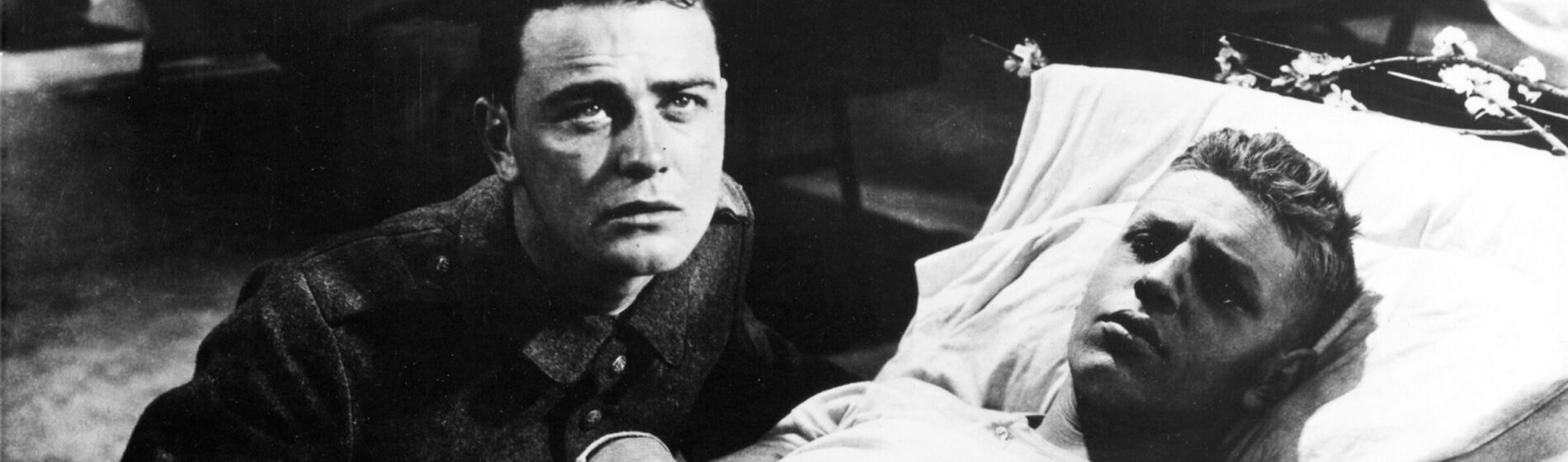
A group of eager German students enlist for service in World War I, heedless of warnings from their professors and families, itching to achieve the heroism promised by the army propaganda that has filled their ignorant minds. The war scenes are unlike anything mainstream cinema had seen before, and the realism of battle is completely at odds with the candy-coloured beauty of propaganda films that would follow. To make sure World War II recruits wouldn’t be deterred by its gruesome images, this film was banned in America years after its release, not only for its pacifism but also because it presented German soldiers as sympathetic protagonists. The more recent, multi-Oscar-winning adaptation of Erich Maria Remarque’s novel may be an impressive work of great strength, but it’s a shame that Edward Berger felt the need to make so many changes in the plot to appeal to modern-day audiences. In my mind, there is still nothing that describes the horror of war more succinctly than a man unable to survive a world in which he is moved by the beauty of a simple butterfly.